
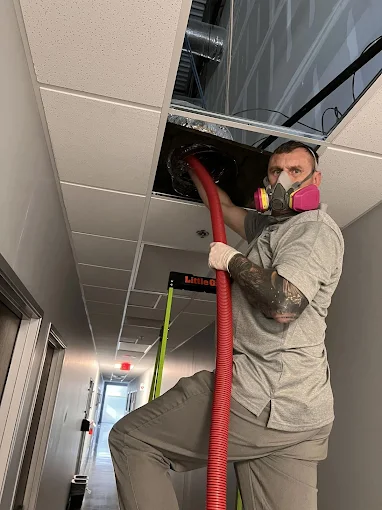
Lone Star Pro Flow LLC Dryer Duct Cleaning For Safe Venting Confidence
If your clothes are taking longer to dry, you notice more lint than usual, or the laundry room smells “warm” after a cycle, the dryer exhaust path may be restricted. This guide explains what duct and dryer vent cleaning should cover, what to check at home, and how to choose an approach that helps support safer, more reliable venting for homes and properties in Frisco, TX.
A homeowner in Frisco, TX recently told us their dryer runs longer than it used to, and the vent hood outside looks like it has trapped buildup. On top of that, the laundry room sometimes feels warmer during drying, and lint seems to collect faster around the dryer and outlet.
When dryer exhaust can’t move freely, lint and moisture can linger. That can affect drying performance and increase the chance of a clogged vent path. In this article, you’ll learn how dryer duct cleaning fits into air duct and dryer vent cleaning, what to inspect before calling, and what a practical cleaning process should look like for dryer vent cleaning services in Frisco.
Quick Answer
If your dryer vent is restricted by lint buildup, poor airflow can cause longer dry times, damp loads, and extra lint around the dryer. Start by checking the outside vent flap for blockage and ensuring the vent path is as straight and short as possible. If you see signs of buildup, or your dryer performance changed, schedule duct and dryer vent cleaning with a team that can clean the full exhaust route. For many homeowners, pairing dryer duct cleaning with routine HVAC duct and dryer vent cleaning helps keep the home’s airflow systems consistent.
What to Check First
Before you schedule service, you can spot several common issues that point to clogged or restricted venting. These checks are also helpful when you’re discussing the problem with a technician.
Outside vent hood
Look for lint buildup on the hood, stuck louvers, or a flap that does not open freely.
Drying time changes
If loads take noticeably longer, it often signals reduced airflow through the vent path.
Lint pattern inside
Excess lint collecting around the dryer or the wall outlet can be a sign of incomplete exhaust.
If you’re unsure what you’re seeing, you can still take a few quick notes. Write down what changed (longer cycles, dampness, musty laundry odors), and note whether the issue is consistent or worse on certain days. That context helps when planning professional dryer vent cleaning for your home.
Professional observation: When dryer lint builds up inside the vent run, airflow drops and the dryer compensates by running longer. Cleaning the dryer exhaust route is often the practical next step when performance changes and lint begins accumulating more quickly.
Main Things Customers Should Understand
“Duct and dryer vent cleaning” sounds simple, but the details matter. A dryer vent is a complete airflow path, and cleaning it effectively means addressing the full route from the dryer connection to the exterior termination.
What “dryer duct cleaning” should realistically cover
- Exhaust route cleaning: the dryer’s venting pathway, not just the lint screen area.
- Lint and debris removal: buildup that can collect along bends, transitions, and interior sections.
- Dryer exhaust cleaning focus: attention to the connection points where restrictions often form.
Residential vs. commercial property considerations
In Frisco, TX, dryer setups vary by property type. Many customers are in single-family homes, while others manage apartments, condos, or small commercial spaces. The best approach depends on how the venting is routed and how often the dryers run. Residential dryer vent cleaning and commercial dryer vent cleaning both aim for improved exhaust flow, but property access and layout can change what’s easiest to inspect and service.
If you want a broader view of airflow care, you may also be interested in how HVAC duct cleaning services can complement dryer vent work.
Practical recommendation: If you’re scheduling air duct and dryer vent cleaning, consider the dryer vent first when symptoms are tied to laundry. Then, if you’re also dealing with indoor airflow concerns, review your HVAC duct cleaning plan so both systems are handled on a schedule you can maintain.
What to expect during dryer vent cleaning
While every home differs, a thorough job generally includes inspection of the vent path, targeted cleaning of the exhaust route, and attention to the dryer connection area. For many homeowners, the goal is to reduce the buildup that restricts airflow and supports more consistent drying.
Representative scenario (anonymized)
In one Frisco-area rental, the tenant reported that towels stayed damp even after a full cycle. The building’s laundry room had multiple dryers, and lint appeared to collect around the wall connection area. After a venting inspection, the team focused on the exhaust path where buildup had accumulated. The resident then noticed improved drying consistency during normal use.
Why This Matters in Frisco, TX
Frisco homes often balance modern layouts with practical laundry placement, and that can influence the dryer vent run length and number of bends. Over time, lint naturally accumulates in the exhaust route. When the vent path is longer or includes more turns, buildup can develop in places that are harder for routine maintenance to reach.
Also, laundry habits matter. Properties where dryers run frequently, including apartments and condos, may see vent buildup faster than a home where laundry is done less often. That’s why air duct cleaning dryer vent cleaning services are commonly planned around regular household or property maintenance routines.
| What you notice | Likely airflow issue | Good next step |
|---|---|---|
| Dryer takes longer than before | Restricted exhaust flow | Schedule dryer vent cleaning services focused on the full duct run |
| More lint than expected around the dryer outlet | Buildup escaping or not clearing through the vent | Ask about dryer duct cleaning and vent path inspection |
| Outside vent hood looks clogged or doesn’t open fully | Termination area blockage | Prioritize cleaning the exhaust route, including the exterior end |
| Musty smell after cycles | Moisture lingering due to reduced exhaust | Arrange professional dryer vent cleaning to support airflow |
Need dryer vent lint removal you can trust?
If your dryer performance changed, the most helpful move is to get the exhaust route inspected and cleaned. Lone Star Pro Flow LLC serves Frisco, TX and surrounding areas.
Call Lone Star Pro Flow LLCCommon Mistakes to Avoid
These are the issues we see most often when customers try to handle venting problems on their own or delay service.
- Cleaning only the lint screen: The lint trap helps, but it does not remove buildup inside the dryer exhaust route.
- Ignoring airflow symptoms: Longer dry times and damp loads are often the first indicators of restricted exhaust.
- Assuming a “quick check” is enough: Even if the outside vent flap looks mostly clear, lint can still build up inside bends and transitions.
- Using temporary workarounds: If you notice reduced performance, patching over the issue without addressing the vent path can delay a real fix.
- Forgetting the connection points: Restrictions often form where the dryer connects to the venting run.
Customer Checklist
- Confirm the outside dryer vent hood flap opens freely
- Note whether drying time has increased or loads stay damp
- Look for lint accumulation around the dryer outlet and wall connection
- Check for obvious vent routing issues such as excessive bends (if accessible)
- Plan for dryer exhaust cleaning that targets the full vent path, not only surface areas
- Ask about coordinating air duct and dryer vent cleaning if you also have HVAC airflow concerns
If you’d like to understand how dryer vent cleaning pairs with HVAC maintenance, you can also review dryer duct cleaning for a focused look at the process.
Frequently Asked Questions
How do I know I need dryer vent cleaning instead of just emptying the lint screen?
Emptying the lint screen is helpful, but it only captures lint at the dryer filter area. If you’re noticing longer drying times, damp laundry after a cycle, more lint around the dryer outlet, or lint buildup on the outside vent hood, those are common signals that buildup has collected in the exhaust route. A vent that cannot move air efficiently can also leave moisture lingering, which can contribute to odors. In those situations, dryer duct cleaning aimed at the full exhaust path is usually the practical next step.
What’s the difference between air duct cleaning and dryer duct cleaning?
Air duct cleaning focuses on the HVAC ductwork that circulates conditioned air through your home. Dryer duct cleaning focuses on the dryer exhaust pathway that carries hot, moist air and lint out to the exterior. They’re different systems with different airflow goals, which is why some homeowners schedule them separately. If you’re dealing with both HVAC airflow concerns and laundry venting symptoms, coordinating HVAC duct and dryer vent cleaning can help you manage both systems on a maintenance plan you can keep.
Can lint buildup affect indoor air quality?
Lint buildup is primarily an exhaust issue, but restricted venting can increase moisture inside the laundry area and contribute to unwanted odors. When airflow is limited, dryer exhaust may not clear as effectively, which can leave more residual lint and moisture-related effects near the dryer connection. That’s one reason customers often see a noticeable improvement in laundry comfort after professional dryer vent cleaning. For customers also focused on airflow throughout the home, pairing dryer vent work with air vent cleaning and HVAC duct care can be a practical way to address multiple airflow pathways.
Is duct and dryer vent cleaning only for homeowners, or do apartments and condos need it too?
Apartments and condos can need dryer vent maintenance too, especially when dryers are used frequently by multiple residents. In multi-unit properties, vent runs and access points may be shared or routed through building walls, which can change how easily buildup is detected. That’s why apartment dryer vent cleaning and condo dryer vent cleaning are common requests for property managers. The goal remains the same: support proper exhaust flow by addressing lint accumulation along the vent route, including the termination.
What should I do before the technician arrives?
Clear space around the dryer if possible and make sure the area is accessible. If you know which dryers are most affected, note whether the issue is consistent across all loads or only certain cycles. Also, take a quick look at the outside vent hood and confirm whether it opens freely. If there’s visible lint buildup around the wall connection, mention it. These small steps can help the technician focus the inspection and cleaning on the most likely restriction points.
Schedule dryer duct cleaning for safer, more reliable venting
If you’re in Frisco, TX and your dryer vent might be restricted, Lone Star Pro Flow LLC can help you get the exhaust route inspected and cleaned. Start with a call and we’ll help you plan the next step.
Request Dryer Duct Cleaning