
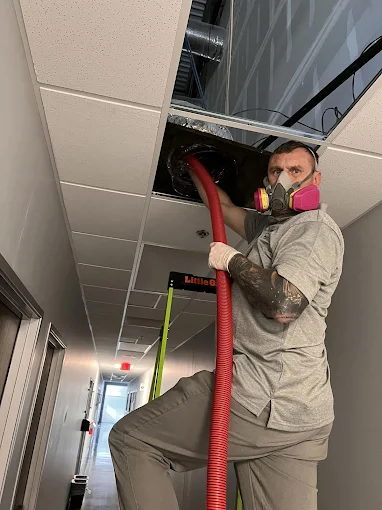
If your laundry room smells musty, your dryer runs longer than it used to, or you suspect lint buildup, you are not alone. This guide explains what DIY dryer vent cleaning can miss, the risks to watch for, and when it is smarter to switch to professional air duct and dryer vent cleaning.
Last week, a homeowner in Frisco told me their dryer “works,” but it takes noticeably longer to dry towels. They also noticed a little more lint around the laundry area and felt warm air where the dryer vent connects to the wall.
They were considering doing a DIY dryer duct cleaning session with a brush and a shop vac. That can help in some situations, but dryer exhaust systems can also hide blockages, damage, or airflow restrictions that are hard to see from the laundry room.
This guide helps you understand what to check first, the specific DIY dryer vent cleaning risks, and the red flags that mean you should schedule professional dryer vent inspection and cleaning instead of continuing to push lint deeper into the ductwork.
- Quick answer
- What to check first
- Main things customers should understand
- Why this matters in Frisco, TX
- Common mistakes to avoid
- Customer checklist
- Frequently asked questions
Quick Answer
DIY dryer vent cleaning is reasonable for basic lint removal at the dryer and for quick checks of the exterior vent opening. However, if your dryer runs longer, you smell burning or musty odors, or you suspect a blockage beyond the first few feet, DIY can be incomplete or even counterproductive. A safer approach is to inspect airflow paths, confirm the exterior vent is clear, and only continue if you can verify the vent is not crushed, disconnected, or packed with lint deeper in the run. When symptoms persist, choose professional dryer vent cleaning services that include thorough inspection and proper removal.
What to Check First
Start with observations you can confirm without pulling everything apart. In Frisco, TX homes often have vent runs that bend around framing or HVAC-related spaces, which means buildup can collect at elbows and transitions. Before you brush, unplug the dryer and take a few minutes to check for obvious issues.
Dryer performance signs
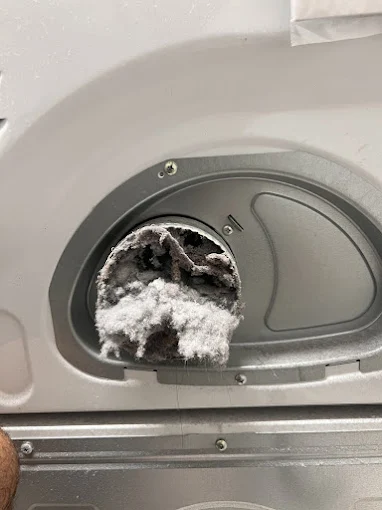
If cycles take longer, clothes feel warmer than usual, or loads come out partially dry, lint and airflow restriction may be building up in the dryer exhaust path. This is the kind of pattern that often shows up with duct and dryer vent cleaning problems.
Exterior vent condition
Walk outside and check the vent hood for visible lint, blocked louvers, or anything that could prevent airflow. If the exterior opening is restricted, DIY cleaning inside the laundry room may not fix the root cause.
Connection and material
Look at the connection point behind the dryer. Loose clamps, disconnected joints, or damaged flexible duct sections can create leaks and make buildup worse.
Professional observation: If you can see the duct run has sagging sections, sharp bends, or a connection that looks separated, cleaning without correcting the airflow path often just moves lint around. That is when dryer exhaust cleaning becomes more than “lint removal.”
Main Things Customers Should Understand
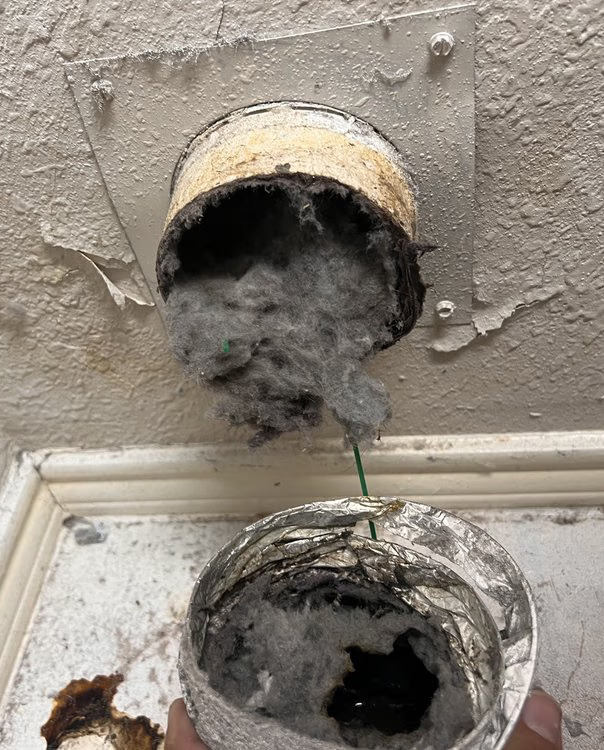
DIY dryer vent cleaning risks usually come from incomplete access and the way lint behaves inside exhaust systems. Lint is light, but it packs tightly when it mixes with moisture and residue. That packing can form at bends, at transitions, or where a flexible section collapses slightly under its own weight.
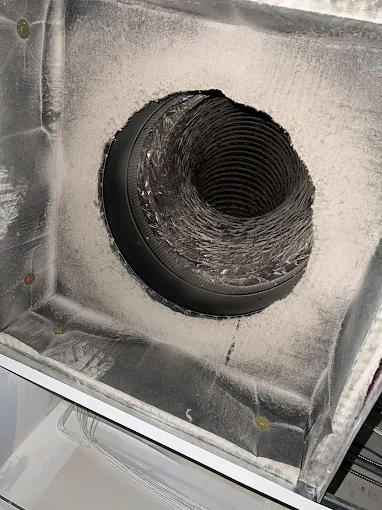
Key idea: A “clean-looking” dryer outlet does not always mean the vent run is clear. The deeper sections are where airflow restrictions and dryer vent blockage removal problems commonly occur.
1) Pushing lint deeper instead of removing it
Brushes can dislodge lint, but if you do not control where it goes, you may end up pushing material farther into the duct. That can increase restriction and lead to recurring symptoms like longer drying times.
2) Damaging ductwork during DIY
Flexible duct can be easily crushed or stretched. If the duct gets kinked or disconnected, it can leak warm, moist air into the laundry room or wall cavity. Over time, that can create odor issues and contribute to indoor air quality and dryer vent cleaning concerns.
3) Missing disconnected or partially blocked sections
Some problems are not visible from the dryer. A disconnected section can look “fine” when you are standing at the laundry appliance, but still allow airflow to escape elsewhere. A proper dryer vent inspection helps confirm where the restriction is actually located.
4) Overlooking the bigger system
Dryer exhaust cleaning is separate from HVAC duct cleaning, but homeowners often notice both issues at the same time. If you are also thinking about air duct cleaning and dryer vent cleaning services, it can be efficient to address the two airflow systems with a clear plan.
You might also find it helpful to review how HVAC duct cleaning works: Lone Star Pro Flow LLC HVAC duct and vent cleaning.
Why This Matters in Frisco, TX
In Frisco, TX, laundry routines can ramp up during seasonal shifts and busy school schedules, which means dryer usage increases even when you think you are “keeping up” with lint cleaning. When the dryer vent run is partially restricted, it may not fail immediately, but it can create a pattern of longer cycle times and recurring lint accumulation.
One firsthand-style observation from our work: when we remove packed lint from dryer duct cleaning systems, it is often concentrated at the bends and near the transition where the duct changes direction. Those areas are also where DIY efforts can be least effective because the brush has to navigate around corners and airflow may not pull debris back toward the dryer.
| Situation | DIY approach risk level | What to do instead |
|---|---|---|
| Dryer cycles are taking longer | Moderate to high (restriction may be deeper) | Schedule professional dryer vent cleaning services with inspection |
| Musty odor or warm air near the vent connection | High (possible leaks or blocked airflow path) | Get dryer exhaust vent cleaning and connection verification |
| Lint visible at the exterior vent hood | Moderate (restricted outlet) | Confirm clearance and consider professional dryer lint removal |
| Suspected crushed or disconnected duct section | High (DIY can worsen damage) | Professional inspection before additional cleaning |
| Basic maintenance only (clean lint screen, clear exterior hood) | Low | Keep up with dryer vent maintenance and monitor performance |
Prefer a clean you can trust?
If you are noticing slower drying or signs of lint buildup, Lone Star Pro Flow LLC can help with air duct and dryer vent cleaning that focuses on airflow and the full exhaust path.
Contact Lone Star Pro Flow LLCCommon Mistakes to Avoid
DIY is tempting because it feels straightforward. The problem is that dryer exhaust systems are not just “a tube with lint.” They are airflow pathways where small errors can create bigger performance problems. Here are the mistakes we see most often.
- Cleaning only the lint screen and assuming the vent run is clear.
- Using a brush without a plan to remove loosened debris safely.
- Continuing to clean even after you notice loose connections, sagging duct, or damaged sections.
- Ignoring the exterior vent hood, especially if louvers look stuck or lint is visible.
- Overlooking the difference between dryer duct cleaning and HVAC duct cleaning when you also have indoor airflow concerns.
- Forgetting to recheck the dryer performance after cleaning. If cycles still run long, the restriction may still be present.
If you are also exploring duct and dryer vent cleaning for the home overall, you may want to compare dryer-focused service with HVAC ductwork cleaning: dryer duct cleaning and dryer vent cleaning services.
Customer Checklist
Use this practical checklist before you grab a brush. It helps you decide whether DIY is likely to help or whether a professional dryer vent inspection and cleaning makes more sense.
- Unplug the dryer before inspecting behind it or handling the vent connection.
- Check for disconnected joints, missing clamps, or damaged flexible duct sections.
- Confirm the exterior vent hood is clear and the louvers move freely.
- Look for sagging ducting, crushed sections, or sharp bends in the run.
- Note dryer symptoms: longer cycles, damp clothes, musty odors, or warm air where it should not be.
- If you cannot verify the full path is clear, stop DIY and schedule professional air duct and dryer vent cleaning.
A representative Frisco homeowner scenario
A busy family in Frisco, TX tried DIY dryer lint cleaning after noticing their dryer was taking longer. They cleaned the lint screen every load and brushed the accessible section behind the dryer. The next week, the issue returned quickly. When the vent was inspected professionally, the packed lint was concentrated near a bend and at the deeper section where the duct direction changed. The exterior hood also showed signs of restricted airflow. After targeted dryer exhaust cleaning, drying times improved because the airflow path was actually cleared.
Frequently Asked Questions
Is DIY dryer vent cleaning ever enough?
DIY can be enough for basic maintenance when the issue is minor and you can verify the full path. Start by clearing the lint screen, checking the exterior vent hood for visible blockages, and inspecting the connection behind the dryer for looseness or damage. If your dryer still runs long, produces a musty smell, or you suspect the blockage is deeper in the duct run, DIY often becomes incomplete. In that case, a professional dryer vent inspection and thorough removal approach is the safer choice for reliable airflow.
What signs mean I should stop DIY and schedule inspection?
Stop DIY and schedule help if you find a disconnected connection, crushed or sagging duct sections, or you see warm air or odors near the vent connection area. Also stop if the dryer continues to take longer to dry after you cleaned the accessible parts. Those signs usually indicate a restriction or airflow leak beyond what a homeowner can easily confirm. A professional team can inspect the duct path and focus on dryer vent blockage removal where it actually matters.
Can lint buildup affect indoor air quality?
Yes. While dryer lint is primarily an exhaust system issue, restricted airflow can contribute to odors and moisture problems that affect the laundry area. If there are leaks at joints or damaged duct sections, that warm, moist air can move indoors and create a musty environment. If you are also dealing with HVAC airflow concerns, addressing both indoor air quality and dryer vent cleaning can help. For HVAC-related airflow, you can review the approach through Lone Star Pro Flow LLC HVAC duct cleaning.
How often should I do dryer lint cleaning or dryer vent maintenance?
At minimum, keep up with lint screen cleaning every load and clear visible debris around the exterior vent hood. For the dryer vent run itself, the “right” frequency depends on usage, vent length, and how the duct is routed through the home. If you notice longer drying times, persistent musty odors, or frequent lint buildup around the laundry area, that is a practical sign it is time for inspection. In many cases, homeowners benefit from periodic professional checks rather than relying on DIY alone.
What does professional dryer duct cleaning usually focus on?
Professional dryer duct cleaning focuses on the full exhaust path, not just the area behind the dryer. That includes identifying where buildup is concentrated, verifying connections, and ensuring airflow is restored. Many homeowners call it dryer exhaust vent cleaning, dryer lint removal, or professional dryer vent cleaning, but the goal is the same: remove packed lint and reduce airflow restriction so the dryer can operate as intended. If you want to compare services, you can explore dryer duct cleaning for a dryer-focused overview.
Get your dryer exhaust working right
If you are in Frisco, TX and want dryer vent cleaning services that prioritize airflow, Lone Star Pro Flow LLC can help. Reach out to schedule inspection and cleaning for your home’s duct and dryer vent cleaning needs.
(972) 532-7959
Lone Star Pro Flow LLC
Lone Star Pro Flow LLC provides duct and dryer vent cleaning for customers in Frisco, TX and surrounding areas. Our focus is practical airflow improvement, careful inspection, and thorough cleaning for residential and commercial duct and dryer vent cleaning needs, including HVAC duct and dryer vent cleaning when homeowners want both systems addressed.