
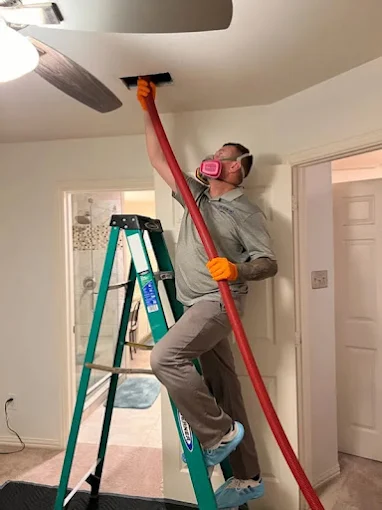
HVAC Duct Cleaning and Dryer Vent Cleaning in Frisco: The Comfort Curve Explained (and Why It Matters)
The first time you notice it, it’s usually subtle. One room feels cooler than the rest. Or the upstairs bedrooms never quite match the thermostat. Then summer humidity settles in, and the “comfort problem” turns into a higher utility bill and a system that seems to run longer than it should.
In Frisco homes and businesses, we see a pattern: people assume the HVAC system is the only culprit. Sometimes it is—but often the real comfort issue is a two-part imbalance. Dirty airflow paths (air ducts and HVAC vents) restrict movement of conditioned air, and clogged dryer vents add heat and moisture to the home. Together, they can push comfort off the “curve” and make both systems work harder than they should.
At Lone Star Pro Flow LLC, we handle primary service work that supports cleaner airflow and safer dryer operation. This article breaks down what the “comfort curve” means in real life, what duct and dryer vent cleaning changes, and how to tell whether you’re dealing with airflow restrictions or something else.
Quick Answer
If your heating/cooling feels uneven and your dryer takes longer than it used to, you may have restricted airflow from HVAC ductwork (air duct cleaning) and airflow/ventilation problems from lint buildup (dryer vent cleaning). Cleaning both the HVAC duct system and the dryer exhaust improves airflow consistency, reduces strain on equipment, and helps prevent excess heat and moisture from building up indoors. For best results, choose professional duct and dryer vent cleaning services that include proper inspection, safe equipment setup, and verification of airflow changes—not just “spray and blow.”
Why Comfort Feels “Off”: The Comfort Curve, Explained Like We See It
The comfort curve is the relationship between:
- how much conditioned air your HVAC system can actually move,
- how evenly it distributes that air,
- and how quickly your space can stabilize temperature and humidity.
When ducts are restricted, the HVAC system may still run “normally” on the control side (thermostat calls for cooling/heating), but the house doesn’t receive the airflow it was designed to deliver. That shows up as:
- rooms that never fully reach the set temperature,
- hot or cold pockets,
- supply vents that feel weak,
- and longer run times.
Now add a dryer vent issue. A partially clogged dryer exhaust vent can cause slower drying cycles and increased lint accumulation. More importantly, it can contribute to indoor heat and moisture issues because the dryer isn’t exhausting air as effectively as it should. In Texas summers, that moisture load makes “feels-like” comfort worse even if the temperature isn’t wildly off.
What We Commonly Find During Local Inspections (Frisco + Surrounding Areas)
In the Frisco area, many homes have similar realities: growing neighborhoods, a mix of older ductwork setups and newer builds, and HVAC systems that are asked to perform through long cooling seasons.
Here are the real-world scenarios we run into:
Scenario 1: “Our upstairs stays hot, but the downstairs is fine.”
During duct and airflow checks, we often see one or more of the following:
- duct sections with heavy debris accumulation,
- poorly sealed transitions or return/supply imbalances,
- flex duct that’s been compressed or has internal restrictions,
- or vents that are blocked by construction dust or household debris.
Even when the system is sized correctly, restricted supply air can leave parts of the home under-served. The thermostat may be satisfied downstairs while upstairs remains uncomfortable.
Scenario 2: “The dryer works, but it takes forever and the laundry room feels warm.”
That’s frequently dryer lint removal and dryer vent maintenance territory. We see lint buildup in the dryer exhaust path, sometimes near elbows or transitions where airflow naturally slows. If the vent is partially blocked, the dryer’s moisture-sensing cycle may run longer (or the dryer may overheat while still not exhausting well).
Result: longer cycles, more heat in the home, and a higher chance that lint accumulates faster over time.
Scenario 3: “We run a small office and comfort complaints are seasonal.”
Commercial duct cleaning and commercial dryer vent cleaning needs can look different than residential. In offices, the comfort complaints often correlate with:
- occupancy patterns (meeting-heavy afternoons),
- increased internal humidity from people and equipment,
- and HVAC zoning that’s sensitive to airflow restrictions.
Cleaning airflow paths can restore the intended distribution so the system doesn’t overcompensate.
What Most Customers Get Wrong About Duct Cleaning and Dryer Vent Cleaning
This is where we have to be a little opinionated, because we see the same mistakes across many service calls.
Mistake 1: Thinking duct cleaning is only about “visible dust”
You can have dust on grilles and still have a duct system that’s relatively clean—or you can have no obvious debris and still have airflow restrictions deeper in the ductwork. The “comfort curve” issue is often about restriction and balance, not just aesthetics.
Mistake 2: Treating the HVAC and dryer systems like separate problems
A dryer vent problem doesn’t just affect laundry. It can influence indoor conditions—heat and humidity—while also reflecting broader airflow/ventilation issues in the home. When customers schedule duct and dryer vent cleaning together, the comfort improvement is typically more noticeable.
Mistake 3: Choosing service without inspection or verification
If a company skips the inspection and doesn’t explain what they found, you’re left guessing. Any reputable air duct cleaning and dryer vent cleaning services should be able to show you where the restriction is and what they removed.
Mistake 4: Overlooking the dryer exhaust path details
A dryer duct cleaning job isn’t just “clean the obvious section.” The exhaust run includes transitions, elbows, and termination points where lint gathers. Dryer exhaust cleaning has to be thorough enough to address those restrictions.
What Actually Changes After Professional Cleaning
When duct and dryer vent cleaning is done correctly, you typically see improvements in three areas:
1) Airflow consistency
Air duct cleaning and HVAC duct cleaning services can help restore the amount of air that reaches registers. That’s what shifts the comfort curve back toward expected temperature stability.
2) System efficiency and reduced strain
When airflow improves, the HVAC system often doesn’t have to run as long to achieve the same setpoint. This won’t “magically” replace a failing component—but it can reduce the burden caused by restricted airflow paths.
3) Dryer performance and indoor conditions
Proper dryer vent cleaning and dryer lint removal can reduce drying times and help limit heat and moisture that would otherwise remain indoors. This supports indoor air quality anddryer vent inspection priorities, especially in homes where laundry rooms are close to living spaces.
For more on the importance of maintaining dryer exhaust systems, the U.S. Consumer Product Safety Commission (CPSC) and other safety guidance consistently highlight lint buildup and airflow restriction as key fire-risk factors. (See references below.)
Actionable Strategy: How to Decide If You Need Cleaning (and What to Ask)
Use this checklist before hiring duct cleaning services or dryer vent cleaning services. It’s designed for real decision-making, not marketing speak.
Step-by-step checklist
For HVAC ducts and vents
- Do you have uneven temperatures (hot/cold rooms that don’t match thermostat settings)?
- Do supply vents feel weak compared to what you remember (or compared to other vents)?
- Are there persistent airflow complaints after filter changes and thermostat adjustments?
- Do you see dust patterns around vents or returns that suggest ongoing buildup?
For dryer vents and exhaust
- Is drying time increasing over the last few months?
- Does laundry come out warmer than usual or still damp in spots?
- Do you notice lint escaping from the vent termination area?
- Have you ever had the vent professionally inspected? If not, consider dryer vent inspection as a baseline.
What to ask a local provider in Frisco
- “Will you inspect before cleaning so we understand what’s actually restricting airflow?”
- “How do you handle dryer exhaust cleaning through elbows and transitions?”
- “Do you clean ductwork in a way that matches residential duct and dryer vent cleaning needs—or are you using the same approach everywhere?”
- “Can you explain what you found and what changed after the job?”
Residential vs. Commercial: Why the Approach Often Has to Differ
You’ll sometimes hear “duct cleaning is duct cleaning.” In practice, residential and commercial systems behave differently.
Residential duct cleaning
- More likely to involve mixed duct layouts (returns/supplies with varying ages)
- Often tied to comfort complaints across bedrooms, hallways, and sun-facing rooms
- Dryer vent issues tend to show up as longer drying cycles and humidity in laundry areas
Commercial duct and dryer vent cleaning
- Higher occupancy and longer operating hours can make airflow restrictions show up faster
- Systems may have different zoning and airflow expectations
- Dryer setups (break rooms, employee laundry areas, multi-unit buildings) may require more consistent dryer vent maintenance scheduling
If you’re looking for a service help option that fits your situation, it matters whether your provider understands residential and commercial airflow patterns.
DIY vs. Professional: A Quick Comparison
| Factor | DIY approach | Professional duct and dryer vent cleaning |
|---|---|---|
| Time and efficiency | Can be inconsistent, especially in tight duct runs | Systematic process with tools designed for ductwork/exhaust paths |
| Safety considerations | Risk of incomplete clearing and improper handling | Safer workflow designed around dryer exhaust cleaning and debris control |
| Comfort impact | Limited if restrictions are deeper in ductwork | More likely to restore airflow balance (the comfort curve effect) |
Ready to Make Your Systems Match Your Thermostat? (AI Overview Answer)
The short version:
If your home or business in Frisco has uneven temperatures and your dryer seems slower than it used to be, professional duct and dryer vent cleaning can improve the airflow conditions that drive comfort. HVAC duct cleaning and dryer vent cleaning address two common bottlenecks—restricted air movement through ducts and lint buildup in the dryer exhaust path. When those paths are cleaned properly, you’re more likely to see better temperature stability, improved dryer performance, and reduced indoor heat/moisture stress.
What to do next:
Start with inspection. Then schedule HVAC duct and HVAC vent cleaning alongside dryer exhaust cleaning so both systems are evaluated together, not separately.
Where Lone Star Pro Flow LLC Fits In
We’re a Frisco-based team that focuses on helping local properties get back to reliable airflow and safer dryer operation through primary service work. Our approach is practical: inspect what’s actually restricting airflow, explain what we find, and clean with an outcome you can feel—better airflow comfort and dryer performance.
If you want to learn more about our HVAC work, you can explore our HVAC services. And for laundry-focused support, our dryer duct cleaning page covers what we look for in dryer exhaust paths.
FAQ
How do I know if I need air duct cleaning instead of just changing my filter?
If comfort issues persist after filter changes—like uneven temperatures, weak airflow at certain vents, or a system that runs longer than expected—you may have restrictions inside the ductwork. Visible dust at registers can be a clue, but the best indicator is airflow behavior plus inspection.
Why does dryer lint buildup affect indoor comfort, not just laundry drying times?
A clogged dryer vent reduces exhaust efficiency. That can lead to longer drying cycles and more heat/moisture staying in the laundry area. In a Texas climate, that extra moisture can make the home feel less comfortable and harder to cool.
What’s the difference between dryer vent cleaning and dryer duct cleaning?
People use the terms interchangeably, but dryer exhaust cleaning typically refers to the full exhaust path—from the dryer connection through the vent run to the termination point. Dryer duct cleaning focuses on the duct/vent components themselves. A professional job should address the whole route, not just the first accessible section.
How often should I schedule dryer vent maintenance?
If you notice longer drying times or recurring lint issues, it’s time to inspect. Beyond that, your schedule depends on household laundry volume, vent length, and how consistently the vent run stays clear. A dryer vent inspection helps set a realistic maintenance cadence for your property.
Ready to Improve Comfort and Dryer Performance in Frisco?
If your HVAC comfort feels unpredictable and your dryer isn’t moving air the way it should, it’s worth getting both systems inspected. Lone Star Pro Flow LLC can help you understand what’s restricting airflow and what cleaning can realistically change for your home or business.
About the Company
Lone Star Pro Flow LLC is a local provider serving Frisco, TX, and nearby communities with professional airflow-focused cleaning. We work with homeowners and commercial property teams to support cleaner air movement through HVAC ductwork and safer, more efficient dryer exhaust. You can learn more about our work at HVAC and dryer duct cleaning, or reach out for an inspection-based recommendation.