
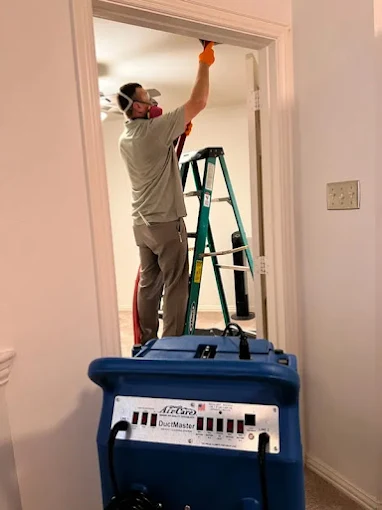
Safer Dryer Drying Sessions: Dryer Duct Cleaning Best Practices in Frisco, TX
Last week, we got a call from a Frisco homeowner who said their dryer “still heats fine,” but clothes were coming out warm and damp—especially towels. When we inspected the dryer exhaust route, the issue wasn’t the dryer itself. It was a long run with lint buildup and a section that had sagged just enough to create a slow, clogged airflow path. The dryer tried to push air through, but the vent system couldn’t move moisture and lint out reliably.
That’s why dryer duct cleaning matters for safety and performance. In Frisco and the surrounding Dallas-area communities, homeowners and property managers often run into the same pattern: the dryer works, but the duct and vent system is quietly degrading—until it shows up as longer drying times, musty laundry rooms, or a strong “hot” smell.
Below, I’ll walk you through what we see locally, what the best practices are for a safer and more effective dryer vent cleaning, and how to tell whether a service will actually solve the problem—not just vacuum out a little lint and leave.
Quick Answer
Professional dryer duct cleaning works best when the tech inspects airflow, checks the full exhaust path (not just the first few feet), removes built-up lint and blockages, and verifies that the system is operating correctly after the job. In practice, that means careful access to the duct run, attention to bends and transitions, and a final check for airflow and proper termination outside.
If your dryer takes longer than it used to, leaves clothes warm-but-damp, or you notice lint accumulation around the laundry area or exterior vent, it’s a strong sign you need dryer vent cleaning services (and not just quick surface cleaning).
Dryer Duct Cleaning Best Practices That Actually Reduce Risk
In our industry work, the biggest safety factor isn’t a “magic machine”—it’s airflow consistency. Lint is engineered to catch more lint. Moisture makes it tackier. Over time, the duct becomes a filter, not a conduit.
Here are the best practices we follow (and recommend) for dryer duct cleaning and dryer exhaust cleaning:
1) Start with an inspection, not a guess
Before pulling anything apart, we look for:
- Vent route length and complexity (extra turns, hidden runs, transitions)
- Duct material and condition (flex duct can collapse internally)
- Exterior termination condition (damaged hood, clogged screen, stuck dampers)
- Signs of past lint migration (lint “snow” around the dryer base, behind/under appliances, or at wall penetrations)
2) Clean the entire exhaust path—access matters
A common failure point is cleaning only the dryer side. Many homes have ducting that’s hard to see: behind cabinetry, through closets, or inside walls. The best results happen when the tech can reach the duct sections that actually hold lint.
That may include:
- Disconnecting the dryer and cleaning both connection points
- Addressing duct sections that have sagged, crushed, or partially detached
- Clearing bends where lint “banks” first
3) Treat transitions and bends like the real problem areas
Bends and transitions are where airflow slows down. That’s where lint accumulates fastest.
We focus on:
- 90-degree turns and tight offsets
- Improper connectors (loose clamps, mismatched diameters)
- Collapsed or kinked flexible duct sections
4) Use the right approach for duct type and installation quality
Not all dryer vent setups behave the same. For example:
- A straight metal run has fewer traps for lint, so cleaning is often simpler.
- A run with multiple bends and flex duct tends to collect lint more aggressively and may require more careful disassembly/access.
If the existing ductwork is damaged, cleaning alone may not fully restore safe airflow. In those cases, we’ll discuss practical options for fixing the route so the problem doesn’t return quickly.
5) Verify after cleaning—don’t skip the “did it work?” step
After cleaning, you should expect a real-world improvement:
- Shorter drying times
- Less heat buildup in the laundry area
- No persistent musty smell
- Better venting at the exterior termination
A reliable service will also consider whether the vent termination is functioning correctly (hood/damper operation, outside airflow path, and blockage risk).
What Most Customers Get Wrong About Dryer Vent Cleaning
After working with local customers around Frisco and nearby communities, we see a few recurring mistakes—some are DIY habits, others are “service shortcuts.”
Mistake #1: Thinking lint is only a dryer problem
Lint starts in the dryer drum, but it doesn’t stop there. It migrates into the vent system. If the duct and dryer vent cleaning isn’t thorough, the lint load just keeps rebuilding inside the exhaust path.
Mistake #2: Cleaning only the accessible part
A lot of “quick clean” services focus on the first section. That can reduce symptoms temporarily, but if the blockage is farther down the duct run, the dryer will keep struggling.
Mistake #3: Relying on flexible duct when it’s installed poorly
Flex duct can be fine when installed correctly, but many homes have flex duct that’s sagging or kinked. That creates turbulence and internal restriction—exactly the conditions that help lint accumulate.
Mistake #4: Ignoring exterior termination issues
Even a perfectly clean duct won’t perform well if the exterior hood is blocked, the damper doesn’t open, or the screen gets clogged.
Mistake #5: Delaying service until there’s a strong “burning” smell
Heat and lint buildup can escalate quickly. If you ever notice a persistent hot smell, frequent overheating, or signs of poor venting, it’s worth addressing immediately rather than waiting for “one more load.”
Local Reality in Frisco, TX: Why This Shows Up More Often Here
Frisco-area homes often have:
- Laundry setups with longer or more routed duct paths (especially in multi-room layouts)
- Renovations and remodels that change how the dryer is positioned without always updating the vent route
- Busy property management cycles in some neighborhoods and commercial spaces, where maintenance gets delayed
We also see a seasonal pattern. When outdoor conditions change and the vent’s airflow dynamics shift, clogged systems can become more obvious—drying time increases, humidity hangs around, and laundry rooms feel warmer than they should.
If you’re looking for air duct cleaning and dryer vent cleaning near me or you manage multiple units, it’s smart to treat vent maintenance as part of a broader indoor air quality plan. A clogged dryer exhaust system doesn’t just affect laundry—it can contribute to moisture problems and odors that linger in the home or building.
And if you’re in a multi-unit situation (apartment, condo, or shared laundry), we’ve found the best results come from consistent inspection and standardized maintenance intervals across units—not one-off cleanings.
A Practical Strategy: How to Choose Dryer Duct Cleaning Services
Here’s a framework we use with customers to separate dependable service from “surface-level” work.
Dryer Duct Cleaning Decision Checklist (Use This Before Booking)
Inspection & explanation
- Do they inspect the full path (or explain how they’ll access it)?
- Do they look at the exterior termination hood/damper condition?
Cleaning approach
- Will they disconnect and clean both the dryer connection and duct run?
- Do they address bends, transitions, and duct sections that trap lint?
Verification
- Do they check for airflow improvement after cleaning?
- Will they explain what changed (and where lint was found)?
Duct condition and recommendations
- If ductwork is damaged, will they discuss fixes rather than pretending cleaning solves everything?
- Do they offer dryer vent maintenance guidance so the issue doesn’t return fast?
Clarity and professionalism
- Are they upfront about what they can access without unnecessary “upsells”?
- Do they document what they found and what they recommend next?
If a provider can’t answer these clearly, you may want to keep looking—because dryer vent cleaning services should be more than a basic vacuum.
DIY vs Professional (Quick Comparison)
| Approach | What it usually gets right | What it often misses |
|---|---|---|
| DIY lint removal | Helps with surface lint and basic airflow | Doesn’t reach deeper lint accumulation or handle duct sag/bends well |
| Basic vacuum-only service | Removes some lint near the dryer | Leaves packed lint farther down the run |
| Professional dryer duct cleaning | Inspects route, clears full path, checks termination, verifies results | Requires access and may recommend duct corrections for long-term performance |
Where Air Duct Cleaning Fits (and Where It Doesn’t)
People sometimes assume that if they’re hiring air duct cleaning or HVAC duct cleaning services, it will solve dryer vent issues too. It usually doesn’t.
- Dryer vents and HVAC systems are separate exhaust/airflow systems.
- You may need both if you’re addressing overall indoor air quality, but duct and dryer vent cleaning are different jobs with different risks and tools.
That said, it can be smart to coordinate maintenance if your home or business is experiencing broader airflow or humidity problems. Lone Star Pro Flow LLC also supports HVAC-related services—so if you’re already doing an indoor airflow assessment, it can be efficient to align the plan.
You can explore our HVAC services here: HVAC duct cleaning.
And if you’re specifically focused on the dryer exhaust system, this is our dedicated page: dryer duct cleaning.
Common Scenarios We See in Real Homes and Businesses
Home scenario: “It heats up, but towels stay damp”
When customers tell us the dryer seems to run normally but drying times have increased, we often find:
- lint buildup beyond the first accessible section
- duct sag or partial restriction
- exterior vent hood issues that reduce exhaust flow
After a thorough clean, the improvement is usually noticeable within a few cycles.
Business scenario: Shared laundry rooms with recurring blockages
In commercial or multi-unit settings, the pattern is often:
- inconsistent lint control habits
- venting that’s older and less reliable
- maintenance schedules that don’t include inspection
That’s why commercial duct and dryer vent cleaning needs a repeatable process—especially in shared laundry vent cleaning environments.
Ready-to-Use “Safe Drying” Habits Between Cleanings
Cleaning is the fix when the system is already restricted, but good habits reduce how fast lint accumulates again.
Practical habits:
- Clean the lint screen every load (and check for residue on the screen)
- Keep the dryer area clear so airflow isn’t blocked at the appliance
- Avoid crush-kink setups (especially with flex duct)
- If drying times creep upward over weeks, don’t wait months—schedule inspection
FAQ: Dryer Vent Cleaning Questions We Hear Most in Frisco
How do I know if I need dryer duct cleaning instead of just lint removal?
If your dryer takes noticeably longer than it used to, clothes are warm but not fully dry, or you smell heat/mustiness in the laundry area, it’s usually more than normal lint screen buildup. Visible lint around the dryer base or at the exterior vent can also be a clue. A professional inspection helps confirm whether the blockage is in the duct run, the bends, or the exterior termination.
What should I check before hiring a local company?
Ask how they’ll inspect the full exhaust path, whether they’ll address bends and transitions, and how they verify airflow improvement after cleaning. Also confirm whether they evaluate the exterior vent hood/damper. Clear communication and a thorough process are the best indicators you’re getting real dryer vent cleaning services, not a quick vacuum pass.
Why does my problem keep coming back after cleaning?
Common reasons include lint buildup forming again in deeper sections that weren’t fully accessed, damaged or sagging ductwork restricting airflow, and exterior termination issues (blocked hood or damper not opening). If the vent route is compromised, cleaning alone can only provide short-term relief.
How long does dryer duct cleaning usually take?
The time varies based on duct length, number of bends, and access. Straight, metal runs are often faster. Multi-turn routes, flex duct issues, or situations requiring additional access typically take longer. A good technician should explain what they expect to find during inspection and give you a realistic time estimate.
Ready to Improve Dryer Safety and Drying Performance?
If you want safer, faster drying and fewer surprises from a clogged exhaust path, Lone Star Pro Flow LLC can inspect and clean your dryer duct system with an approach focused on airflow and thorough removal.
Take the next step with dryer duct cleaning help here: dryer vent cleaning.
About the Company
Lone Star Pro Flow LLC is a Frisco, TX-area team focused on practical indoor airflow solutions—especially where performance and safety depend on clean ductwork and properly functioning vents. We bring hands-on industry experience to each job, explain what we find in plain language, and recommend next steps that help customers avoid repeat problems. If you’re dealing with longer drying times, lint buildup, or a vent system that just doesn’t seem to “pull” like it should, we’re here to help.