
See Cleaner Laundry: Dryer Duct Cleaning Success Tips
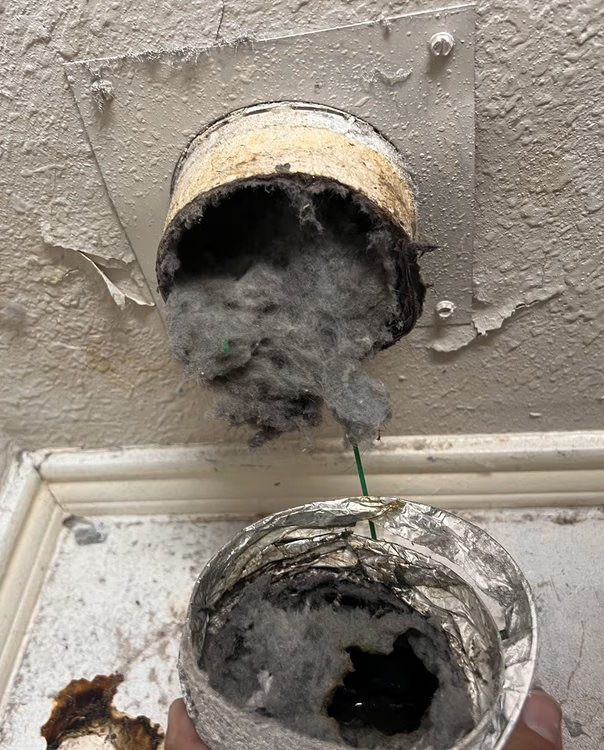
If your dryer takes longer than it used to—or your laundry room smells “hot” even when the cycle is finished—you’re not imagining things. In Frisco homes and nearby commercial spaces, we see the same pattern: a clogged or poorly routed exhaust path turns a simple dryer into a lint recycler. The result isn’t just slower drying. It’s extra moisture in the laundry area, higher energy use, and a real fire-risk when lint accumulates behind the dryer and through the duct run.
Below are practical, field-tested dryer duct cleaning success tips from our work at Lone Star Pro Flow LLC—what to check, what to ask for, and how to avoid the common mistakes that make cleaning fail.
Quick Answer
For reliable dryer duct cleaning, focus on the full exhaust path (from the dryer outlet to the exterior termination), not just what’s easy to reach. A successful service includes inspection, proper duct cleaning technique (with the right agitation and airflow), verification that airflow improves, and guidance on maintenance—like lint removal and duct checks before blockages build up. If you’re hiring, ask how they access long runs, how they handle vent termination, and whether they confirm airflow afterward.
What We’ve Learned From Real Dryer Exhaust Jobs (and Why It Matters in North Texas)
In the Dallas–Fort Worth area, laundry rooms are often tucked into garages, utility closets, or behind tight cabinetry. That layout is convenient—until the dryer vent becomes a long, lint-filled highway with bends, offsets, and sometimes older ducting that wasn’t installed with airflow in mind.
One firsthand observation we make often: the “problem” is usually not the dryer itself. It’s the exhaust path. A homeowner will tell us, “My clothes won’t dry,” but when we inspect the venting, we commonly find:
- Lint packed around the dryer outlet and in the first few feet of duct (easy to ignore, costly over time)
- Duct runs that are too long, too many elbows, or crushed in a tight space
- Exterior vents that flap weakly, get blocked by debris, or don’t open fully
- Aluminum foil-style ducting (flexible or “accordion” sections) that traps lint and collapses over time
Those conditions don’t just slow drying—they encourage recurring blockage. That’s why “cleaning” in the casual sense doesn’t always solve the underlying airflow problem.
What Most Customers Get Wrong About Dryer Duct Cleaning
We’ll say this plainly: most failures aren’t caused by bad intentions—they’re caused by incomplete cleaning and unclear expectations.
1) Cleaning only the visible lint
A lot of people can remove lint around the dryer trap and inside the lint screen area (good habit), but that doesn’t clear lint packed deeper in the duct. The most dangerous accumulation is often beyond the first accessible section.
2) Treating duct cleaning like a one-time event
Even with good lint practices, vents collect buildup over time. For residential and multi-family properties, we recommend building dryer vent cleaning into a maintenance routine—especially when tenants change, laundry frequency is high, or the duct route includes multiple turns.
3) Using the wrong approach that “stirs” lint instead of removing it
Some DIY methods may loosen lint without extracting it. If lint breaks free but doesn’t get pulled out through the full run, it can settle deeper and make future blockages faster.
4) Ignoring the exterior termination
A clean duct can still fail if the outside vent cover is blocked or the flap sticks. In Frisco-area weather, exterior openings can collect dust, small debris, and even nesting material. We check termination behavior because that’s where airflow can be won or lost.
How This Plays Out Locally in Frisco (and Around Nearby Communities)
Frisco is growing fast, and so are the number of rental units, townhomes, and mixed residential setups—each with its own venting realities. In newer builds, we sometimes see venting that was installed “good enough” for the first year, then gradually degrades because of how people use the space:
- Dryer placement changes during remodels or tenant turnovers
- Duct routes get modified to fit cabinets, storage, or shelving
- Flexible duct sections get stretched, kinked, or compressed when appliances are moved
In older homes near Frisco and neighboring areas, you’ll also see ducts that are undersized, poorly angled, or routed through spots that don’t get good airflow. That combination is why we emphasize full-path cleaning and why we look at duct condition during inspection—not just lint volume.
If you want broader context on how air systems affect comfort and health, you may find our HVAC resources helpful too:
HVAC services
A Practical Framework: How to Judge Whether Dryer Duct Cleaning Will Actually Work
Use this checklist as your “success test” before, during, and after the service. If a company can’t clearly address these points, it’s a red flag.
Step-by-step: Dryer duct cleaning success checklist
1. Inspection first
- Do they inspect the dryer exhaust connection and the duct route?
- Do they check the exterior vent termination?
2. Full-path cleaning approach
- Do they address the entire run to the outside, including bends and offsets?
- Will they access areas that aren’t visible from the laundry room?
3. Extraction, not just loosening
- Is there a process focused on pulling debris out through the duct?
- Do they use appropriate equipment for dryer exhaust cleaning (not generic vacuuming)?
4. Verification
- Do they explain what they removed and how it changes airflow?
- Do they recommend a maintenance plan based on your setup?
5. Documentation (especially for businesses and rentals)
- For commercial and multi-unit spaces, ask how they track cleanings and observations so maintenance doesn’t disappear between tenants or facility managers.
Quick comparison: what “good” looks like
| Scenario | DIY or partial service | Professional full-path service |
|---|---|---|
| Lint removal | Often limited to accessible areas | Targets the whole duct run to the exterior |
| Drying performance | May improve briefly, then returns | More consistent airflow improvement |
| Risk reduction | Reduced locally, still possible deeper buildup | Addresses where blockage actually forms |
| Exterior vent health | Usually ignored | Checked and recommended if restricted |
Expert Take After Working With Local Customers: What to Ask Before You Book
If you’re searching for “dryer vent cleaning services” or “professional dryer vent cleaning,” here are the questions that actually separate a quick fix from a lasting improvement:
- “Will you clean from the dryer outlet all the way to the exterior?”
If they won’t confirm full-path coverage, you may pay for partial results.
- “Do you inspect the duct condition and number of bends?”
A short cleaning can’t overcome a bad duct layout forever.
- “Do you check the exterior vent flap/termination?”
Blocked termination can make a clean duct behave like it’s dirty again.
- “How do you handle long runs or hard-to-access sections?”
A real plan matters when the duct runs through tight walls, behind shelving, or through utility closets.
- “What maintenance do you recommend to prevent recurring blockage?”
Success is maintenance plus the right cleaning.
For more detail on our Primary Service, you can review our dryer vent cleaning focus here:
dryer duct cleaning
Common Dryer Vent Maintenance Habits That Prevent Future Blockages
Cleaning helps—but maintenance keeps it from coming right back. In our experience, these habits make the biggest difference:
- Clean the lint screen every load (and remove all visible lint, not just what’s on top)
- Avoid overstuffing the dryer so airflow stays strong
- Check for restricted airflow symptoms:
- Clothes are consistently damp at the end of the cycle
- Dryer runs longer than usual
- Laundry area feels unusually warm or muggy
- Keep the duct route as straight as possible when moving the dryer
- Inspect the exterior vent occasionally to ensure the flap opens freely
Quick Answer: When Should You Schedule Dryer Duct Cleaning?
If you’re trying to decide whether it’s time, use this rule of thumb:
- Residential: schedule when drying performance declines, after repeated signs of restricted airflow, or as part of routine maintenance for your household’s usage level.
- Multi-family (apartments/condos): schedule more predictably, especially with tenant turnover and higher laundry volume.
- Commercial/large households: plan for regular inspections because higher usage accelerates lint buildup.
If you’re seeing any of the following, don’t wait:
- Dryer takes noticeably longer to dry clothes
- Dryer exhaust feels unusually weak
- Exterior vent doesn’t seem to exhaust strongly
- You smell hot, dusty air during operation
Ready to Improve Dryer Performance and Reduce Blockage Risk?
If your dryer is acting up in Frisco or nearby areas, Lone Star Pro Flow LLC can help you get the venting back to safe, efficient operation. The goal isn’t just to “remove lint”—it’s to restore airflow through the full exhaust path and give you maintenance guidance that fits your setup.
You can also explore related service areas to see how we approach air systems in general:
HVAC duct and dryer vent cleaning support
About the Company
Lone Star Pro Flow LLC is a Frisco, TX-area provider focused on duct and vent solutions with a practical, inspection-first mindset. We’ve worked with residential and commercial customers who are dealing with recurring dryer vent issues, airflow problems, and indoor comfort concerns. Our approach is grounded in what we consistently find during real on-site checks—because the best results come from cleaning the right path, confirming what changed, and helping you prevent the problem from returning.
For dryer exhaust cleaning and ongoing support, our team is ready to help.