
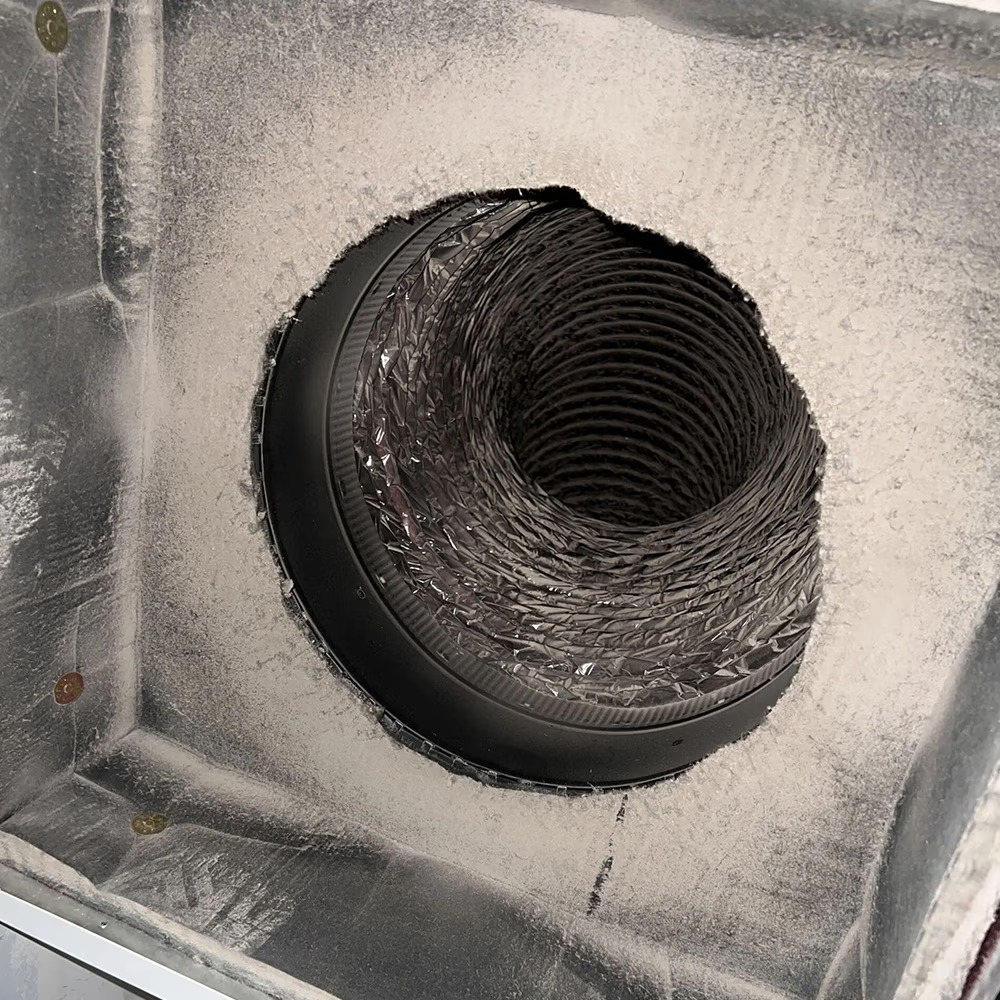
HVAC Duct Cleaning for Texas Homes: The Real Fix for Dusty Air and Dryer Vent Risk
A lot of Texas homeowners don’t realize they’ve got two separate problems living in the same system—until the symptoms show up. You’ll hear it in the house: dust settling faster than usual, rooms that feel stuffy even with the A/C running, and that “warm” laundry smell that never quite disappears.
Then you check the dryer and notice lint where it shouldn’t be, longer drying times, or a vent that feels a little too warm at the outside wall. In Frisco and across the surrounding North Texas communities, we see this pattern constantly because homes here tend to have a mix of older ductwork, changing seasons (and humidity swings), and laundry routines that push vent airflow to the limit.
Below, we’ll walk through what HVAC duct cleaning and air duct cleaning really can—and can’t—solve, why dryer duct cleaning often needs to be handled alongside it, and how to decide whether you need professional HVAC cleaning or dryer duct cleaning (or both).
Quick Answer
If your HVAC system is pushing dust, odors, or uneven airflow, professional HVAC duct cleaning can help remove built-up debris from duct interiors—especially when the ducts are the source of the problem.
If your dryer is taking longer to dry, leaving clothes damp, or creating lint buildup at the vent, dryer vent cleaning (including blockage removal and inspection) is the higher-priority safety step.
For most homes in Frisco and nearby areas, the best approach is coordinated duct and dryer vent cleaning so indoor air quality issues and dryer exhaust airflow issues don’t keep getting blamed on the wrong system.
What Most Customers Get Wrong About This
We’ve heard every version of it: “We just need the ducts cleaned,” or “The dryer vent is fine.” Most of the time, the misunderstanding isn’t the goal—it’s the diagnosis.
1) Expecting duct cleaning to fix every indoor air problem
Duct cleaning can reduce dust and debris inside the ductwork. But if the main issue is humidity control, filtration, duct leakage, airflow imbalance, or a dirty air filter routine, cleaning alone won’t solve it.
2) Using “vacuuming the vent” as a substitute for real dryer vent cleaning
A quick sweep can stir up lint inside the duct run without removing it fully. In Texas homes with longer vent paths, elbows, or flexible transition sections, the difference between “picked at” and “properly extracted” is huge.
3) Waiting until something gets worse
We often see homeowners schedule cleaning after:
- a noticeable smell returns every laundry cycle,
- the dryer starts running longer than normal,
- or dust visibly increases across multiple rooms.
That delay can matter because more lint buildup and more restricted airflow typically mean more heat and more strain on the dryer exhaust system.
Our Take After Working With Local Customers
Here’s what stands out from our work in the Industry—especially with Texas homes where A/C cycles and laundry routines create steady wear on indoor air systems:
What we usually find in HVAC duct systems
- Dust and light debris in supply/return runs that get redistributed every A/C cycle
- Spots where duct seams or transitions collect more grime
- The “invisible” buildup that shows up as faster dust accumulation on vents, shelves, and electronics
But we also see a key limitation: the duct interior isn’t the only source of indoor dust. Filters, return air paths, crawlspace/attic air leaks, and occupant activities all contribute. That’s why we focus on cleaning where it actually impacts airflow and debris distribution.
What we usually find in dryer exhaust systems
- Lint packed in sections with bends or rougher duct material
- Partial blockages that reduce airflow but don’t fully stop it (until they do)
- Accumulation that makes the outside exhaust area feel warm or overly active
One practical lesson: dryer lint removal isn’t just about cleanliness—it’s about airflow consistency. When airflow drops, drying time increases, and moisture lingers, which can create odor and additional dust movement in the home.
When It Makes Sense to Do HVAC Duct Cleaning and Dryer Vent Cleaning Together
In Texas homes, these two systems often get treated like separate worlds. But in real life, problems overlap.
A common scenario we see
A homeowner notices:
- dust on furniture within a few days of cleaning,
- the A/C doesn’t feel “as strong” in certain rooms,
- and the dryer takes longer than it used to.
When we inspect, the HVAC duct system may be redistributing fine debris, while the dryer vent cleaning issue is causing longer run times and more lint exposure. Addressing only one system can leave you frustrated—because the symptom you care about (cleaner air and better drying performance) won’t fully improve.
Practical example
In a recent anonymized case in the Frisco area, the dryer was running noticeably longer. The vent inspection showed lint buildup along the run with restrictions at bends. After proper dryer vent cleaning services and exhaust cleaning, drying times improved. At the same time, the homeowner still saw dust accumulation. That’s where professional HVAC cleaning helped reduce interior debris that was being pulled through the return and distributed again during A/C cycles.
What This Means for Local Customers (Frisco + Nearby Areas)
North Texas homes—especially those with established landscaping, seasonal humidity changes, and older ductwork—often experience:
- more frequent A/C cycling during warm months,
- dust intrusion from attics and crawlspaces when building envelopes shift over time,
- and high laundry demand that stresses dryer ventilation.
If you’re searching for air duct cleaning and dryer vent cleaning near me, it usually means you want a local team that understands how these systems behave in real living conditions—not just in a lab.
We also see local decision patterns:
- Some homeowners schedule HVAC cleaning but ignore dryer vent maintenance until a “hard symptom” appears (like the dryer stopping mid-cycle).
- Others focus only on the dryer vent and miss the HVAC contribution to indoor dust distribution.
A coordinated plan is typically the more efficient path.
Step-by-Step Checklist: How to Choose Professional Duct and Dryer Vent Cleaning
Use this framework before service day—so you know what “good” looks like.
Step 1: Identify the primary symptom
Ask yourself:
- Is the bigger issue dust/odors/uneven airflow? (HVAC ducts may be involved.)
- Is the bigger issue drying time, heat at the vent, lint buildup, or blockages? (Dryer exhaust needs attention.)
- Is it both? (Consider HVAC duct and dryer vent cleaning as a package.)
Step 2: Ask for an inspection—not just a quote
For dryer systems, you’ll want a dryer vent inspection that checks the path and identifies restrictions or blockage areas.
For HVAC, a good approach includes evaluating where debris is accumulating and how your system cycles.
Step 3: Confirm the scope matches the problem
You may hear terms like:
- dryer duct cleaning and dryer exhaust cleaning
- air duct cleaning and ductwork cleaning
- HVAC vent cleaning and furnace duct cleaning
Scope should match what’s actually affecting your home—especially for homes with long duct runs, multiple elbows, or mixed duct materials.
Step 4: Choose extraction-based cleaning over “quick brushing”
For dryer ducts and vents, removal matters. For HVAC ducts, debris capture and thorough cleaning are key to reducing resettling.
Step 5: Plan for airflow support afterward
Cleaning helps, but performance depends on fundamentals:
- proper filter changes,
- ensuring returns aren’t obstructed,
- and keeping dryer vent maintenance on schedule.
DIY vs Professional Support (Quick Comparison)
| Task | DIY Approach | Professional Service |
|---|---|---|
| Dryer vent lint removal | Often incomplete; can stir lint deeper | Designed to extract debris and address restrictions |
| Dryer vent blockage removal | Hard to confirm the blockage level | Inspection-focused; targets the actual restriction points |
| HVAC duct cleaning | Limited access and inconsistent capture | Systematic cleaning with attention to where debris accumulates |
| Indoor air quality and dryer vent cleaning | You may reduce one symptom but miss the source | Coordinated plan for both systems when needed |
Ready to Solve the Dust + Drying Time Problem?
If you’re dealing with recurring dust, musty laundry odors, longer dryer cycles, or a vent area that feels unusually warm, Lone Star Pro Flow LLC can help you sort out what’s actually going on—then clean the right parts with a focus on airflow and debris removal.
Start with the right service for your situation:
- Need HVAC duct cleaning support?
- Or is the priority dryer performance and dryer duct cleaning?
FAQ
How do I know if I need HVAC duct cleaning?
If you’re seeing dust accumulate quickly after cleaning, noticing musty odors that seem to track with A/C cycles, or experiencing uneven airflow across rooms, ductwork may be contributing. That said, duct cleaning isn’t a cure-all—filter issues, leaks, and ventilation problems can mimic duct-related symptoms. A professional inspection helps confirm whether the duct interior is actually the source.
What should I check before hiring professional dryer vent cleaning services?
Look for a company that performs a dryer vent inspection, can explain where restrictions typically occur in your vent path (bends, transitions, length), and focuses on removal—not just agitation. Ask how they handle extraction and whether they’ll discuss follow-up steps like maintaining dryer vent maintenance to prevent recurrence.
Why does the problem keep coming back after cleaning?
The most common reasons are incomplete removal, vent path issues (long runs, too many elbows, crushed or poorly routed duct), or inconsistent dryer vent lint removal habits. Also, some homes have air pressure differences that can pull fine debris around the return/duct system. Ongoing maintenance matters after the initial cleaning.
About the Company
Lone Star Pro Flow LLC is a Frisco, TX-based HVAC and duct-related service team built around practical, inspection-first work. We help homeowners and businesses reduce the buildup that affects airflow—whether that’s through HVAC duct cleaning or dryer duct cleaning. Our goal is simple: identify the real cause, clean what’s responsible, and give you a clear plan for keeping it from coming back.
References (for further reading):
- U.S. Fire Administration (dryer fires and ventilation risks): https://www.usfa.fema.gov/
- ENERGY STAR (dryer safety and venting guidance): https://www.energystar.gov/
- EPA (indoor air quality basics and sources of indoor pollutants): https://www.epa.gov/indoor-air-quality-iaq/introduction-indoor-air-quality