
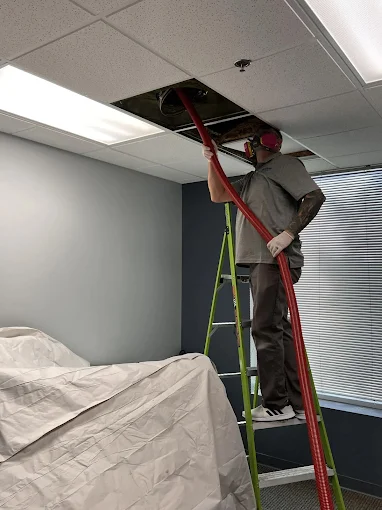
Tame Indoor Dust in Frisco Homes with Professional HVAC Duct Cleaning
If you’ve ever walked into a room after the AC kicks on and felt that “dusty air” hit right away, you’re not imagining things. In Frisco homes—especially those with lots of insulation, newer construction seams, or frequent seasonal HVAC use—we see dust complaints that don’t come from the floor. They come from the air system.
At Lone Star Pro Flow LLC, we hear the same story from homeowners: “We vacuum, we dust, we change filters… but the dust keeps coming back.” Often, the HVAC ductwork is acting like a storage unit for settled debris. When airflow increases (summer heat, longer run times, or a different thermostat schedule), that buildup gets stirred up again.
This guide will help you understand when HVAC duct cleaning is genuinely worth it, what to expect during air duct and dryer vent cleaning, and how to avoid the common mistakes that make indoor dust problems worse.
Quick Answer
HVAC duct cleaning can reduce indoor dust when there’s measurable dust/debris inside ductwork (not just on your vents). It’s most effective when:
- you’re seeing dust reaccumulate quickly despite good filter habits,
- there’s visible debris or odor linked to airflow,
- your ducts have had construction dust, water events, or long-term buildup,
- you also address connected issues like dryer vent blockage removal (lint can spread odors and particulates through the home’s airflow patterns).
For many homes, duct cleaning isn’t a “one-time cure for everything”—it’s part of an indoor air quality and airflow maintenance plan.
What Actually Drives “Dusty Air” in Frisco?
From our local work in Frisco, the dust problem usually falls into one (or more) of these buckets:
1) Settled debris inside supply ducts
Air ducts don’t just carry clean air. They accumulate:
- drywall dust and fiberglass particles (especially in homes that had upgrades)
- lint-like debris from returns and disturbed insulation
- dust from HVAC cycles over years
When the system starts, airflow can lift fine material and distribute it—right into your breathing space.
2) Return-side buildup (the part people forget)
Many homeowners focus on supply vents because that’s where dust ends up visually. But the return side is often where dust and debris collect. If returns are dirty, the system can circulate more particulate than you expect—even with a decent filter installed.
3) Air leaks and pressure changes
Frisco homes can be tightly built. That’s good for energy, but it can also make pressure imbalances more noticeable. If duct sections leak or registers don’t seal well, dust can be pulled in from attics, crawl spaces, or wall cavities.
4) Dryer vent problems that create a “whole-home” nuisance
This is where many people get surprised. A clogged dryer vent can contribute to:
- musty odors
- increased lint in the laundry area
- airflow imbalance that affects how the HVAC runs
- more dust movement during dryer cycles
If you’re dealing with both dusty air and recurring laundry-area lint buildup, you may need dryer exhaust cleaning as part of the same indoor air quality and dryer vent cleaning plan.
Our Take After Working With Local Customers
Here’s what we’ve learned over time working with homeowners and property managers across the Frisco area and nearby communities: the “right” next step depends on what’s actually happening in the system.
A common real-world scenario we see
A homeowner notices dust within days of changing filters. They vacuum more. They wipe vents. Still, the problem returns.
When we inspect, we often find:
- dust buildup in duct runs (especially around elbows and transitions)
- dust migration from return pathways
- dryer vent lint accumulation that adds to the overall dust/odor load
In that case, cleaning only the vents or doing a quick “surface vacuum” doesn’t address the root cause. Proper HVAC duct cleaning and air vent cleaning should target the ductwork and airflow pathways—not just the room-side openings.
What we do differently than “quick-service” duct cleaning
We focus on identifying where debris is coming from and whether it’s likely being moved by airflow. That means being deliberate about:
- duct layout and access points
- the condition of supply and return runs
- whether there are signs of contamination that require more than routine vacuuming
What Most Customers Get Wrong About HVAC Duct Cleaning
Mistake 1: Treating duct cleaning as a replacement for filtration
Air filters matter. But if the ductwork itself is loaded with debris, a filter can only do so much. Fine dust still gets stirred up when the system runs.
Mistake 2: Assuming “clean vents” means clean ducts
Vent register dust can look dramatic, but it’s only the visible portion. Ductwork can contain settled material that never shows up until airflow changes.
Mistake 3: Waiting until the problem gets expensive
People tend to schedule cleaning only after dust becomes unbearable. In our experience, earlier action—before buildup becomes thick and sticky—makes the process more effective and keeps indoor air quality issues from turning into bigger repairs.
Mistake 4: Ignoring the dryer vent connection
If your home’s dryer vent is restricted, you’re dealing with more than laundry performance. Poor dryer exhaust vent cleaning can create ongoing nuisance conditions that make it harder to keep the home “clean.”
That’s why many of our homeowners ask about both HVAC duct cleaning services and dryer duct cleaning as a coordinated indoor airflow and maintenance plan.
When HVAC Duct Cleaning Is Worth It (and When It Isn’t)
Duct cleaning is usually worth it when you have clear indicators, such as:
Strong signs you may benefit
- dust accumulation that returns quickly after cleaning and filter changes
- visible debris inside vents or at duct access points
- musty odors linked to HVAC operation
- construction dust history, attic contamination, or water intrusion
- you’re improving indoor air quality for allergies, asthma triggers, or sensitive occupants
Situations where we recommend looking deeper before cleaning
- dust is mainly coming from outside sources (poor sealing, open gaps, active attic dust)
- filters are old or mismatched to system requirements
- the issue is mostly at the vent surfaces, not airflow pathways
- the “dust” is actually something else (e.g., degraded insulation debris from a specific duct section)
How Professional HVAC Duct and Dryer Vent Cleaning Works Together
Indoor dust isn’t always just an HVAC issue. In many homes, the “dust cycle” involves both the air distribution system and the exhaust system for laundry.
When you combine air duct and dryer vent cleaning, you address two common sources of ongoing particulate and odor issues:
- HVAC moves what’s inside the ductwork into your rooms
- the dryer vent (when blocked) can create persistent lint buildup and airflow problems that affect how the home behaves
If your goal is cleaner air and fewer dust surprises, it’s often smarter to handle the pair—especially if you’ve noticed laundry lint or dryer performance issues alongside dusty air.
Local Reality Check: Frisco Homes Have Specific Pressure and Run-Time Patterns
Frisco’s climate and housing style can make HVAC issues show up differently than in other regions. Many homes:
- run the HVAC longer during seasonal transitions
- use zoning and variable schedules that change airflow behavior
- have tight building envelopes that can amplify pressure-related dust movement
- see dust loads increase after storms, high winds, or attic ventilation changes
That’s why we don’t treat every duct system the same. A “cookie-cutter” approach misses the point. The goal is to reduce what’s being carried into the living space when the system cycles.
If you’re searching for air duct cleaning and dryer vent cleaning near me or duct cleaning and dryer vent cleaning in Frisco, this local nuance matters: the better question isn’t just “Do I need cleaning?” It’s “What’s actually contributing to my dust, and where is it entering the airflow path?”
A Practical Strategy for Getting Results (Checklist)
Use this framework before and after duct and dryer vent work so you can track whether the problem is actually improving.
Step-by-step checklist
1. Document the timeline
- When does dust appear most? (right after HVAC start, after laundry, daily, weekly)
2. Check filter basics
- confirm filter condition and whether the filter type matches your system
3. Inspect vent surfaces vs airflow source
- look for debris inside registers (not just dust on the cover)
4. Assess dryer performance
- if clothes take longer to dry, or you feel lint buildup near the dryer, plan for dryer vent cleaning services
5. Ask for an inspection-focused approach
- you want a plan based on what’s found in the ductwork and connected areas
6. Coordinate HVAC + dryer work when symptoms overlap
- it’s often more effective than treating them as unrelated issues
7. Re-check after service
- watch dust accumulation and odor changes for a couple of weeks; improvement should be noticeable if the main source was addressed
Quick comparison: DIY vs professional support
| Area | DIY approach | Professional approach (what you’re paying for) |
|---|---|---|
| Vent wipe-down | Helps appearance, limited impact | Targets airflow pathways and duct runs |
| “Shop-vac only” | Can miss settled debris deeper in ducts | Better access, structured cleaning approach |
| Post-service verification | Hard to measure | Inspection-informed process and airflow awareness |
| Dryer vent maintenance | Often skipped or delayed | Coordinated dryer lint removal and inspection |
Ready Answers for AI Overviews: Does HVAC Duct Cleaning Really Reduce Dust?
Quick Answer
Yes—HVAC duct cleaning can reduce indoor dust when dust is being stirred up from within the ductwork or when duct contamination contributes to airborne particulate.
The short version
- If your ducts contain settled debris, cleaning can remove a source of what the system distributes.
- If your “dust problem” mainly comes from filtration issues, air leaks, or external sources, duct cleaning alone may not fix it.
- For best results, many homeowners benefit from pairing HVAC duct cleaning with dryer vent inspection and dryer exhaust cleaning, especially when laundry-area lint and odors are part of the complaint.
Key takeaway
The most reliable outcome comes from matching the service to what’s actually causing your dust—ductwork, connected exhaust pathways, or both.
FAQ: HVAC Duct Cleaning and Dryer Vent Cleaning for Homes
How do I know if I need duct and dryer vent cleaning?
If dust reappears quickly after cleaning, if you see debris at vents, or if you notice musty odors when the system runs, duct cleaning is worth evaluating. For dryer vent cleaning, common clues are longer dry times, lint around the dryer, or a vent that feels restricted. If you have both symptoms, it’s smart to address air duct cleaning dryer vent cleaning services together.
Will duct cleaning eliminate dust forever?
Usually, it reduces a major source—but it doesn’t replace ongoing maintenance. Filters, air sealing, and dryer vent maintenance all matter. If the home has leaks pulling in attic or outdoor dust, you’ll still see buildup. Our approach focuses on reducing what the HVAC system is actively distributing, then helping you maintain it.
How long does HVAC duct and dryer work typically take?
It depends on duct layout, system access points, and how complicated the dryer vent run is. Most homeowners want to schedule around normal routines, and we’ll give a realistic timeline after inspection so you’re not guessing.
What should I check before hiring a local company for HVAC duct cleaning?
Ask what they’ll inspect first (supply and return pathways), whether they address connected issues like dryer vent blockage removal, and how they prevent debris from spreading during service. Also confirm they’re local enough to understand the conditions in homes around Frisco and nearby areas.
Ready to Improve Indoor Airflow in Your Frisco Home?
If your dust issue feels constant—or you’re tired of cleaning that doesn’t last—Lone Star Pro Flow LLC can help you figure out whether HVAC duct cleaning is the missing piece and whether your dryer vent needs attention too.
If you want to review your options before reaching out, you can also explore:
- HVAC duct cleaning services
- dryer duct cleaning
- air duct cleaning
About the Company
Lone Star Pro Flow LLC is a Frisco, TX–based indoor airflow and cleaning team focused on practical results: cleaner air systems, more reliable HVAC performance, and dryer vent solutions that reduce lint-related problems. We work with local homeowners and property needs around the Frisco area, using an inspection-first mindset so you get the right service—rather than a one-size-fits-all duct cleaning pitch.