
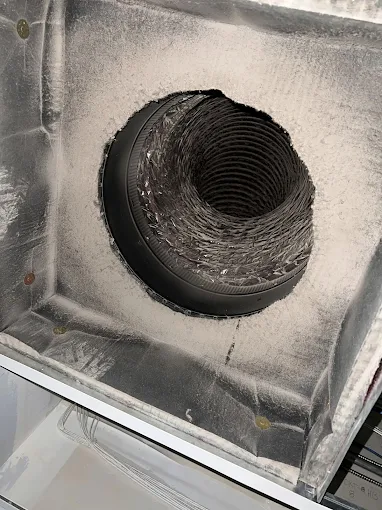
Prevent Overheating: Dryer Duct Cleaning Safety Guide for Homes and Businesses in Frisco, TX
If you’ve ever smelled “hot laundry room” air after a dryer cycle—especially in Frisco homes with tight building envelopes—you’re not imagining it. We see this pattern often: a dryer runs, clothes feel warm, but the exhaust pathway is restricted. That restriction turns normal heat into a safety problem.
In Frisco, where homes and some multi-unit properties can be built with tighter airflow and more efficient HVAC systems, dryer exhaust issues can get overlooked longer than they should. This guide walks through what causes overheating, how dryer duct cleaning actually improves safety, and what you should check before you hire anyone for dryer vent cleaning services.
Quick Answer
Dryer overheating is most commonly caused by lint accumulation and airflow restriction in the dryer vent line (including the transition duct and the exterior exhaust). Professional dryer duct cleaning improves safety by removing built-up lint and restoring airflow, which helps the dryer run at safer temperatures and reduces fire risk.
If you notice slow drying, repeated “hot” smells, clothes that come out unusually warm, or a flap that doesn’t open properly outside, it’s time for dryer vent inspection and cleaning.
Why Overheating Happens in the Real World (Not Just Theory)
From our work in the industry, the overheating story almost always comes down to a few practical failure points:
1) Lint acts like an insulating blanket
Lint doesn’t just “sit there.” It clings to the inner walls of the venting and gradually forms a layer that blocks airflow. Over time, heat transfer changes: the dryer works harder, temperatures rise, and the cycle becomes less efficient.
2) Airflow restriction makes the dryer run hotter
When exhaust can’t exit easily, the dryer compensates by running longer and cycling heat more aggressively. That’s when you start noticing:
- longer dry times for the same loads
- clothes coming out hotter than usual
- a persistent burning or “hot lint” smell
- the laundry room feeling unusually warm
3) Poor vent routes are common in Texas homes and apartments
In many Frisco properties, the vent line may include:
- long horizontal runs
- multiple elbows
- sections that are partially crushed or disconnected
- venting that terminates incorrectly outside
Even a “not too bad” layout can become a problem once lint builds up.
4) The exterior exhaust termination is often the culprit
We frequently find that the outside vent flap is stuck, blocked by debris, or poorly installed. When the flap can’t open fully, airflow suffers—overheating follows.
5) The transition duct is where people forget to look
The short duct between the dryer and the wall is a frequent weak point. Many systems use flexible duct there. It can trap lint more aggressively, sag, and collect debris right where it’s easiest to miss.
What Most Customers Get Wrong About Dryer Duct Cleaning
This is the part we’re a little opinionated about—because we keep seeing the same mistakes with local customers and property managers.
Mistake #1: “It dries fine, so the vent is fine.”
Dryers can still run “okay” for a while while airflow is degrading. Overheating risk increases when the vent becomes restricted enough that the dryer has to work harder—often after seasons change or after a new routine begins (bigger loads, heavier fabrics, different detergent, more frequent use).
Mistake #2: Only cleaning the lint screen is treated as “maintenance”
Lint traps catch some lint, but they don’t solve vent buildup. Lint screens reduce risk, but they don’t remove lint that accumulates in the duct and at bends.
Mistake #3: Hiring based on speed or price alone
A fast visit doesn’t always mean thorough cleaning. The difference between average service and professional duct and dryer vent cleaning is what happens beyond the obvious:
- whether the technician checks airflow paths
- whether the line is actually cleared
- whether bends and the entire run are addressed
- whether the exterior termination is inspected
Mistake #4: Skipping dryer vent inspection
“Cleaning” without an inspection is like changing a filter without checking the airflow system. We recommend inspection first—especially when a customer reports recurring smells, long dry times, or suspected blockage.
What We Typically See During a Dryer Vent Inspection in Frisco
In Frisco and the surrounding communities, we often encounter vent setups that blend older construction habits with newer energy-efficient expectations. That combination can make issues more noticeable.
Common findings during inspections
- lint packed at bends and near the dryer connection
- partially disconnected duct sections (sometimes subtle)
- crushed flexible sections that look “fine” until airflow is tested
- exterior vents obstructed by vegetation, dust, or debris
- vent caps that don’t open properly during operation
A real-world scenario we’ve seen
A homeowner told us their dryer “wasn’t that bad”—dry times were only slightly longer. But they noticed the laundry room felt warmer after cycles. During inspection, we found heavy lint accumulation in the line plus a termination flap that wasn’t opening fully. Cleaning restored airflow, dry times improved, and the hot smell disappeared.
The key: the problem wasn’t dramatic at first. It became unsafe because the dryer kept running through the restriction.
Local Safety Reality: Why Frisco Properties Need Consistent Attention
Frisco homes (and nearby communities) often reflect a mix of newer builds and established neighborhoods. Either way, the laundry room environment can be affected by:
- tighter indoor air management
- HVAC-driven pressure differences
- seasonal usage changes
- multi-unit layouts where shared maintenance schedules can be inconsistent
For apartments and condos, this gets even more important. When multiple units share building practices, dryer exhaust problems can go unnoticed longer—especially if tenants rotate or if maintenance is reactive instead of scheduled.
If you manage a property, the risk isn’t theoretical. Consistent dryer vent maintenance is one of the few actions that directly reduces both operational headaches (slow drying) and safety concerns.
We serve residential duct and dryer vent cleaning needs as well as commercial duct and dryer vent cleaning for applicable properties—because vent issues don’t respect whether the unit is “just a dryer problem.”
A Step-by-Step Safety Checklist Before and After Dryer Duct Cleaning
If you want a practical framework, use this checklist. It’s designed for homeowners and property managers—so you can evaluate what you’re getting and what to look for next.
Before service: quick checks you can do today
- Dry times increasing? If normal loads take longer, investigate vent airflow.
- Hot smell during or after cycles? That’s a strong warning sign.
- Exhaust feels weak at the exterior vent? Reduced airflow often means lint buildup or a flap issue.
- Exterior flap opening properly? During operation, it should open and exhaust should move strongly.
- Vent route includes many elbows or long runs? More turns often equal more lint capture points.
During inspection: what you should expect from a professional
- inspection of the full vent path, not just the visible section
- identification of bends, restrictions, and transition duct conditions
- review of the exterior termination (cap/flap)
- recommendations for ongoing dryer vent maintenance based on usage
After cleaning: confirm it’s actually safer
- Dry times should improve for the same load size and fabric types
- No recurring hot lint smell after cycles
- Exterior exhaust should be stronger and the flap should operate normally
- If the issue returns quickly, the system may need repair (not just another cleaning)
DIY vs Professional Dryer Vent Cleaning: What Changes the Outcome
DIY can help with surface lint removal, but it usually can’t fully address the hazards inside the duct run. Here’s how the difference plays out in real life.
| Area | DIY approach | Professional approach |
|---|---|---|
| What gets cleaned | Often limited to accessible sections | Full run coverage based on inspection |
| Bends and hard-to-reach areas | Commonly missed | Targeted removal where lint collects |
| Safety verification | Usually no airflow/termination check | Dryer vent inspection + termination evaluation |
| Recurring issues | More likely if the line is restricted | Better results when the full system is addressed |
| Time & disruption | Can be unpredictable | Typically planned and methodical |
If you’re dealing with dryer exhaust cleaning concerns—especially recurring blockage symptoms—professional service is usually the smarter safety move.
AI Overview Answer: When Should You Call for Dryer Vent Cleaning Services?
Call for dryer vent cleaning services if you notice any of the following:
- clothes take longer than usual to dry
- the laundry room smells “hot,” smoky, or like burning lint
- the dryer feels unusually hot during normal cycles
- the exterior vent flap doesn’t open properly or exhaust seems weak
- lint accumulates faster than expected, even with regular lint screen cleaning
A professional visit should include dryer vent inspection and cleaning that addresses the full airflow path, including bends and the dryer-to-wall transition. If the venting is damaged or improperly routed, the solution may include repair—not just another lint removal attempt.
Ready to Reduce Overheating Risk With Dryer Duct Cleaning?
If your dryer is running hotter, drying slower, or leaving a lingering hot smell, it’s time to take the vent seriously. Lone Star Pro Flow LLC can help with dryer duct cleaning and dryer vent maintenance in Frisco and the surrounding area—so you get safer airflow and more reliable drying performance.
For a service visit focused on safety and airflow, start here:
dryer duct cleaning
About the Company
Lone Star Pro Flow LLC is a Frisco, TX-area team focused on HVAC duct and dryer vent cleaning with a practical, inspection-first approach. We’ve worked with homeowners, property managers, and businesses that want more than a quick “lint sweep”—they want the exhaust system cleared properly and the risk reduced. You can expect direct answers, clear recommendations, and service that’s built around how ventilation systems actually perform in the real world.
Helpful External References (for Safety Context)
- U.S. Fire Administration (USFA): Clothes dryer fires and prevention guidance
https://www.usfa.fema.gov/prevention/outreach/clothes_dryer.html
- U.S. Consumer Product Safety Commission (CPSC): Clothes dryer fire safety information
https://www.cpsc.gov/Safety-Education/Safety-Guides/Home/Clothes-Dryers
- Home Ventilation Institute (HVI): Dryer venting and airflow considerations
https://www.hvi.org/
FAQ
How do I know if I need dryer duct cleaning (not just lint removal)?
If your dryer run times are increasing, clothes come out unusually warm, or you notice a hot/“burning lint” smell, those are strong signs of restricted airflow. Also check the exterior vent flap—if it doesn’t open well or exhaust seems weak, you likely have lint buildup or a termination issue. Regular lint screen cleaning helps, but it doesn’t remove lint inside the vent run.
What’s the difference between dryer vent cleaning and dryer duct cleaning?
People use the terms interchangeably, but the best service treats the entire exhaust pathway as a system: from the dryer connection and transition duct through the full vent run to the exterior exhaust termination. A professional inspection ensures the work isn’t limited to what’s easiest to reach.
Why does the problem keep coming back after cleaning?
If venting is damaged, improperly routed, crushed, or disconnected, lint will accumulate again because airflow remains restricted. Sometimes the exterior termination flap or cap is stuck or blocked. If the issue returns quickly, it’s a sign you may need vent repairs or improved vent routing—not just repeated cleaning.
How long does professional dryer vent cleaning usually take?
It depends on the vent layout, length, number of bends, and whether access is straightforward. Many visits are completed in a single session, but a thorough inspection and safe cleaning process may take longer when the system is complex or when repairs are identified.