
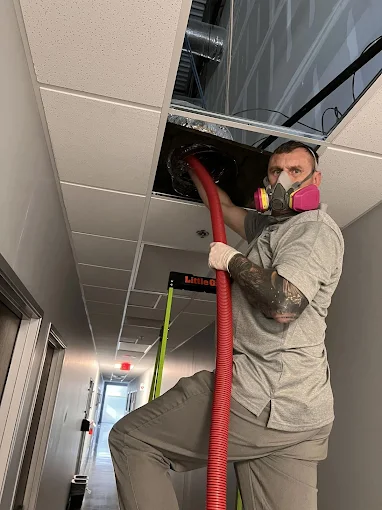
Air Duct Cleaning Deep Clean in Frisco, TX: What a Real HVAC Duct Refresh Should Actually Do
Last month, we inspected an HVAC system in a Frisco home where the air “felt fine” until the AC ran hard on hot afternoons. Then the supply vents started to smell faintly—more dusty than musty, but noticeable. The homeowner had changed their filters regularly and still felt like something was off.
That’s a familiar story for us at Lone Star Pro Flow LLC. When filters are new but the system still seems to push stale air, the issue is often inside the ductwork and at the air-handler connections—where debris, moisture residue, and construction/accumulation dust can build up over time.
In this guide, we’ll break down what an HVAC duct cleaning deep clean should cover, how we approach air duct and dryer vent cleaning together (because they’re connected in real homes), and how to spot the difference between a quick “vacuum and done” service and a professional ductwork cleaning process that actually improves indoor comfort.
Quick Answer
A professional HVAC duct cleaning deep clean targets more than surface dust. It addresses debris inside supply/return ductwork, cleans accessible components around the air handler, and helps reduce the conditions that keep dust and odors circulating. In many homes, pairing HVAC duct cleaning with dryer vent cleaning also makes sense because both systems share the same underlying problem: buildup in airflow paths.
If you’re seeing persistent dust, musty smells after cooling, allergy flare-ups that don’t match filter changes, or long drying times, it’s a good sign to schedule HVAC duct cleaning services—and, if you have clothes dryer issues, include dryer duct cleaning and dryer vent maintenance in the same plan.
What a Deep Clean Should Include (Not Just a “Vacuum”)
Most customers think duct cleaning means someone shows up with a truck-mounted vacuum, runs hoses through vents, and leaves. Sometimes that happens. But a true HVAC duct cleaning deep clean is a process—one that starts before any equipment comes out.
Here’s what we look for in the field:
1) Source of the problem: dust, odor, or airflow restriction
- Dust near registers: often tied to duct contamination, poor sealing at joints, or dust already living in the duct interior.
- Odor after AC cycles: can point to residue in ductwork, moisture history, or debris at the air handler that gets agitated when the system runs.
- Weak airflow: sometimes goes beyond duct buildup and involves duct size, dampers, or return-path restrictions. Cleaning helps when debris is the limiting factor, but it isn’t a substitute for diagnosing airflow balance.
2) Inspection first, then cleaning
Before we start cleaning, we evaluate access points and airflow paths. In practical terms, that means checking:
- accessible supply/return runs (and whether they’re reachable for effective agitation)
- the condition around the air handler (where dust can accumulate and get redistributed)
- whether there are obvious signs of buildup at transitions, elbows, or joints
3) Agitation and removal, not just suction
Duct contamination isn’t always loose. In many systems, dust becomes layered—especially where air slows down or where duct interiors have rough spots. A quality approach uses agitation methods appropriate to the duct material and layout so debris breaks loose and then gets removed by controlled airflow.
4) Cleaning the parts that actually connect to your indoor air
A deep clean isn’t limited to what’s visible through vents. The “interface zones” matter:
- duct-to-air-handler connections
- accessible components around the air handler
- return pathways where dust can collect
We also pay attention to how debris is managed during the work—because the goal is removal, not redeposition.
5) Sealing and best-practice prevention (when needed)
Cleaning helps, but if the duct system has leaks or gaps, you can reintroduce dust from attics, crawlspaces, or wall cavities. We don’t oversell sealing as a universal fix—but we do recommend next steps when we see conditions that would undermine the results.
What Most Customers Get Wrong About HVAC Duct Cleaning
We’ve seen the same patterns across residential duct cleaning and commercial duct cleaning jobs, and a few misunderstandings keep showing up:
Mistake #1: Thinking a new filter solves duct contamination
Filters catch what comes through the airstream, but they don’t remove what’s already inside the ductwork. If dust and residue have been accumulating for years, swapping filters can reduce future buildup while leaving the older contamination to keep circulating.
Mistake #2: Choosing “cheap and quick” without checking the process
A short visit can still be legitimate—but if there’s no inspection, no talk about verification, and no explanation of how debris will be loosened and removed, you may be paying for partial results.
Mistake #3: Ignoring connected airflow systems (especially dryers)
People often treat HVAC duct cleaning and dryer vent cleaning as separate topics. In reality, they’re both airflow systems—and both can be sources of indoor dust and odor problems. If you’re already noticing dryer lint issues, longer drying cycles, or dusty laundry rooms, it’s smart to address dryer exhaust cleaning and duct cleaning together.
Mistake #4: Assuming odors always mean “mold”
Odors can come from residue, dust layering, or debris that gets kicked up when the system runs. We recommend identifying the likely cause rather than treating every smell as mold—because the cleaning approach depends on what’s actually present.
Our Take After Working With Local Frisco Homes
Frisco homes often have specific realities that affect duct cleaning results:
- Seasonal demand swings: long cooling stretches can stir up residue that wasn’t noticeable during milder months.
- Attic and enclosure conditions: temperature swings and airflow leaks can contribute to dust migration into duct systems.
- Construction-era differences: duct materials and installation quality vary across neighborhoods, and those differences show up during inspection.
One scenario we see often: homeowners keep the HVAC schedule consistent and still notice dust patterns—especially on furniture near supply registers or along returns. When we inspect, we frequently find that the duct interiors hold onto fine particulate that’s difficult to “filter out” after the fact.
Another scenario: the system runs fine until a certain weather shift—then smells or dust seem to appear “suddenly.” That usually points to residue being disturbed under heavier airflow, not a brand-new problem overnight.
Why Pair HVAC Duct Cleaning With Dryer Vent Cleaning?
It’s not just convenience. It’s practicality.
When you’re dealing with dryer duct cleaning needs—like dryer vent blockage removal, dryer lint removal, or poor drying performance—you’re already fighting a buildup problem in a second airflow pathway. That same kind of debris accumulation can lead to:
- increased dust in the laundry area
- longer run times (which can affect the home’s overall humidity load)
- higher risk conditions when venting becomes restricted
If you’re searching for air duct cleaning and dryer vent cleaning near me, it’s often because you want one coordinated plan rather than scheduling separate contractors and hoping the timing lines up.
If you want to start with the primary service first, that’s totally fine. But if dryer exhaust cleaning is overdue, it’s worth addressing during the same service window.
You can also explore:
- HVAC services
- dryer duct cleaning
Air Duct Cleaning vs. HVAC Duct Cleaning: What’s the Real Difference?
People use these phrases interchangeably online, but in the field we think about scope.
- Air duct cleaning is often used broadly for ductwork cleaning.
- HVAC duct cleaning usually implies cleaning tied directly to heating and cooling equipment—plus attention to the air-handler interface and system airflow paths.
- In practice, the best results come from a technician who treats it as a system, not just a set of vents.
So when you’re comparing contractors offering duct cleaning services, ask what parts of your HVAC system they’ll clean and how they’ll manage debris during removal. That’s where the difference shows up.
Actionable Checklist: How to Choose Professional Duct Cleaning and Dryer Vent Cleaning Services
Use this before you schedule. It helps you filter out “vague promises” and get clarity fast.
HVAC duct cleaning checklist
- Inspection: Do they inspect before cleaning, not just arrive and start?
- Scope: Will they explain what areas of the ductwork and air handler they’ll address?
- Method: Do they describe how debris will be loosened and removed (not only vacuumed)?
- Verification mindset: Will they talk about what they expect to improve and how they’ll confirm work quality?
- Moisture/residue discussion: If you mention odors or dust patterns, do they ask targeted questions and diagnose likely causes?
Dryer vent cleaning checklist
- Inspection: Will they inspect the vent path and point out restrictions?
- Blockage removal plan: Do they discuss how they’ll handle lint buildup and dryer vent lint removal?
- Maintenance guidance: Will they give dryer vent maintenance tips for your setup?
- Inspection outcomes: Will they share what they found and what needs attention next?
Comparison: DIY vs Professional (and Why “It’s Just Dust” Isn’t Always True)
| Approach | What you can expect | Where it often falls short |
|---|---|---|
| DIY duct cleaning | Temporary reduction if dust is very loose and access is easy | Incomplete coverage, no proper agitation/removal, higher chance of pushing debris deeper |
| Professional HVAC duct cleaning | System-focused cleaning with inspection and controlled removal | Results depend on duct layout, contamination level, and whether leaks/sealing issues are addressed |
| DIY dryer vent cleaning | Can remove surface lint in accessible areas | Often misses deeper restrictions; can be unsafe without proper tools and technique |
| Professional dryer vent cleaning | Better blockage detection and dryer exhaust cleaning | Effectiveness depends on inspection and thoroughness |
In our experience, the risk with DIY isn’t just “not enough results.” It’s also redeposition of debris and incomplete cleaning—especially in complex duct runs.
Ready to Refresh Your Indoor Air Comfort in Frisco?
If you’re noticing persistent dust, musty or dusty smells after the AC runs, or you’re tired of dealing with dryer lint buildup, Lone Star Pro Flow LLC can help you get a clear plan for HVAC duct cleaning and dryer vent cleaning services.
Our team works with homeowners and businesses in Frisco and nearby communities—focused on practical outcomes, not vague promises. If you’d like to understand what’s going on in your system, schedule an inspection and we’ll walk you through what we see and what makes sense to do next.
About the Company
Lone Star Pro Flow LLC is a local HVAC and airflow services company serving customers in Frisco, TX. We built our reputation by taking ductwork and venting seriously—because indoor comfort isn’t just about the equipment running. It’s about how air moves through the system, what’s inside the duct paths, and whether airflow restrictions are silently working against you. If you want a professional duct cleaning experience grounded in real-world inspection and practical recommendations, Lone Star Pro Flow LLC is here to help.
FAQ: HVAC Duct Cleaning Deep Clean and Dryer Vent Cleaning
How do I know if I need HVAC duct cleaning?
Look for patterns: dust buildup that doesn’t match filter changes, visible debris around registers, persistent odors that show up after cooling/heating cycles, or unexplained allergy flare-ups. If airflow seems weaker in certain rooms, that can also point to duct contamination or restrictions. The best way to confirm is an inspection based on your system layout and symptoms.
Will duct cleaning reduce odors and dust immediately?
Often, people notice improvements right away—especially if the odor is tied to dust residue that gets disturbed during airflow. But if the smell is coming from moisture history, leaks, or a specific component issue, cleaning may help while the root cause still needs attention. A clear inspection and honest scope are key.
Should I clean my dryer vent before or after my HVAC ducts?
If dryer performance is already poor (long drying times, lint buildup, or a dusty laundry area), addressing dryer vent cleaning first can reduce ongoing lint intrusion and improve overall airflow conditions. If HVAC symptoms are more urgent, start there. Either way, coordinating HVAC duct and dryer vent cleaning services is often the most efficient plan.
How often should I schedule duct and dryer vent cleaning?
There isn’t a one-size schedule for every home or business. Frequency depends on conditions like occupant sensitivity, pet activity, filter habits, construction or renovation history, and how your dryer performs. If you’re dealing with recurring dryer vent blockage removal or consistent dust complaints, it’s reasonable to reassess rather than wait for a “worst-case” event.
What should I ask a company before hiring duct cleaning services?
Ask about inspection, scope (exactly what areas they’ll clean), their method (how debris is loosened and removed), and how they verify results. For dryer work, ask how they’ll inspect the vent path and handle dryer lint removal and potential blockages. Clear, specific answers usually correlate with better outcomes.