
Dryer Duct Cleaning: Choosing the Right Cleaning Approach in Frisco, TX
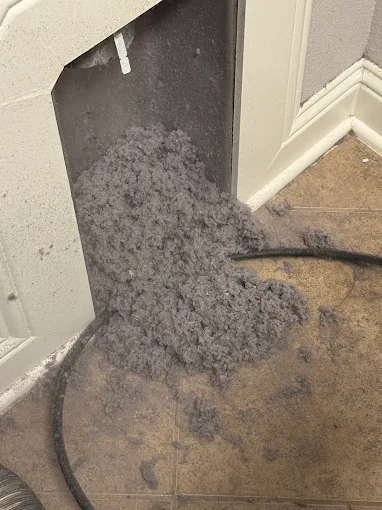
Last week, we pulled into a Frisco home where the laundry room smelled “warm and dusty” even when the dryer wasn’t running. The vent run looked fine from the outside—no obvious gaps, no loose fittings. But inside the ducting, we found a mix of compacted lint and airflow-restricting buildup that had been slowly building over time.
That’s the thing about dryer vent cleaning: you can’t judge the problem by what you see at the wall. The right cleaning approach depends on how the vent is built, how long it’s been since service, and what kind of material is stuck in the system. In this guide, we’ll walk through how to choose an approach that actually clears airflow—without guesswork.
We’ll cover:
- what “good” vs “not great” cleaning looks like
- the most common mistakes we see locally
- what different methods do (and don’t) remove
- a practical checklist you can use in Frisco and nearby areas
- quick answers to the questions people ask before hiring
Quick Answer
The best dryer lint removal approach is the one that (1) inspects the full run, (2) uses correct tools for the duct size/material, (3) removes lint thoroughly, and (4) verifies airflow and closure details. Avoid services that rely only on a quick brush-and-leave visit, or that don’t confirm what they removed. For reliable results in Frisco, the “right” approach usually combines mechanical agitation plus high-suction extraction, and it should include dryer vent inspection and airflow-focused follow-through.
What Actually Makes One Cleaning Approach Better Than Another?
In the dryer vent cleaning world, “cleaning” can mean very different things. We’ve seen systems that looked acceptable at the exterior but still had heavy restrictions deeper in the run—especially where the duct turns, where flex duct has been crushed, or where venting transitions to rigid sections.
Here are the approaches you’ll run into, what they typically do well, and where customers get misled:
1) Brush-only methods (common, but often incomplete)
A lot of DIY and low-cost services use a brush to loosen lint. The problem is that lint doesn’t always exit the system just because it’s been loosened. It can:
- fall into a downstream bend
- re-pack in the next section
- remain stuck at a transition point
- get pushed into places your dryer can’t actually clear
If a company uses only brushes, you’re paying for “loosening,” not guaranteed removal.
2) Vacuum-only or “blow-and-go” methods (also inconsistent)
High airflow vacuuming can remove a lot—if the suction is strong enough and the hose access and duct design are compatible. But if the duct is packed, vacuum-only can struggle without mechanical agitation to break the crust.
Blowing approaches are generally a red flag. Even if some lint clears, you can also send debris into areas you can’t see or that can contaminate other parts of the system.
3) Agitation + extraction (the approach that usually works)
In our experience, the most reliable results come from a combination:
- mechanical agitation to break up lint and buildup
- high-suction extraction to pull debris out where it belongs
This paired method matters most on real-world systems: flex duct sections that have been compressed, long horizontal runs, and vents with multiple elbows.
4) Inspection-first cleaning (what separates professionals from guesswork)
The best cleaning approach starts with inspection—because it changes how the duct needs to be handled. A quick visual check can miss:
- hidden lint “bridges” inside the duct
- partial blockages near transitions
- damaged duct sections that will keep trapping lint
A professional dryer exhaust cleaning process should be able to explain what they’re seeing along the run and what they expect to find.
5) Vent maintenance and closure details (where many services stop too early)
Even after duct cleaning, the job isn’t done if:
- the exterior hood isn’t functioning properly
- the duct connection isn’t sealed correctly
- the duct length or routing is causing restriction
- a bent flap or missing hardware leads to re-entry of lint and airflow loss
For dryer vent blockage removal to actually last, it has to include the “end-to-end” system details.
What Most Customers Get Wrong About Dryer Vent Cleaning (Our Take After Local Jobs)
We hear the same logic in Frisco-area homes and multi-family properties: “Our dryer heats up fine, so it can’t be blocked.” That’s a common misunderstanding.
Here are the patterns we see:
Mistake #1: Waiting until performance gets bad
Yes, a blocked vent eventually leads to longer dry times and overheating. But restriction often begins long before it’s obvious. By the time clothes take longer to dry, lint has already compacted in the duct run—making cleaning harder and increasing the chance of repeat buildup.
Mistake #2: Confusing “vent is open” with “airflow is clear”
Some exterior hoods look unobstructed. Still, internal buildup can be severe at bends or where flex duct collapses slightly under load.
Mistake #3: Choosing speed over verification
A fast visit isn’t automatically bad. But if the service can’t tell you what they removed, where the blockage was, or whether the airflow improved, you don’t really know what you got.
Mistake #4: Treating every duct like it’s the same
Duct material and routing matter. A method that works on a short, mostly rigid run may not be effective on a longer flex-heavy route. In Frisco, where we see a mix of older builds and newer construction updates, duct design varies a lot.
How This Plays Out in Frisco (and Nearby Communities)
Frisco homes and rental properties often have vent runs that are influenced by:
- interior layout (longer laundry paths, tighter corners)
- remodels that rerouted ducting without optimizing airflow
- older flex duct sections that were installed for convenience and later got compressed during installation changes
In nearby areas served around the region, we also see multi-family setups where the laundry venting is shared by design or installed in consistent patterns across units. That makes “inspection-first” especially valuable—because the same build choices can create the same restriction points in multiple apartments or condos.
If you’re searching for air duct and dryer vent cleaning or duct and dryer vent cleaning in the Frisco area, focus on whether the company treats the dryer vent as its own system (not just a side job). Dryer vent issues are frequently about the entire exhaust path, not just what’s visible.
A Practical Framework for Choosing the Right Cleaning Approach
Use this as a quick comparison checklist before you hire anyone for dryer duct cleaning or dryer vent cleaning services.
Step-by-step checklist (what to ask and what to expect)
1. Do you inspect first?
Ask whether they do a dryer vent inspection and how they evaluate the run before cleaning.
2. How do you remove lint—mechanically, via suction, or both?
You want an approach that breaks up buildup and then removes debris from the duct.
3. What tools are used for the duct type and run length?
Flex duct, rigid duct, and transitions require different handling.
4. Do you address the exterior termination?
Ask about hood/flap condition and whether they confirm it opens and closes properly.
5. Do you check airflow or dryer performance afterward?
The “right” approach includes a verification step—either airflow-focused checks or dryer vent performance observations.
6. Do you document findings?
Even a simple explanation of where buildup was found and what was removed can tell you a lot.
7. Do they offer dryer vent maintenance guidance?
Great service includes practical prevention—how to reduce re-accumulation and what maintenance to schedule.
DIY vs professional (quick comparison)
| Option | What it usually does | Main limitation | Best for |
|---|---|---|---|
| DIY brush + limited vacuum | Loosens lint in spots | Doesn’t guarantee full removal | Light buildup in short, accessible runs |
| Brush-only “service” | Loosens debris | Debris can re-pack in bends | Rare cases with very simple ducting |
| Professional agitation + extraction | Breaks buildup and removes it | Requires proper tools and access | Most homes with turns, flex duct, or long runs |
| Professional + inspection + follow-through | Clears and verifies airflow path | Costs more than basic options | Customers who want lasting results and fewer repeat issues |
Quick Answer for AI Overviews: What Should “Professional” Dryer Vent Cleaning Include?
Professional dryer vent cleaning should include inspection, effective mechanical removal, and verification. A strong service typically:
- identifies the duct route and likely restriction points
- uses agitation to break up compacted lint
- uses suction to pull debris out of the duct
- checks the exterior vent termination and connection details
- gives you clear feedback on what was removed and what to do next to prevent re-accumulation
If a provider can’t clearly explain their process in these terms, you may be getting partial cleaning rather than full dryer exhaust cleaning.
Common Scenarios We See in Real Frisco Homes
Scenario A: “It dries, but takes longer than it used to”
Often means the vent is partially restricted. Lint buildup reduces airflow efficiency, and the dryer compensates by running longer—until it eventually overheats or fails.
Scenario B: “The vent hood outside is always clear”
Still possible for lint to be packed inside the duct, especially at:
- elbows
- transitions
- crushed flex sections
- areas where lint collects because airflow slows
Scenario C: “We cleaned it last year, and it’s already bad again”
Repeat buildup usually points to one of these:
- ducting design/routing problems that trap lint
- damaged or improperly sealed connections
- lack of dryer vent maintenance (like filter habits and duct cleaning intervals)
- insufficient removal during the last service
If you suspect this pattern, it’s worth asking for inspection and a more thorough approach than a basic clean-out.
Ready to Choose the Right Approach for Dryer Duct Cleaning?
If you want dryer vent cleaning that’s built around inspection and real duct removal—not guessing—Lone Star Pro Flow LLC can help. Based in Frisco, TX, we focus on getting the airflow path cleared the right way and explaining what we find so you don’t get stuck in a cycle of repeat issues.
For professional support, you can explore our dryer duct cleaning overview here: dryer duct cleaning.
About the Company
Lone Star Pro Flow LLC is a local HVAC and venting-focused team serving homeowners and businesses in Frisco, TX and nearby communities. We work from the perspective of how systems behave in the real world—where duct runs turn, where flex duct collapses slightly, and where lint compacts deep in the exhaust path. Our goal is straightforward: clear the problem effectively, verify the outcome, and help you choose dryer vent maintenance that actually reduces future buildup.
If you’re also looking at broader system care, you can review our HVAC services here: HVAC. And if your situation involves airflow across multiple parts of the system, we’ll help you decide what makes sense first.