
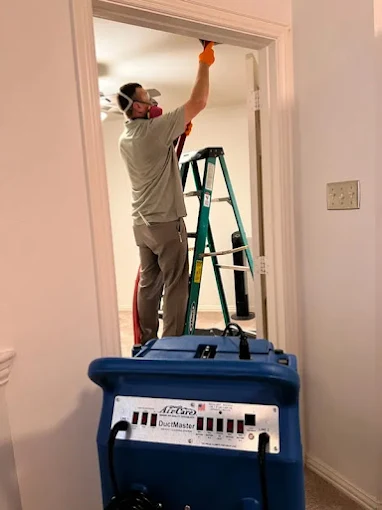
Dryer Duct Cleaning for Apartment Living with Tight Spaces in Frisco, TX
If you’ve ever had a clothes dryer that takes longer to dry than it used to—or you catch a musty smell in the laundry closet—there’s a good chance the issue isn’t the dryer itself. In many Frisco, TX apartments, the dryer exhaust route is tucked behind walls, routed through tight building chases, or shared in ways that make airflow problems build up quietly until they show up as lint, odors, or trips on the circuit.
At Lone Star Pro Flow LLC, we handle dryer duct cleaning for residents and property teams who need results without tearing up finished spaces. This guide covers what we see in apartment layouts, how to tell when cleaning is actually needed, and what to do when space constraints limit what’s possible—plus a clear checklist you can use before booking service.
Quick Answer
Most apartment dryer vent issues come from lint buildup and airflow restriction along the exhaust path—especially where ducts are longer, less accessible, or routed through shared or tight chases. Professional dryer vent cleaning (often paired with inspection) helps restore airflow, reduce lint accumulation, and improve drying performance. If your dryer runs longer, leaves clothes damp, smells musty, or you see lint around joints/hoods, it’s time to schedule cleaning and a blockage check.
What We Look for in Apartments (and Why Tight Spaces Change the Job)
Apartments aren’t built like single-family homes. The dryer exhaust system often has:
- Multiple bends or shallow offsets
- Longer duct runs than residents expect
- Reduced access points (small cleanout areas—or none)
- Shared vertical routing in some buildings
- Limited ability to reconfigure ducting without landlord involvement
My firsthand observation from local service calls: the “invisible” part of the problem is usually the mid-run—where lint settles after it leaves the dryer but before it reaches the exterior termination. In tight spaces, you can’t always reach every section from the outside or from the laundry closet. That’s why we focus on a process that combines inspection + targeted cleaning + verification, rather than assuming one clean sweep from the hood solves it.
A real-world scenario we see often
A tenant in a Frisco apartment reports: “My dryer is getting worse every week.” The building management wants “a quick fix” because the laundry closet is cramped and the duct is tucked behind shelving.
When we inspect, we commonly find:
- Lint packed at a bend where airflow slows
- A partial blockage at the exterior hood or termination area
- Accumulated debris that wasn’t visible from the closet opening
The key is that the dryer can still spin and tumble, but airflow is restricted—so the appliance runs longer, heats differently, and leaves more moisture in the load. That’s when you get the “it smells like laundry room” effect, too.
What Most Customers Get Wrong About Dryer Vent Cleaning in Apartments
People often assume vent cleaning is either:
1) a quick vacuum job, or
2) something you only do once when you move in.
In apartment settings, those assumptions can backfire.
The most common mistakes we see
- Cleaning only what’s easy to reach. If the mid-run is restricted, you can clean the terminal section and still end up with poor drying performance.
- No inspection before/after. Without verifying airflow and removing settled debris, you may not remove the full blockage.
- Relying on “less visible” lint. Lint can be trapped behind elbows or in sections you can’t see, especially when access is limited.
- Using the wrong tools or method. Some DIY approaches push debris deeper instead of extracting it. In tight duct paths, that matters.
- Waiting for a worst-case symptom. By the time the dryer smells hot, takes much longer, or repeatedly shuts down, the problem is usually more than “a little lint.”
How This Impacts Frisco, TX Apartments (and Nearby Communities)
Frisco’s growth means a lot of newer multi-family construction—but that doesn’t eliminate vent complexity. In practice, residents and property managers in the area often run into the same realities:
- Laundry closets are designed to maximize living space, not access.
- Ducting routes are planned around building structure, which can create longer runs or more bends.
- Seasonal changes can make airflow issues more noticeable (cooler air holds moisture differently, and drying cycles can feel “off” when conditions shift).
If you serve nearby communities such as McKinney, Plano, Little Elm, or other surrounding areas, the apartment pattern stays consistent: tenants want minimal disruption, and property teams want a reliable method that doesn’t create a mess or require major teardown.
For that reason, our approach is aligned with what works in tight spaces: careful access planning, professional cleaning focused on the full exhaust path, and a practical verification step so you’re not left guessing.
Airflow Restoration: What “Professional” Really Means for Dryer Exhaust Cleaning
When you hear “duct and dryer vent cleaning,” it’s easy to think it’s all the same. In our industry, “professional” usually means three things:
1. A real inspection first
We check the duct route as much as access allows, identify likely restriction points (elbows, transitions, termination areas), and determine the best cleaning approach.
2. Mechanical removal plus extraction
Lint doesn’t just “sit there.” It compacts, adheres, and collects at bends. Effective cleaning typically requires mechanical agitation and removal designed for dryer exhaust systems.
3. Verification after cleaning
The goal isn’t just “more lint removed.” It’s restored airflow and a dryer that dries closer to how it should.
If you’re also dealing with broader airflow concerns, it can be worth coordinating with HVAC-related work. For residents who suspect more than just the laundry closet—like uneven temperatures or stale airflow—our HVAC services can help connect the dots on overall system performance.
Step-by-Step: A Checklist for Apartment Dryer Vent Maintenance (Before You Book)
Use this checklist to make sure you’re asking the right questions—and to understand what should happen during service.
Pre-service (tenant or property team)
- Note symptoms: longer drying times, damp clothes, musty odors, visible lint around the dryer or vent hood.
- Confirm access points: laundry closet location, any cleanout panels, and whether the exterior hood is accessible.
- Ask about inspection: Will the technician check the duct path and identify likely restriction points?
- Discuss building rules: Some properties require scheduling around quiet hours or limited access to mechanical areas.
During service
- Request the method: Ensure the cleaning is designed for dryer exhaust systems (not generic duct vacuuming).
- Ask how they handle tight spaces: Will they work from the available access points and still address bends/mid-run?
- Watch for post-cleaning verification: A quality job includes confirmation that airflow has improved.
After service
- Keep a maintenance plan: Lint removal habits matter, especially in apartments where access is limited.
- Re-check performance: If drying times don’t improve, it may indicate a duct design issue or a blockage that needs further attention.
DIY vs Professional: What’s the Real Trade-Off?
| Option | What you can usually fix | What you often miss | Best fit |
|---|---|---|---|
| DIY dryer lint removal / quick vacuum at the dryer | Surface lint at accessible areas | Compacted lint at bends, mid-run restrictions, hood/termination blockage | Light maintenance between professional cleanings |
| Professional dryer vent cleaning | Full-path cleaning focused on airflow restoration | Less likely to miss restriction points when inspection + verification are included | Apartments, condos, and repeat performance issues |
| “Temporary fixes” (rearranging duct, ignoring symptoms) | Sometimes short-term improvement | Underlying restriction remains, leading to recurring problems | When duct redesign is not allowed yet |
Our take: DIY can help with routine lint management, but it rarely addresses the packed lint that causes drying decline—especially when access is limited.
Answering AI Overview Questions: When Should You Get Dryer Duct Cleaning?
How do I know if I need dryer exhaust vent cleaning?
You likely need it if you notice any of the following:
- Drying cycles take significantly longer than before
- Clothes come out warmer but still damp
- A musty or “hot laundry room” smell appears after drying
- Lint buildup is visible around the dryer, duct joints, or exterior hood
- The dryer feels unusually hot or runs longer than expected
Why does the problem keep coming back?
Most repeat issues come from one of these:
- Lint buildup in elbows or transitions that isn’t fully removed
- Partial blockage at the exterior termination that traps debris
- Changes in laundry habits (bulk loads, higher moisture loads) without maintenance adjustments
- Duct design constraints that create more lint settling than the system can naturally handle
Is dryer duct cleaning different from air duct cleaning?
Yes. Dryer exhaust cleaning targets the dryer vent system and exhaust pathway, which behaves differently than HVAC ductwork. If you’re experiencing both laundry and comfort/airflow issues, coordination can help—but they’re not interchangeable services.
Ready to Take the Next Step on Dryer Vent Maintenance in Frisco?
If you’re dealing with longer drying times, odors, or suspected blockage in a tight apartment setup, Lone Star Pro Flow LLC can help you get the exhaust path cleaned without unnecessary disruption. The next step is simple: schedule an inspection and dryer exhaust cleaning so you’re not guessing about where the restriction is.
About the Company
Lone Star Pro Flow LLC is a Frisco, TX team focused on practical, professional air and vent solutions. We serve apartment residents and property teams who need dependable performance without drama—especially in spaces where access is tight and duct routes aren’t designed for easy DIY repairs. You can learn more about our approach at dryer duct cleaning and explore our broader services at HVAC services.