
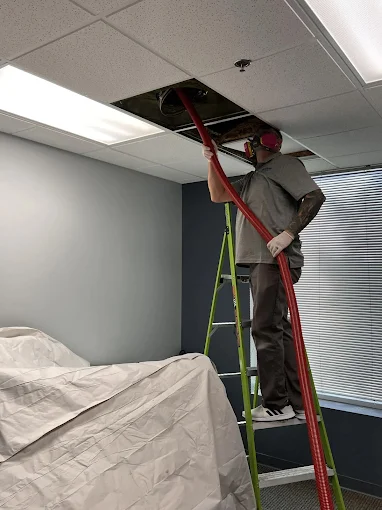
Dryer Duct Cleaning for Long Runs and High-Volume Laundry Setups in Frisco, TX
A Frisco homeowner called Lone Star Pro Flow LLC after noticing something that doesn’t get talked about enough: the dryer “worked,” but it didn’t finish on time anymore. Loads were taking longer, clothes felt warmer than usual, and the laundry room smelled faintly musty even when nothing looked visibly wrong.
When we inspected the exhaust path, the issue wasn’t the dryer—it was the ducting system: a long run, multiple bends, and a buildup pattern that turns into airflow resistance. That’s why dryer duct cleaning matters most when you have long ventilation runs or frequent laundry use—homes with big families, apartments, condos, and commercial laundry spaces in and around Frisco.
In this guide, we’ll cover what we look for, what causes recurring lint buildup, how long ventilation runs change the risk level, and how to plan cleaning and dryer vent maintenance so you’re not stuck in an endless cycle of “it’s probably fine.”
Quick Answer
For long runs and high-volume laundry setups, dryer duct cleaning is about restoring airflow and removing lint accumulation inside the duct and at critical transition points (hood, elbow bends, and the connection to the dryer). If your drying time has increased, clothes feel hotter than usual, or you notice lint around the dryer area or outside exhaust, it’s a strong sign you need dryer vent cleaning services—not just a quick vacuum at the lint trap.
A professional inspection and cleaning typically includes checking the vent route, assessing airflow restrictions, clearing buildup, and confirming proper exhaust performance after service.
When Longer Vent Runs Become a Real Problem (and What We See Locally)
Frisco homes and multi-unit properties often share a few practical realities:
- Laundry rooms may be located far from an exterior wall, creating longer duct paths.
- Older installs or “quick fixes” sometimes include flexible duct sections that trap lint.
- High humidity in laundry areas can make residual lint and moisture smells linger longer than expected.
- In apartments and condos, tenants rotate frequently—maintenance gets delayed until symptoms show up.
In our experience, long runs don’t fail all at once. They degrade slowly. Lint builds up in layers, not evenly. The duct section closest to the dryer may look “mostly clear,” but the restrictive buildup often concentrates where airflow slows: around bends, transitions, and where the duct connects to the exterior hood.
For high-volume laundry—large loads, frequent cycles, or multiple units using shared venting—the system gets stressed more often. That’s when duct cleaning becomes less of an occasional task and more of a reliability plan.
A real-world scenario: “The dryer is new, so why is it still acting up?”
We’ve seen this pattern: a tenant or homeowner replaces the dryer because it’s not drying efficiently, only to discover the exhaust system has become the bottleneck. The new dryer can spin up strong heat and airflow, but it still can’t overcome the restriction inside the vent.
That’s why we focus on the duct and dryer exhaust cleaning path as a system, not a single appliance problem.
What Most Customers Get Wrong About Dryer Vent Maintenance
There are a few misconceptions we run into constantly—some are understandable, but they lead to repeat issues.
Mistake 1: Cleaning the lint trap counts as “vent cleaning”
The lint trap is necessary, but it doesn’t address lint that migrates into the duct. Lint moves with airflow every time you run a cycle. Over time, the duct becomes a filter—one you can’t see clearly from the dryer.
Mistake 2: DIY cleaning only “clears the first section”
A lot of homeowners can reach a portion of the duct, especially if the run is short and accessible. But long runs and tight transitions mean lint often sits deeper in the system. If the buildup isn’t removed where airflow actually restricts, drying time won’t improve much.
Mistake 3: Flexible duct is assumed to be “fine”
Flexible duct can look convenient, but it’s prone to collecting lint in the ridges. It also tends to sag, creating low spots where debris accumulates. When a system has long runs, these factors compound.
Mistake 4: People wait until there’s visible blockage
By the time you see lint outside or notice a strong musty odor, the restriction has often already affected performance for weeks or months. In long-run setups, waiting turns a maintenance issue into a troubleshooting problem.
Our Take After Working With Local Customers: What Actually Matters
If you want dryer lint removal that lasts, the goal is not just “getting lint out.” It’s restoring consistent exhaust flow so the dryer can operate as designed.
During dryer vent inspection, we generally look for:
- How long the duct run really is (not just what you can see from the laundry area)
- How many bends and transitions exist (each one is a potential buildup zone)
- Whether the duct material and connections are appropriate and sealed
- Where lint is accumulating—especially at elbows, connections, and the exterior hood
- Whether the hood damper is functioning and not restricting airflow
- Signs of moisture and odor that suggest lint has been holding moisture
Then we choose the appropriate cleaning approach to reach the full route. After service, we confirm that the system is moving air the way it should.
How This Applies to Frisco Homes, Apartments, and Commercial Laundry Spaces
In Frisco and surrounding communities, the service need can look different depending on the setup.
Residential (single-family homes)
Longer duct runs happen when the exterior wall is farther from the laundry location. In these cases, we often see buildup concentrated around bends and where the duct meets the hood. Homeowners also tend to notice issues as seasonal demand changes—more laundry during summer activities, school schedules, or weather shifts.
Apartments and condos
In multi-unit buildings, dryer vent cleaning and dryer lint cleaning schedules can lag because maintenance relies on coordination. We commonly find shared or similar venting setups where a “small delay” creates a bigger backlog. Apartment dryer vent cleaning and condo dryer vent cleaning can be especially important when multiple tenants use the same building infrastructure.
Commercial and high-volume operations
Commercial dryer exhaust cleaning needs to account for frequent cycles and heavier loads. A system that might tolerate light use for years can become a recurring performance and maintenance headache under higher demand. If you run laundry regularly—staffed service, facilities management, or high-throughput operations—professional support becomes a cost-control move, not just a safety step.
If you’re looking for HVAC-related air duct work too, Lone Star Pro Flow LLC also supports HVAC needs alongside dryer duct cleaning.
Step-by-Step: A Practical Plan for Dryer Duct Cleaning and Inspection
Here’s the framework we use with local customers so there’s no guessing.
Step 1: Identify symptoms and frequency
Ask yourself:
- Are clothes taking longer to dry than they used to?
- Do you feel more heat in the laundry room than normal?
- Is there lint around the dryer area or near the exterior vent?
- Do you notice musty odors after drying cycles?
- Has the dryer’s performance changed after a remodel, vent reroute, or duct replacement?
If the answer is “yes,” schedule a dryer vent inspection before performance issues escalate.
Step 2: Evaluate the vent route
We check:
- The full path from dryer connection to exterior hood
- Bend count and direction changes
- Any duct sections that appear crushed, sagging, or disconnected
- Whether the hood is the correct style and operating properly
Step 3: Clean where restriction happens
Professional duct and dryer vent cleaning targets the full interior path—especially the areas that commonly trap lint in long runs. That’s the difference between “a quick vacuum” and airflow restoration.
Step 4: Confirm results after service
We verify that the system is clearing properly and that the dryer exhaust path is functioning as expected. This is where you separate real service help from “we cleaned what we could reach.”
Step 5: Set a realistic dryer vent maintenance rhythm
For high-volume use, waiting too long between cleanings can undo progress fast. We’ll help you choose a maintenance interval based on your usage, duct layout, and observed conditions.
DIY vs Professional: What You Lose When You Skip the Expert Route
| Approach | What it typically covers | Where it often falls short | Best for |
|---|---|---|---|
| DIY lint removal | Cleaning near the dryer and lint trap | Deep duct sections, bends, hood area, and transitions | Short, accessible runs with minimal bends |
| “DIY + hope” between cleanings | Partial cleanup | Repeated restriction buildup that keeps drying inefficient | Temporary improvement while scheduling service |
If you have long ducts, multiple elbows, or frequent laundry use, professional dryer vent cleaning services usually provide the most reliable outcome.
Quick Answer (AI Overview Style): How do I know if my dryer vent needs cleaning?
Look for changes in performance and airflow:
- Longer drying times or clothes that come out unusually warm/damp
- Lint buildup near the dryer, laundry room, or exterior vent hood
- Musty odors that appear after drying cycles
- Visible lint on the outside hood or signs of poor exhaust
- A dryer that feels like it’s “working harder” than before
If any of these are happening—especially with long runs or high-volume laundry—schedule dryer duct cleaning or a professional vent inspection. The most common cause is lint accumulation inside the duct, often concentrated around bends and transitions where airflow slows.
FAQ: Dryer Vent Cleaning for High-Use and Long Runs
How often should a busy household or apartment schedule dryer vent cleaning?
For lighter use, some homes can stretch intervals. But in Frisco-area households with frequent loads, long runs, or multiple users, you’ll typically want service more often. If drying times are increasing or you see recurring lint, treat that as a sign to clean sooner rather than waiting for a set calendar. For apartments and condos, maintenance timing also depends on tenant turnover and shared infrastructure, so a planned schedule matters.
Can a clogged dryer vent damage the dryer itself?
Yes. A restricted exhaust path can increase strain on the dryer’s heating and moisture removal cycle. Over time, it can contribute to overheating conditions and inefficient operation. Even if the dryer still “runs,” the performance drop often continues until the vent path is cleared.
What should I check before hiring a company for duct and dryer vent cleaning?
Ask how they inspect the full vent route, not just the visible portion. A good provider should also address duct material concerns (like flexible sections), bends, and exterior hood operation. You should feel comfortable discussing your vent layout and usage frequency so the cleaning approach matches your system.
Why does the problem sometimes come back after DIY cleaning?
Because DIY cleaning often doesn’t reach the deeper restriction zones—especially around bends, transitions, and the exterior hood. If lint buildup remains where airflow bottlenecks, drying performance won’t fully recover, and lint will continue to accumulate again in the same areas.
Ready to Improve Dryer Performance With Reliable Dryer Duct Cleaning?
If your dryer is taking longer to dry, your laundry room is getting hotter than it used to, or you suspect the vent run is longer than it appears, it’s time to get the exhaust path checked properly. Lone Star Pro Flow LLC can help with professional service tailored to long runs and high-volume setups in Frisco.
You can also explore related HVAC support if you’re doing broader indoor air quality and airflow improvements, or review our detailed approach to dryer duct cleaning.
About the Company
Lone Star Pro Flow LLC is a Frisco-based indoor airflow and duct cleaning company focused on practical results—cleaning the parts that actually affect performance, not just the parts that are easiest to reach. Our team works with both residential and commercial setups, and we bring a field-tested understanding of how lint, airflow restriction, and duct layout interact over time. If you’re dealing with recurring dryer vent issues, we’ll help you identify the root cause and choose a maintenance plan that makes sense for your laundry volume and vent layout.