
Dryer Venting and Performance: Why Vent Cleanliness Matters in Frisco Homes and Businesses
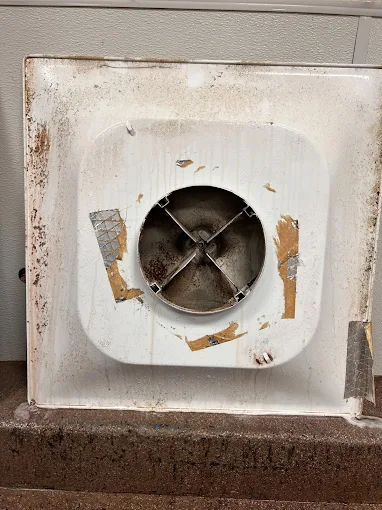
The first time we show a homeowner in Frisco, TX what’s inside a dryer exhaust line, the reaction is almost always the same—silence, then “So that’s why it takes forever to dry.”
It’s not just about lint. When dryer venting is restricted, the whole drying process changes: cycles run longer, clothes feel hotter and come out less dry, and you can start seeing musty odors, overheating, and even recurring blockages. In a climate where people run laundry more frequently during seasonal shifts, those performance losses add up fast.
In this guide, we’ll explain how venting affects performance, what we commonly find during dryer duct cleaning, what competitors and DIYers often miss, and how to decide whether you need a full cleaning or just corrective maintenance.
Quick Answer
Dryer venting affects performance because restricted airflow forces the dryer to work harder to push moisture out. When lint and debris accumulate, you get longer drying times, higher energy use, cooler-than-expected exhaust (a common “it still works” trap), recurring clogs, and sometimes overheating. Professional dryer vent cleaning removes buildup, checks for partial blockages, and verifies airflow so your dryer can dry efficiently and safely again.
How Venting Affects Dryer Performance (and What We See Locally)
A clothes dryer is basically a heat-and-airflow system. It heats air, tumbles clothes, and then exhausts humid air through the vent to the outdoors. When venting isn’t right, the dryer can’t move air the way it was designed to.
What restriction actually does
When airflow drops, you’ll typically notice one or more of these:
- Longer cycles: You might start a “normal” load and still feel like it’s damp near the end.
- More heat without better drying: The dryer can heat longer because moisture isn’t being removed efficiently.
- Lint buildup accelerating: Partial restrictions create turbulence where lint settles faster.
- Odors and indoor humidity: Some homes pick up a musty smell around laundry areas when exhaust isn’t leaving properly.
- Higher wear on components: More runtime means more stress on motors and sensors.
The “it’s not totally clogged” problem
One of the most common situations we run into in the Frisco area: the vent isn’t completely blocked, so people keep using the dryer. But “not blocked” doesn’t mean “working correctly.”
Partial restrictions can still cause:
- weak exhaust,
- slow moisture removal,
- and lint accumulation that keeps returning.
During inspections, we often find vents with lint packed in “sections”—tight turns, transitions, and poorly sealed joints. Those are the places airflow slows down and debris collects.
What Most Customers Get Wrong About Dryer Vent Cleaning
We’ll be honest: a lot of advice online focuses on lint removal, but the real performance problem is airflow restriction throughout the run—not just what you can reach with a brush from the laundry room.
Here’s what we see most often:
Mistake #1: Cleaning the lint trap and assuming the vent is next
Lint traps catch a lot—but they don’t catch everything. Fine particles and fibers still escape, and over time they form dense layers inside the venting.
Mistake #2: Using a DIY brush that doesn’t match the duct path
Many duct runs have sections that are difficult to access, especially if there are tight bends or older materials. A short brush can give a false sense of progress while leaving the packed sections untouched.
Mistake #3: Overlooking venting design issues
Some venting setups are inherently prone to buildup:
- too many elbows,
- long horizontal runs,
- transitions from rigid to flexible venting,
- ducts that sag toward the floor,
- or joints that aren’t sealed well.
If the system is designed in a way that traps lint, cleaning alone may not fully solve the recurring problem.
Mistake #4: Ignoring safety and “near-miss” signs
Customers sometimes wait until something feels alarming: a hot laundry room, a burning smell, or a dryer that shuts down unexpectedly. Those are signals that demand attention now—not later.
Local Reality in Frisco: Why This Shows Up in More Homes and Small Businesses
Frisco homes and many local businesses see consistent laundry demand—schools, gyms, daycare centers, small multi-unit properties, and busy households all contribute to higher dryer usage. That matters because dryer vent buildup is cumulative.
A few local factors we often account for:
- Frequent laundry schedules: More loads = faster lint accumulation.
- Older venting installs in some areas: Renovations can leave behind vent runs that weren’t upgraded with modern performance goals.
- Multi-home and shared exhaust setups: In apartments, condos, and shared laundry spaces, a venting issue can affect more than one unit.
- Weather-driven behavior: When outdoor conditions make people avoid opening windows or checking areas near the vent termination, maintenance gets postponed—and buildup continues.
If you’re searching for “dryer vent cleaning services” or “air duct cleaning and dryer vent cleaning near me,” it’s worth choosing a company that understands both the mechanical side of venting and the real-life patterns of local usage.
Dryer Vent Cleaning Strategy: What to Ask Before You Hire
Not every “cleaning” is the same. Here’s a practical framework we use when we’re helping homeowners and property managers evaluate service.
Step-by-step checklist (use this for your next call)
Ask the provider:
1. Will you inspect the vent run first?
You’re looking for an approach that identifies where buildup exists and whether there are design issues.
2. Do you remove debris from the full run, not just the accessible section?
A proper service focuses on the entire duct path, including bends and transitions.
3. How do you handle flexible duct sections and transitions?
Flexible duct can trap lint—especially if it sags or has sharp bends.
4. Will you verify airflow after cleaning?
Cleaning without confirming performance can leave you with the same drying problems.
5. Do you recommend preventative maintenance and inspection intervals?
If the goal is long-term performance, you should leave with a plan.
6. Will you address connected systems when relevant?
In some buildings, dryer venting interacts with other airflow issues. If you’re already planning HVAC work, it can be efficient to coordinate services like HVAC vent cleaning or air duct cleaning.
If you want to connect this with broader indoor airflow improvements, Lone Star Pro Flow LLC also supports HVAC work through HVAC services. For vent-focused service, see dryer duct cleaning.
Comparison: DIY Lint Removal vs Professional Dryer Exhaust Cleaning
Here’s the difference in outcomes we typically see.
| Approach | What it usually improves | Where DIY often falls short | Best for |
|---|---|---|---|
| DIY lint removal (lint trap + quick brush) | Short-term reduction in surface lint | Packed sections in bends/transitions; limited access; no airflow verification | Very light buildup and frequent homeowner checks |
| Professional + corrections to venting design | Performance + lower future maintenance | Not all companies address venting geometry or joint problems | Systems with recurring blockages or poor vent routes |
We’re slightly opinionated here: if you’re already noticing performance problems, DIY usually becomes a “try again next month” cycle. Professional cleaning breaks that loop.
The AI Overview-Style Answer: When Should You Get Dryer Vent Cleaning?
Quick decision guide
Consider scheduling dryer vent cleaning if you notice any of the following:
- drying times are getting longer (even after routine lint trap cleaning)
- clothes feel hotter but still come out damp
- the laundry room smells musty or has lingering odors
- the dryer exhaust feels weak compared to before
- you see lint buildup around the dryer or vent termination
- you’re in a multi-unit property where vents may be shared or maintained inconsistently
What to expect
A quality provider typically:
- inspects the vent path,
- removes lint and debris from the run,
- checks for blockages and problematic sections,
- and helps you understand what caused the buildup and how to prevent it.
Ready to Improve Dryer Performance in Frisco?
If your dryer is running longer than it used to, it’s not just an inconvenience—it’s wasted energy, extra wear, and a vent system that’s steadily collecting lint and debris. The best next step is a proper inspection and full dryer duct cleaning services approach that targets airflow, not just what’s visible.
For help with dryer vent lint removal, dryer vent blockage removal, and professional verification of results, contact Lone Star Pro Flow LLC and book the service you need.
About the Company
Lone Star Pro Flow LLC is a local indoor airflow and venting-focused team serving Frisco, TX and nearby communities. We combine hands-on industry experience with practical, performance-first cleaning so homeowners and property managers can stop guessing and start getting reliable results. If you’re dealing with slow drying, recurring lint issues, or venting that just doesn’t seem to “work right,” our approach is built to find the cause and address it—not just remove what’s easy to reach.