
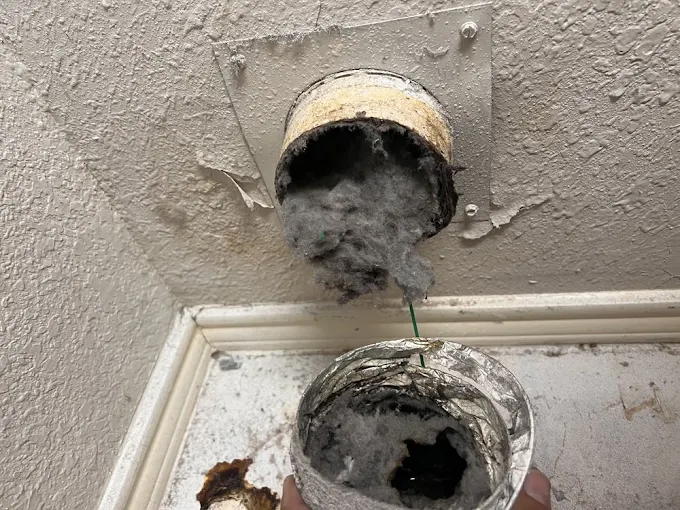
Dryer Duct Cleaning: Keep Venting Flowing for Better Performance in Frisco, TX
A clothes dryer that “works fine” can still be quietly underperforming. We see it all the time in Frisco homes and nearby communities: the load dries in two cycles instead of one, the laundry room smells warm and dusty, and lint builds up around the vent area. Most people assume it’s just a dryer issue—but often the bottleneck is the venting path.
Lone Star Pro Flow LLC helps local homeowners and property managers keep ventilation systems moving the way they’re supposed to. This guide breaks down how dryer duct cleaning and dryer vent inspection actually impact performance, indoor air quality, and fire risk prevention—plus what to do when the problem keeps coming back.
Quick Answer
Professional dryer duct cleaning and dryer vent cleaning services remove built-up lint and debris from the dryer’s exhaust route—reducing restrictions that can slow drying, increase heat, and create recurring lint problems. In Frisco and surrounding areas, we typically recommend inspection first, then cleaning based on what’s found (including checking for vent blockage removal needs, poor vent routing, and damaged duct sections). If you’re noticing longer dry times, “hot laundry room” conditions, or repeated lint buildup, it’s a strong sign you need clothes dryer vent cleaning rather than another maintenance guess.
How Proper Vent Cleaning Improves Dryer Performance (and What It Fixes)
A dryer is a forced-air appliance. It pushes hot air through the drum, then exhausts that air through the duct and out of the home. Lint is designed to be caught—at least in theory. In reality, lint doesn’t stay put. It migrates through seams, collects in elbows, and packs tighter where airflow slows.
When the vent system gets restricted, you get a few predictable outcomes:
- Longer dry cycles: Moisture can’t escape efficiently.
- Higher operating temps: Restricted airflow can make the dryer run hotter than it should.
- More lint inside the exhaust path: That “soft” lint becomes denser over time.
- Laundry-room odors and dust: You may smell hot, dusty air or notice lint near the vent termination.
- Recurring clogs: Cleaning the lint screen helps, but it doesn’t address lint that already built up inside the ductwork.
From our experience, homeowners often focus on the lint trap and ignore the duct route. But the duct is where restrictions become “invisible problems.” You can’t see what’s packed in the duct after months of use, especially once the lint layer thickens and catches more debris.
What Most Customers Get Wrong About Dryer Vent Cleaning
A lot of advice online is too generic, and it leads to wasted money—or worse, repeated failures.
Mistake 1: Assuming the lint screen is the whole story
The lint screen helps, but it only catches lint before it enters the airflow. Fine lint and debris still travel through the system. Over time, it accumulates along the path, especially around:
- 90-degree elbows
- flex duct sections
- crushed or partially collapsed runs
- vent terminations that don’t exhaust cleanly
Mistake 2: Using quick “brush-and-hope” methods
A basic brush kit can loosen surface lint, but it doesn’t always remove the packed material inside. If the system is heavily restricted, you need a method that actually clears debris, not just knocks it loose.
Mistake 3: Cleaning without inspecting first
If you clean the duct and the problem returns quickly, the cause might be structural:
- damaged ducting
- incorrect vent routing
- an exhaust hood that’s blocked or poorly installed
- sections that have collapsed under repeated heat cycling
A good dryer exhaust cleaning visit includes dryer vent inspection so the cleaning plan matches what’s actually going on.
Mistake 4: Waiting until there’s a “serious” sign
By the time you see obvious blockages or a dryer that won’t dry at all, the vent system may already be dangerously restricted. Local customers tell us they delayed because the dryer still “worked.” In our area, that delay matters—especially for busy households and rental properties where laundry schedules are constant.
Local Reality in Frisco: Why Venting Issues Show Up Faster Here
Frisco homes and multi-family properties often have a mix of older venting setups and newer remodels. Even when the dryer looks modern, the venting route may be:
- longer than expected,
- routed through transitions that collect lint,
- or installed with duct material that doesn’t handle sustained airflow restrictions well.
In the Frisco area, we also hear the same pattern from property managers: laundry facilities or shared laundry rooms get heavy use, and tenants report “dryer problems” that are really venting problems. When multiple units share similar vent characteristics—long runs, bends, or older duct materials—the restrictions can show up faster and become recurring.
That’s why we treat residential and commercial situations differently in the inspection and cleaning approach. Residential duct cleaning and dryer vent cleaning are not the same as handling a property where usage patterns, maintenance schedules, and access limitations require a more systematic plan.
If you manage a property in the area, you can also benefit from understanding how HVAC duct cleaning and dryer vent cleaning work together to improve overall airflow and comfort.
Our Take After Working With Local Customers: What We Check Every Time
When Lone Star Pro Flow LLC does dryer duct cleaning, we don’t treat it like a one-size-fits-all job. The key is identifying where airflow is being lost.
Here’s what we typically evaluate during dryer vent inspection:
1. Dryer connection and duct material
- Check for proper connection and any loose joints.
- Identify whether flex sections are kinked, crushed, or overly long.
2. Duct routing and bends
- Elbows and turns are where lint commonly packs.
- We look for areas likely to trap lint and restrict airflow.
3. Exterior termination condition
- Ensure the vent hood is functioning and not blocked by debris, buildup, or poor installation.
4. Signs of blockage and restriction
- Slow drying, heat buildup, and lint re-accumulation are strong indicators.
- We focus on clearing lint and debris where it actually collects.
5. Overall venting integrity
- If we see damaged sections, the cleaning alone may not solve the root issue.
- In those cases, we recommend corrective steps so the problem doesn’t come back.
Step-by-Step: A Practical Decision Framework for Homeowners and Businesses
Use this checklist to decide what to do next—whether you’re a homeowner, apartment owner, or a facility manager.
Step-by-Step Checklist: DIY vs. Professional Support
| Situation you’re seeing | What it usually means | Best next step |
|---|---|---|
| Dry times increased noticeably | Airflow restriction or mid-duct buildup | Professional duct and dryer vent cleaning |
| Lint around the exterior vent hood | Duct blockage or poor exhaust flow | Dryer lint removal + vent inspection |
| Laundry room gets unusually hot or smells dusty | Restricted exhaust and recirculating heat | Dryer exhaust cleaning |
| Dryer vent lint returns quickly after cleaning | Hidden packed lint or damaged ducting | Inspection first, then cleaning |
| You’re managing multiple units | Consistent vent issues across runs | Scheduled professional duct and dryer vent cleaning |
What to do before the appointment
- Clean the lint trap every load (obvious, but it helps the inspection).
- Note symptoms: how long it takes to dry, when the issue started, and whether it happens every load or only larger ones.
- Check the exterior vent hood visually (from a safe distance). If you see heavy buildup around it, that’s a clue.
What to do during/after the appointment
- Ask for a quick rundown of where buildup was found.
- Confirm the cleaning addressed the most restricted sections (elbows, termination, and any flex runs).
- If the technician identifies damaged ductwork or poor routing, treat that as part of the solution—not an upsell.
Dryer Duct Cleaning Services: What’s the “Right” Frequency?
There’s no single magic number for every home, because usage patterns differ. But we do see consistent triggers that justify professional service sooner:
- Heavy laundry usage (families, shared laundry, apartments/condos)
- Long duct runs or many bends
- Vent runs that include flex duct prone to kinking
- Visible lint at the vent termination
- Recurring blockage symptoms (repeated lint buildup, slow drying)
If you’re trying to decide between “wait and see” or scheduling professional duct cleaning and dryer vent cleaning, use the symptoms as your signal. When performance drops, it’s not just inconvenient—it’s a sign the vent system is no longer moving air efficiently.
FAQ: Dryer Vent Cleaning Questions We Hear in Frisco
How do I know if I need professional dryer vent cleaning?
If your dryer takes longer than it used to, the laundry room feels hotter than normal, or you notice lint around the exterior vent hood, those are strong signs. Another clue is when the problem returns quickly after you clean the lint trap. Professional dryer vent inspection can confirm whether lint is packed inside the duct, whether the vent is blocked, and whether the duct routing needs corrective attention.
What should I check before hiring a local company?
Ask how they handle inspection versus just cleaning. A reputable provider should evaluate the duct route, exterior termination, and likely restriction points like elbows. It’s also reasonable to ask what method they use to remove debris and whether they can identify damaged duct sections. If they only offer a quick duct brush without an inspection conversation, you may not be addressing the root cause.
Why does dryer lint keep building up even if I clean the lint screen?
Because the lint screen doesn’t capture everything. Fine lint and debris travel through the airflow and collect in elbows, seams, and where airflow slows. Over time, that buildup forms a dense layer that traps more lint and increases restriction. If your vent system has bends, flex sections, or a long run, lint accumulation is more likely—making professional dryer lint removal and dryer exhaust vent cleaning a practical long-term solution.
How long does dryer duct cleaning usually take?
For many homes, the cleaning process can be relatively quick once the duct route is assessed—often within a single visit. However, time varies based on duct length, number of bends, duct material condition, and how restricted the system is. If your venting path is heavily packed or the duct needs additional attention due to damage, expect a bit more time and a more thorough approach.
Ready to Improve Dryer Performance and Vent Safety?
If your dryer is taking longer, your laundry area feels too warm, or you keep dealing with lint buildup, it’s a good time to schedule a vent check. Lone Star Pro Flow LLC can help with dryer duct cleaning, dryer vent inspection, and dryer exhaust cleaning so your system runs efficiently and consistently.
About the Company
Lone Star Pro Flow LLC is a Frisco, TX-based team focused on duct and vent airflow solutions for homeowners and businesses. We approach dryer duct cleaning with the same mindset we bring to other HVAC and airflow services: inspect first, clear what’s actually restricting flow, and help you prevent the problem from returning. For anyone searching for dryer vent cleaning services in the area, our goal is simple—keep venting working the way it was designed to work.