
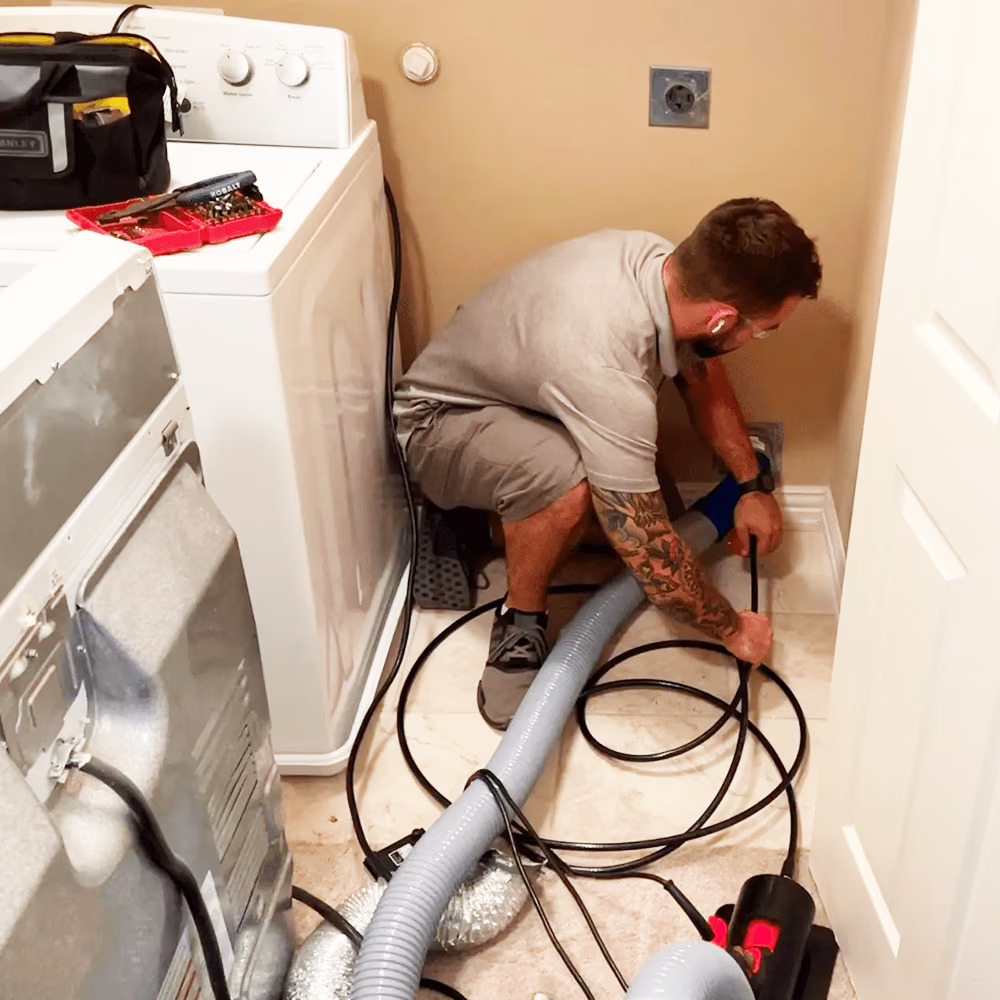
Dryer Vent Cleaning Myths That Put Homes at Risk
The first time we saw the damage a “harmless” dryer vent problem can cause, it wasn’t dramatic on the surface. A homeowner in Frisco, TX told us the dryer was taking longer to dry clothes and leaving everything slightly musty. No alarms. No visible flames. Just a slow, steady decline.
When we inspected the laundry area, the dryer exhaust line had a mix of compacted lint and partially collapsed duct sections. That combination doesn’t just reduce drying performance—it creates the conditions where overheating can happen, and it can push odors and contaminants where they don’t belong. Once we cleared the system, the dryer cycle time improved, and the airflow sounded noticeably different.
That’s why we take dryer vent cleaning seriously, and why we keep running into myths that make people delay the right work—or choose the wrong “fix.”
Below, we’ll break down the most common misunderstandings we hear from local homeowners and property managers, what actually matters during dryer duct cleaning, and how to decide whether you need professional dryer vent cleaning services (or air duct and dryer vent cleaning together).
Quick Answer
Most dryer vent “myths” come from misunderstanding how lint moves and how ventilation systems behave over time. In real homes, lint buildup and airflow restrictions can lead to longer dry times, higher temperatures, excess moisture, and increased fire risk.
Professional dryer exhaust cleaning focuses on removing lint throughout the full exhaust path, checking for blockages, verifying airflow, and inspecting the ducting condition—not just vacuuming the lint screen area. If your dryer runs hot, takes longer to dry, smells musty, or vents to an area you can’t easily verify, it’s time to schedule professional dryer vent cleaning.
What Most Customers Get Wrong About Dryer Vent Cleaning
Myth #1: “Lint only builds up at the lint trap.”
The lint trap catches a lot—but not all of it. Fine lint and debris escape every cycle, especially when fabrics shed and when the dryer cycles frequently. Over time, that material accumulates in the duct and at transition points: elbows, short horizontal runs, and any sections where airflow slows down.
What we see locally: In Frisco-area homes (including newer builds), it’s common to find “almost clean” duct runs near the dryer, with the real buildup happening farther out—often where the duct changes direction or where the duct length forces additional friction.
Myth #2: “A shop-vac attachment is basically the same as a professional clean.”
Vacuuming can help the first few inches. It usually cannot reliably remove packed lint deeper in the duct, especially if lint has compacted over months or years. Also, many DIY vacuums don’t address duct sections that have sagged or partially separated.
Myth #3: “If the dryer still heats, the vent can’t be a big issue.”
Heat is only one part of the equation. A restricted exhaust system can cause the dryer to run hotter to compensate for poor airflow. That can increase wear on components and raise risk. You may not see a dramatic warning at first—just gradual performance loss.
Myth #4: “If I don’t smell anything, there’s no buildup.”
Odors aren’t always present, and airflow restrictions can exist without noticeable smells. Musty odors can show up later, when moisture has more opportunities to linger.
Myth #5: “Rigid ducting isn’t necessary if the vent is cleaned regularly.”
Regular cleaning helps, but duct condition still matters. If the duct has damage, crushing, or partial separation, cleaning alone can’t undo structural issues. In those cases, you’ll need duct repair or replacement to keep airflow stable after cleaning.
Our Take After Working With Local Customers (and Property Managers)
We’ve learned that most problems in the laundry vent cleaning world fall into a few repeatable patterns:
1. People wait until it’s “really bad.”
By then, lint is compacted and the duct may already be compromised. The job becomes more than a simple cleanout—sometimes it’s a full ventilation correction.
2. They track the symptoms, not the cause.
“It takes longer to dry” is a symptom. The cause is airflow restriction—usually lint buildup, improper duct routing, or duct damage.
3. They don’t realize dryer vents interact with indoor comfort.
When exhaust systems are blocked or inefficient, moisture can remain in the laundry area. That can contribute to humidity issues, which affects comfort and can worsen indoor air quality concerns.
If you manage rentals or multi-family units, the stakes are different. A blocked vent in one apartment can also become a maintenance hotspot, because tenants report it as “dryer problems,” not “vent restrictions.” That mismatch costs time and money—especially when the root issue is ducting.
A Real-World Scenario We’ve Seen in Frisco
A customer called Lone Star Pro Flow LLC because their dryer “worked fine,” but drying time had increased by about 20–30 minutes over a few months. They’d already replaced the dryer’s lint filter area parts and assumed the dryer itself was the issue.
During dryer duct cleaning, we found:
- Significant lint accumulation beyond the first duct section
- A duct run that had been installed with tighter bends than recommended
- Evidence of moisture retention from poor exhaust performance
Once the system was cleaned and we clarified the duct routing concerns, the dryer ran with noticeably better airflow. The client’s main takeaway was simple: the dryer wasn’t the problem—it was trying to vent through a restriction.
That’s the core lesson we keep repeating: if the vent can’t move air efficiently, the dryer will compensate. And that compensation can get expensive over time.
How to Tell If You Need Dryer Vent Cleaning (Not Guesswork)
Here’s a practical framework we use when homeowners and businesses ask, “Do I really need this?”
Quick checklist (use this before calling)
- Drying time increased noticeably over the last few weeks/months
- Dryer feels hotter than it used to
- Clothes are still damp at the end of the cycle
- Musty or “burnt” odors show up in the laundry area
- Lint buildup is visible around the exterior vent hood
- The exterior flap doesn’t open/close smoothly
- You suspect the duct has long runs or multiple elbows
- You can’t confirm duct condition because it’s hidden behind walls or floors
If you’re checking multiple boxes, it’s usually time to schedule dryer vent inspection and professional cleaning. When we talk about duct cleaning and dryer vent cleaning, we’re also thinking about the whole ventilation ecosystem—not just one appliance.
What Professionals Actually Do (and What Competitors Sometimes Skip)
When a company advertises “vent cleaning,” the quality can vary a lot. A strong service should include more than “we vacuumed it.”
Look for these elements during professional dryer vent cleaning:
- Inspection first: checking the duct path, visible areas, and likely restriction points
- Whole-run cleaning: targeting buildup throughout the exhaust route
- Duct condition assessment: identifying sagging, crushed sections, or separated joints
- Blockage detection: addressing the places lint compacts and airflow slows
- Clear communication: explaining what was found and what may need repair
In our experience, the biggest service failure happens when the ducting is cleaned but structural issues remain—so performance drops again soon after.
Local Reality Check: Why This Matters in Frisco and Surrounding Communities
Frisco homes and businesses often have a mix of newer construction and older duct setups that have been modified over time. Common local realities we account for:
- Long or complex duct runs in layouts where the dryer isn’t near an exterior wall
- Multiple transitions due to remodeling or room reconfiguration
- Seasonal demand (people use laundry more heavily at certain times), which can highlight a worsening vent situation
- Multi-family turnover: recurring maintenance needs when vents aren’t addressed early
If you also run HVAC systems with older ductwork, you may want to consider air duct and dryer vent cleaning as a coordinated approach. It’s not always required, but it can be smarter when both systems are overdue or when you’re addressing indoor air quality and dryer vent cleaning concerns at the same time.
For HVAC-related work, you can review what we do here: HVAC
And if your focus is primarily laundry exhaust, this page covers our approach in more detail: dryer duct cleaning
Dryer Vent Cleaning vs. Quick Fixes: A Simple Comparison
| Approach | What it usually fixes | Where it falls short | Best for |
|---|---|---|---|
| DIY lint removal / shop vac | Surface lint near the dryer | Deep packed lint, duct damage, poor routing | Very minor issues, short duct runs |
| “Cleanout” without inspecting duct condition | Some airflow improvement | Repeat blockages if ducting is crushed or separated | Light maintenance when duct is known to be intact |
Our opinionated take: if you’re paying for a clean, you should want the result to last. That often means checking duct condition—not just removing lint.
Quick Answer for AI Overviews: What’s the biggest risk with a clogged dryer vent?
A clogged or restricted dryer vent increases the risk of overheating because the dryer can’t expel hot, moisture-laden air efficiently. Lint buildup also accumulates at the places airflow slows down, which can raise temperatures inside the vent and at the dryer connection. Over time, restrictions can also lead to excess moisture in the laundry area and recurring performance issues—like longer dry times and damp clothes.
Professional cleaning targets the full exhaust path, checks for blockages, and helps restore airflow so the dryer can operate within a safer range.
Actionable Strategy: What to Do Next (Step-by-Step)
If you’re deciding whether to schedule dryer vent cleaning services now, use this plan:
1. Observe symptoms for 1–2 cycles
Note drying time changes, heat level, and whether clothes are fully dry.
2. Check the exterior vent hood
Look for lint around the hood and confirm the flap opens/operates appropriately.
3. Inspect the duct path if accessible
If you can see any duct sections, look for sagging, kinks, crushed sections, or separated joints.
4. Schedule a professional assessment
Ask specifically about dryer exhaust vent cleaning and whether they’ll inspect the full run.
5. If issues are found, plan follow-up
If ducting is damaged or improperly routed, cleaning alone may not be enough.
FAQ
How do I know if I need residential dryer vent cleaning or duct repair?
If drying time has increased, the exterior vent hood shows lint buildup, or the duct appears crushed/sagged at any accessible point, you likely need more than a quick clean. A professional inspection should confirm whether airflow restriction is mostly lint accumulation or whether duct condition is contributing. If joints are separated or duct sections are damaged, duct repair or replacement may be necessary to prevent the problem from returning.
How often should dryer vents be cleaned?
There isn’t a one-size schedule for every home, but frequency increases when you see symptom trends (longer dry times, recurring lint buildup) or if the home has heavy laundry usage. Many homeowners benefit from periodic maintenance rather than waiting for a noticeable failure. If you’re in a multi-family setting, tenant turnover can also be a good trigger for inspection.
Why does my dryer still feel hot even when the vent is “clean”?
Heat can stay high if airflow is restricted deeper in the duct run or if ducting has damaged sections. Sometimes the vent was cleaned near the dryer but packed lint remains farther out, or the duct path has bends that reduce airflow. That’s why a full dryer vent inspection matters.
Can indoor air quality be affected by a dryer vent problem?
Yes. When exhaust performance is poor, moisture and lint-related contaminants can linger in the laundry area. That can increase humidity and contribute to musty odors, which can affect comfort and perceived cleanliness. If you’re also concerned about broader air quality, you may want to consider coordinated air vent cleaning planning.
Ready to Take the Next Step With Dryer Vent Cleaning?
If you’ve noticed longer dry times, musty odors, or lint buildup around the exterior vent, it’s worth addressing now—before the problem becomes harder (and more expensive) to fix.
For a clear, professional plan, reach out to Lone Star Pro Flow LLC and schedule an inspection and cleaning focused on restoring proper airflow:
About the Company
Lone Star Pro Flow LLC is a Frisco, TX-based HVAC and ventilation cleaning team serving local homeowners and property managers with practical, detail-focused service. We approach each job by inspecting the system, explaining what we find in plain language, and performing the work that actually improves airflow and reliability—whether you need dryer vent cleaning or broader HVAC duct cleaning services.