
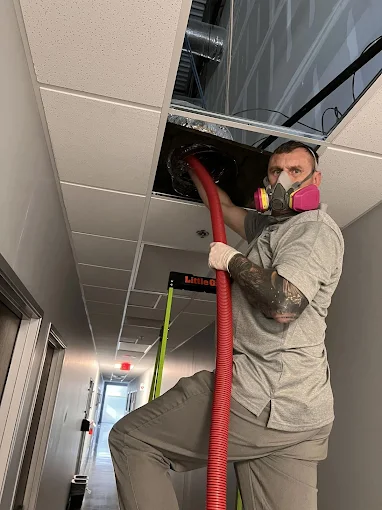
Dryer Vent Cleaning in Frisco, TX: Protect Your Home from Lint Buildups and Vent Blockages
Last summer, a homeowner in Frisco called Lone Star Pro Flow LLC because their laundry routine “seemed slower than usual.” The dryer still heated up, the clothes came out warm—but the vent run was always hot, and the lint screen looked unusually full even after normal cycles. When we inspected the exterior termination, we found a mix of compacted lint and debris that had tightened over time. That didn’t just reduce airflow; it created the conditions for a dangerous situation.
In Frisco and the surrounding communities, homes and apartments often share the same challenge: dryer vents run through walls, attics, and exterior soffits where lint accumulates out of sight. Over time, that buildup can restrict airflow, increase drying time, and raise risk. This guide explains how to spot the problem early, what professionals actually do during dryer vent inspection and dryer lint removal, and how to choose duct and dryer vent cleaning services that get results—not just a quick vacuum.
Quick Answer
Most dryer-related vent problems come from lint buildup and partial blockages in the duct and at the vent termination. Professional dryer vent cleaning improves airflow, helps dryers run cooler and more efficiently, and reduces risk from restricted exhaust paths. If you notice longer drying times, a hot dryer/exhaust area, repeated “overheating” errors, or visible lint around the vent outlet, it’s time for a professional dryer exhaust cleaning and inspection.
If you’re also dealing with whole-home airflow issues, pairing this with air duct cleaning can help you maintain better indoor air quality overall—especially in homes with existing HVAC airflow restrictions. For our HVAC help, see HVAC service.
Why Dryer Vent Cleaning Matters (Even If Your Dryer Still Works)
A dryer doesn’t just “blow out air.” It pulls moisture-laden air from your laundry drum, then pushes it through a duct system that’s designed to vent hot air safely outdoors. The issue is that dryer exhaust carries lint—and lint doesn’t disappear. It builds up.
Here’s what we see frequently in North Texas homes:
- Lint compacts inside elbows and vertical runs. These areas are where airflow slows down and lint settles.
- Exterior terminations clog. Bird nests, leaves, and dust buildup can reduce exhaust flow and trap moisture.
- Flexible duct sections collect debris. Some older installations use accordion-style ducting, which creates more surface area for lint to stick.
- Partial restrictions look “fine” at first. A dryer may still heat and tumble clothes, but it works harder—raising heat at the wrong places.
One real-world scenario we encounter: a family that does several loads on weekends. Their dryer “seems okay” during the week, but after heavy laundry days they notice musty odors or longer cycle times. That pattern usually points to a vent path that’s already near its limit. Professional cleaning removes the restriction so the dryer can do its job efficiently again.
What We’ve Learned Locally: What Most Customers Get Wrong About Vent Cleaning
In our experience with local homeowners and property managers in Frisco and nearby areas, the most common mistakes aren’t about effort—they’re about assumptions.
Mistake #1: “I clean the lint screen, so the vent is fine.”
Lint screens catch a portion of lint, but not the fine particles that travel deeper into the duct system. Even with diligent dryer lint removal, the vent path still needs periodic attention.
Mistake #2: A quick shop-vac job is “good enough.”
A basic vacuum can help with loose lint near the dryer connection. But dryer vent blockage removal often requires proper tools, correct technique, and attention to bends and the termination. Otherwise, the buildup stays in the places that matter most.
Mistake #3: Waiting until the dryer “smells hot” or trips a sensor.
By then, the system may already be operating under restricted exhaust conditions. You can reduce risk by addressing the cause early—before it becomes an emergency.
Mistake #4: Ignoring the duct material and layout.
Some ducts are installed with unnecessary bends, long runs, or poor transitions. Cleaning helps, but if the ducting configuration is already restrictive, maintenance must be paired with a practical improvement plan.
If you want the bigger picture of airflow and ductwork cleaning, we also cover whole-system support through dryer duct cleaning and related services.
Frisco, TX Reality Check: How Local Homes Change the Cleaning Plan
Frisco homes tend to have a mix of newer construction and established neighborhoods, and that affects dryer vent cleaning needs.
A few local factors we account for during inspection:
- Long vent runs through interior cavities. Many installations route ducting through attic spaces or wall cavities where lint accumulates undetected.
- Exterior conditions around vent terminations. Texas weather cycles plus dust and debris can increase buildup at the outside cap.
- Multi-family properties. In apartments and condos, shared venting layouts and maintenance schedules can lead to inconsistent cleaning over time—especially if tenants rotate frequently.
Serving nearby areas means we often support property managers who need dependable results across multiple units. For those situations, consistency matters: the same inspection standards, the same cleaning approach, and clear documentation of what was found.
If you manage a rental or multi-unit building, you’ll likely want both residential dryer vent cleaning approaches and a schedule that matches tenant turnover and laundry demand. When dryer exhaust cleaning is done correctly, it’s easier to see patterns and prevent recurring issues.
The Professional Dryer Vent Inspection & Cleaning Process (What to Expect)
When you hire Lone Star Pro Flow LLC for dryer vent inspection and cleaning, the goal is not just “remove lint.” It’s to restore safe exhaust flow and identify what’s causing restrictions.
A typical professional workflow includes:
1. Assessment of the vent route
- We review how the duct runs from the dryer to the exterior termination.
- We look for bends, long runs, and any sections that commonly trap lint.
2. Dryer-side inspection
- We confirm the connection and check for early signs of buildup.
- We identify whether the ducting is partially obstructed or poorly configured.
3. Vent inspection and documentation
- We inspect the duct path and exterior termination to locate where lint and debris accumulate most.
4. Targeted dryer lint removal
- We remove buildup using equipment and technique designed for duct systems (not just a surface vacuum).
- We focus on elbows, transitions, and the areas where blockage tends to form.
5. Final verification
- We confirm airflow restoration and check that the termination is clear.
- We share any recommendations if the duct layout is contributing to repeated restrictions.
This is also where we can advise on whether you should treat this as an ongoing maintenance item (often the safest choice) versus a one-time fix.
What to Do Before You Hire: A Simple Framework for Choosing Services
Not all duct and dryer vent cleaning services deliver the same results. Use this checklist to compare providers—especially if you’ve searched for “air duct cleaning and dryer vent cleaning near me” or “professional dryer vent cleaning.”
Step-by-Step Checklist: Dryer Vent Cleaning “Quality Controls”
- Do they start with an inspection?
If the process begins with cleaning immediately, without evaluating the duct route and termination, you may not get full coverage.
- Do they address the exterior termination?
Many blockages are at the outside cap or vent outlet.
- Do they explain how the duct is configured?
A good company will talk about bends, duct material, and where restrictions form.
- Do they communicate what they found?
Clear reporting builds trust and helps you plan future maintenance.
- Do they recommend a maintenance schedule?
Dryer vent maintenance isn’t one-size-fits-all. Laundry volume, duct layout, and household routines change the timeline.
- Do they connect the dots with indoor air quality and airflow?
If your HVAC system and dryer systems share airflow concerns (or your home is already dealing with dust and airflow imbalance), you’ll want a team that understands both.
DIY vs Professional: Why the Difference Shows Up Later
A lot of homeowners start with DIY because it feels straightforward. Sometimes it helps. But here’s the tradeoff we see repeatedly: DIY can remove surface lint while leaving compacted buildup in the bends or at the termination—where airflow restrictions actually form.
| Approach | What You Can Usually Fix | Where DIY Often Falls Short | Best Use Case |
|---|---|---|---|
| DIY vacuuming/cleaning | Loose lint near the dryer connection | Elbows, long runs, and exterior termination | Quick maintenance if the system is already in good condition |
| “One-time deep clean” with no follow-up | Temporary improvement | If duct layout and usage patterns continue | Better than doing nothing, but maintenance planning helps prevent repeats |
FAQ: Dryer Vent Cleaning in Frisco (What Homeowners Ask Us)
How do I know if I need professional dryer vent cleaning?
If you notice longer drying times, a dryer that runs hotter than usual, a musty smell on laundry, lint buildup around the vent outlet, or a dryer that triggers error codes or shuts off early, it’s a strong sign you have a restriction. Even if the dryer still works, partial blockages can develop quickly in duct elbows and at the exterior termination.
What should I check before scheduling a local company?
Look for whether they conduct an inspection of the vent route and termination, and whether they can explain what they found. Avoid providers that don’t discuss the duct configuration or that only focus on the dryer-side connection. If you’re searching for duct and dryer vent cleaning in your area, ask about how they verify airflow after cleaning.
Why does the problem keep coming back after cleaning?
Recurring restrictions usually come from one (or more) of these: lint accumulation in hard-to-reach areas, a duct layout with too many bends, flexible ducting that traps lint, or an exterior termination that clogs with debris. A professional inspection can identify which factor is driving the repeat issue.
How often should dryer vent maintenance be scheduled?
There isn’t a single perfect schedule for every home. Laundry volume, duct length, and how the duct is routed all change the timeline. A practical approach is to start with a professional cleaning and inspection, then follow recommendations based on what the team finds and how your household uses the dryer.
Ready to Get Your Dryer Vent System Inspected and Cleaned?
If you’re seeing longer drying cycles, excessive heat near the dryer, or you suspect lint buildup in hidden duct sections, it’s worth getting a proper inspection. Lone Star Pro Flow LLC serves homeowners and property managers around Frisco with professional dryer duct cleaning focused on restoring safe airflow and reducing risk from vent blockages.
About the Company
Lone Star Pro Flow LLC is a local team based in Frisco, TX, focused on dependable airflow services for homes and businesses. We combine hands-on industry experience with a practical inspection-first approach—so you don’t just get “cleaned,” you get the problem correctly identified and addressed. For related services, you can also explore HVAC support when your system needs broader attention.
For more information, visit https://lonestarproflow.com/.