
Dryer Vent Cleaning: When to Schedule for Peace of Mind in Frisco (and Nearby Areas)
The first time you smell “hot laundry” that doesn’t go away—even after everything dries normally—you don’t panic. You check the lint trap. Then you check the settings. And if the smell lingers or drying time keeps creeping up, you start wondering whether the vent system is quietly building a problem behind the scenes.
In Frisco and the surrounding communities, that pattern is common. Homes and apartment units here often have tight layouts, long vent runs, and plenty of seasonal laundry demand. When the dryer exhaust can’t breathe, it doesn’t just slow down drying—it can affect indoor comfort and safety.
This guide explains when to schedule professional dryer duct cleaning, what “good timing” looks like in real households, and how to avoid the common mistakes that make dryer vent problems come back.
Quick Answer
Schedule professional dryer vent cleaning when you notice reduced airflow (slower drying, longer cycles), visible lint around the dryer/exhaust area, unusual heat or odors, or recurring blockages. If you don’t have obvious symptoms, many homeowners and property managers still benefit from cleaning on a predictable cycle—especially in homes with heavy laundry use or longer vent runs.
What “Good Timing” Looks Like (Beyond Just Waiting for a Smell)
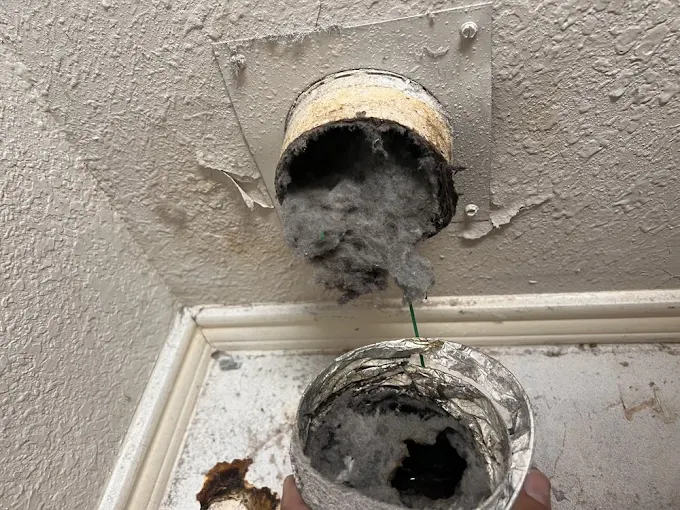
From what we see at Lone Star Pro Flow LLC in the Frisco area, the best time to schedule dryer duct cleaning is when the system shows early warning signs. By the time lint is fully packed at the wrong spots, you’re not just dealing with inconvenience—you’re dealing with airflow restriction that can contribute to overheating.
Here are the triggers that typically mean it’s time:
1) Drying time has increased
If normal loads take noticeably longer—especially across several cycles—that’s usually airflow resistance. Lint buildup reduces airflow and heat transfer, so the dryer keeps working longer to reach the same dryness.
Practical example: A family in Frisco might start noticing towels come out slightly damp after bedtime loads. They increase time or try “high heat.” A few weeks later, the dryer runs hot and the vent area collects more lint than before. That’s a typical early-to-mid stage blockage pattern.
2) Clothes feel hotter than they used to
Over time, restricted exhaust can cause the dryer to run hotter. You might notice:
- The dryer housing feels unusually warm
- Clothes come out very hot even on lower settings
- The room around the dryer feels warmer than normal
3) You smell “hot lint” or musty odors
Odors are often the first sign customers notice. The smell can come from lint near the hood/exhaust outlet or from lint that’s been baked by heat in the vent path.
4) The exterior exhaust flap doesn’t behave normally
When the dryer runs, the exterior vent should open properly and exhaust air noticeably. If you see little airflow, poor flap movement, or visible lint around the termination point, schedule cleaning.
5) You’ve recently installed or changed the dryer setup
New dryer installations aren’t “clean by default.” If the vent run includes turns, the duct material is rough, or the path wasn’t assembled to reduce restrictions, you can create conditions where lint accumulates faster.
6) You’re a business or multi-family property managing heavy use
Commercial laundry rooms, apartments, and condos often face higher usage and less consistent maintenance. If multiple tenants or staff use the same dryer bank, vent cleaning schedules need to be tighter and more predictable.
What Most Customers Get Wrong About Dryer Vent Cleaning
We hear two common misunderstandings repeatedly.
Mistake #1: “The lint trap catches everything”
The lint trap catches what you can see. The rest travels through the venting system. With each cycle, more lint deposits along the duct walls—especially at bends, long runs, and joints.
Mistake #2: “If the dryer still runs, it’s fine”
A dryer can keep running even when airflow is restricted. That’s the problem: it works harder to compensate, which increases heat exposure and prolongs cycle times. By the time someone decides to act, lint is often compacted deeper in the exhaust path.
Mistake #3: “DIY brush kits are the whole solution”
DIY tools can help for surface lint, but they don’t always reach and remove the packed material deeper in the ductwork. Without proper technique and equipment, you may loosen debris without fully clearing it—meaning performance doesn’t improve as much as you expect.
How This Applies Locally in Frisco (Residential and Multi-Family Realities)
Local conditions matter. In Frisco, many homes and rental properties have:
- Longer vent runs due to room layouts
- More transitions and turns (which are lint “catch points”)
- Vent materials that vary by age of the home (and sometimes weren’t installed for today’s dryer performance needs)
We also see a seasonal pattern. During peak laundry periods—holidays, school schedules, and weather-driven indoor drying—dryers run more often, which accelerates lint accumulation.
Residential homes: watch the household pattern
If your household does heavier-than-average laundry—sports gear, towels, bedding, frequent loads—your “normal” cycle times can shift faster than you think. In that situation, scheduling cleaning sooner (rather than waiting for symptoms to become severe) is usually the smartest move.
Apartments/condos: treat it like shared infrastructure
For apartment dryer vent cleaning and condo laundry areas, the system experiences higher throughput and inconsistent tenant behaviors. A tenant may avoid reporting drying issues until they’re frustrated, and by then, lint buildup has often progressed. Regular service helps keep cycles efficient and reduces the risk of repeated complaints.
A Simple Scheduling Framework You Can Use
Instead of guessing, use a practical framework based on how your dryer behaves and how the property is used.
Step-by-step checklist (use it before you book)
1. Time a normal cycle for typical loads. Has it increased recently?
2. Check the lint trap after a few cycles. Is lint accumulation unusually fast?
3. Inspect the exterior vent outlet (hood/termination). Any lint around it?
4. Test airflow during operation. Do you feel strong exhaust at the outlet?
5. Look for heat signs near the dryer and laundry area.
6. Consider usage level:
- Light: occasional loads
- Moderate: weekly routines
- Heavy: families, uniforms, multi-load days, property laundry rooms
7. Plan professional service when you hit any warning signs—or when heavy use makes “waiting” unnecessary.
Recommended “schedule” approach (typical scenarios)
- If you see symptoms: schedule promptly.
- If you don’t see symptoms but you have heavy usage, long vent runs, or shared laundry: schedule proactively on a regular cycle.
- If you recently had renovations or duct changes: schedule soon after installation to establish baseline performance.
DIY vs Professional: What Actually Changes the Outcome?
| Approach | What it does well | Where it often falls short | Best for |
|---|---|---|---|
| DIY lint removal (lint trap + basic brush) | Reduces surface lint | Can miss packed buildup deeper in the duct; may not fully clear bends/joints | Quick touch-ups when performance is already normal |
| Professional dryer vent cleaning | Removes deeper lint and improves airflow across the full run | Requires scheduling; needs access and service time | When drying time/odors/heat suggest restriction, or for proactive maintenance |
Professional dryer duct cleaning typically focuses on clearing airflow paths more completely than basic homeowner tools can manage—especially where lint collects in hard-to-reach areas.
What to Expect From Professional Service (So You Can Plan Around It)
When Lone Star Pro Flow LLC performs dryer exhaust cleaning in Frisco, the goal is straightforward: restore proper airflow and reduce the buildup that causes slow drying and recurring issues.
You can usually expect a service process that includes:
- Assessing the dryer connection and vent path
- Inspecting for visible and suspected buildup points (especially bends and joints)
- Cleaning to remove accumulated lint throughout the accessible run
- Verifying airflow performance improvements where possible
If your setup includes challenging ducting or unusual routing, we’ll help you understand what’s realistic and what might need follow-up attention.
External References Worth Knowing
For homeowners and property managers, these sources help explain why airflow and lint management matter:
- U.S. Fire Administration (USFA) on dryer fires and contributing factors: https://www.usfa.fema.gov/
- NFPA guidance on fire risk and home safety (general fire prevention resources): https://www.nfpa.org/
- ENERGY STAR information on dryer efficiency and proper operation: https://www.energystar.gov/
(If you’re running a multi-unit property, it’s also smart to align maintenance plans with your local building/property policies and any applicable safety expectations.)
Ready to Book Dryer Vent Cleaning in Frisco?
If your dryer is taking longer, running hotter, or producing lingering odors, that’s your cue. The sooner you clear the airflow path, the more likely you are to prevent the problem from escalating into repeated breakdowns and ongoing inefficiency.
For scheduling help, service questions, or to confirm what your system needs, reach out to Lone Star Pro Flow LLC and we’ll help you map out the right next step:
dryer duct cleaning
About the Company
Lone Star Pro Flow LLC serves homeowners and businesses around Frisco, TX, with practical HVAC and ventilation support that’s built around real-world performance. Our team focuses on restoring airflow and helping you avoid recurring problems—because in laundry systems and ductwork, prevention is usually cheaper than troubleshooting after the fact.
If you’d like to compare needs across your home’s airflow systems, you can also review our HVAC support here:
service help