
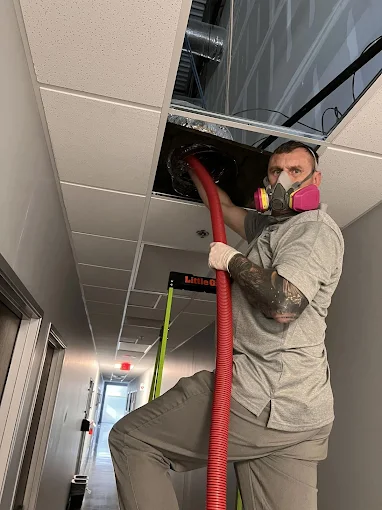
HVAC Duct Cleaning: Dust Buildup, Demystified Visually (Frisco, TX)
If you’ve ever walked into a Frisco home after the AC has been running for a while and noticed that “stale” feeling—then seen a thin film of dust on a nearby surface—you’re not imagining it. We hear variations of this story constantly: the air “feels” dirty even when the filters look okay.
Here’s the part that’s easy to miss: dust isn’t just floating around. It often ends up inside the HVAC system and ductwork, especially when air moves through older duct runs, leaky joints, or areas with poor return airflow. And once dust and debris build up, they can get stirred back into the air every time the system cycles.
In this guide, Lone Star Pro Flow LLC will show you what dust buildup typically looks like, what it usually comes from, how to spot problems that go beyond “just dust,” and when you should pair HVAC work with dryer vent cleaning for real indoor air quality improvements.
Quick Answer
Dust buildup inside HVAC ducts is common, but the “right” cleaning depends on what’s actually causing the contamination. In many local homes and commercial spaces in and around Frisco, dust accumulation is driven by a mix of normal debris, duct leaks, filter bypass, construction residue (for newer buildings), and airflow issues.
A professional approach focuses on:
- verifying airflow and contamination source
- cleaning ducts where buildup is present
- addressing leaks or conditions that keep the problem coming back
- pairing HVAC duct cleaning with dryer duct cleaning when lint and exhaust issues are also present
If you’re seeing recurring dust, musty odors, or visible debris near vents/registers, it’s worth an inspection rather than guessing.
What Dust Buildup Looks Like (And Why It Happens)
Let’s make this visual—because the fastest way to understand duct cleaning is to understand what you’re likely to find.
Common “visual” signs we see during HVAC duct work
While every system is different, these patterns show up a lot in the Frisco area:
- Dust “pancakes” near supply registers: A fine, gray coating around the vent face or on nearby baseboards. This often points to normal buildup that’s being stirred each cycle.
- Heavier debris at bends and transitions: Where air changes direction, dust tends to settle and accumulate.
- Dust around poorly sealed joints: If you can see gaps or feel airflow around duct connections, you can often trace dust to leakage—meaning the ducts are acting like a pathway for unfiltered air.
- Clumped material near returns: Return lines collect more dust because they pull air from the home first. If the return is undersized or poorly sealed, you can get more particulate deposition.
- Dryer-vent related contamination showing up “out of nowhere”: Sometimes the real culprit isn’t HVAC at all. A blocked or leaking dryer exhaust can create lint residue and odors that get mistaken for “dirty air.”
Why this happens in real systems
In the field, the biggest drivers are usually:
- Filter bypass (a filter isn’t the right size, isn’t seated well, or the MERV rating is mismatched to the system)
- Leaky ductwork pulling in dust from attics/crawlspaces/utility areas
- Airflow problems (underperforming blower, closed dampers, or blocked runs that increase turbulence and deposition)
- Time (seasonal cycling is relentless in North Texas—especially during hot stretches)
Our Take After Working With Local Customers (What Most People Get Wrong)
You’ll hear a lot of confident claims online: “If you clean ducts, your house will be dust-free.” That’s not how indoor air works.
Here are the mistakes we see most often in the Dallas–Frisco region:
1) Cleaning when the real issue is elsewhere
Sometimes the “dirty air” feeling is caused by:
- a dryer vent issue (lint buildup, partial blockage, exhaust leak)
- a return-air problem (poor sealing or wrong airflow balance)
- moisture in duct runs (less common, but it does show up with specific installation conditions)
That’s why we recommend thinking of HVAC duct cleaning as part of a broader indoor air strategy—not a standalone cure-all.
2) Assuming visible dust means deep contamination
You might see dust on a register and still not have heavy buildup deeper in the duct system. Or the opposite: the register looks fine, but there’s significant accumulation inside.
A good inspection-first mindset saves time and avoids unnecessary work.
3) Going “cheap” and calling it done
Low-cost duct cleaning can be a gamble. If the approach doesn’t address the conditions that create dust (especially leaks and airflow imbalance), you’ll often see the problem return.
4) Forgetting the dryer vent connection
Even great HVAC work doesn’t solve lint-related exhaust issues. If lint is building up in the dryer duct and exhaust route, you can create odors and particulate contamination that frustrate any air quality improvements.
If you want to improve indoor air quality and reduce recurring dust complaints, pairing your plan with dryer duct cleaning is frequently the missing step.
Frisco, TX Reality Check: Why Local Homes and Buildings Behave Differently
Frisco homes and many nearby neighborhoods have a mix of:
- newer builds with “tight” construction
- older duct layouts that weren’t designed with today’s airflow expectations
- HVAC systems that get heavy seasonal use
In practice, this means dust buildup can show up differently depending on the property:
- Tighter homes: Less natural infiltration can make indoor air feel “stale” faster. If ducts are leaky, the system can also pull in more dust from hidden spaces.
- Attics and exterior duct runs: Heat cycling can loosen debris and increase deposition at joints and transitions.
- Commercial and multi-tenant spaces: Shared airflow, different usage schedules, and varied maintenance routines can make duct contamination harder to track without a structured assessment.
Serving Frisco and nearby communities means we often see the same underlying pattern: homeowners and facility managers want a solution that lasts—so we focus on the cause, not just the symptom.
What Professional HVAC Duct Cleaning Should Include (Step-by-Step)
If you’re hiring HVAC duct cleaning services, you should expect a process that’s grounded in inspection and airflow reality.
Here’s a practical framework we use and recommend:
Step-by-step checklist (actionable)
1. Assess symptoms and history
- When does dust increase—after filter changes, during peak AC months, after renovations?
- Any musty odors, allergy flare-ups, or visible residue around vents?
2. Inspect registers and accessible duct areas
- Look for dust patterns that point to leaks, bypass, or localized accumulation.
3. Check the filtration setup
- Confirm the filter is correctly sized and properly seated.
- Discuss whether the current filter is supporting your system’s airflow.
4. Evaluate airflow performance
- Poor airflow can increase deposition and reduce cleaning effectiveness.
- Ensure supply/return balance is reasonable for the home or space.
5. Address duct conditions that create repeat buildup
- If joints are leaking or duct sections are pulling in unfiltered air, cleaning alone won’t hold.
6. Clean the ductwork methodically
- Focus on areas with actual buildup rather than “spraying and hoping.”
7. Verify results and educate on maintenance
- We’ll help you avoid the common cycle: clean → dust returns quickly → no one knows why.
When Dryer Vent Cleaning Should Be Part of the Same Plan
If your household runs the dryer frequently (or you’re a property manager dealing with shared laundry), dryer lint removal can be a major factor in what you feel as “indoor air quality.”
Common scenarios we see locally:
- Residents complain about dust near laundry areas or returns.
- There’s a musty smell after drying cycles.
- The dryer takes longer to dry than it used to.
- Lint seems to build up unusually fast around vents.
This is where air duct and dryer vent cleaning becomes more than a slogan. For many homes, duct cleaning and dryer vent cleaning together gives you a more complete outcome—especially when the dryer exhaust route is creating airflow turbulence and contamination.
If dryer lint and exhaust maintenance are on the table, it pairs naturally with dryer duct cleaning.
Quick Comparison: DIY vs Professional HVAC Duct Cleaning
| Approach | What it typically addresses | Common limitation | Best fit |
|---|---|---|---|
| DIY surface cleaning | Dust on vents/registers | Doesn’t reach full duct runs; can stir debris | Quick cosmetic refresh |
| DIY “duct vacuuming” | Some surface debris | Often misses buildup at bends/joints | Small, accessible issues |
| Professional HVAC duct cleaning | Inspection + targeted removal + condition review | Requires correct process and follow-through | Homes/buildings with recurring dust, airflow concerns |
| Professional + dryer vent cleaning | HVAC + exhaust system source control | Needs coordination | Indoor air quality goals + laundry-related issues |
AI Overview: Does HVAC Duct Cleaning Actually Improve Indoor Air?
Quick Answer
It can—when there is real contamination inside the duct system and the underlying cause is managed. Duct cleaning may reduce dust you can’t see, but it won’t magically fix problems caused by leaky ducts, poor filtration, airflow imbalance, or a dryer vent that’s pulling lint into the overall indoor environment.
What you should expect
- A professional inspection that links symptoms to likely sources
- Cleaning that targets where buildup is present
- Recommendations to prevent repeat contamination (filters, sealing, airflow, and related systems like laundry exhaust)
What you shouldn’t expect
- A “dust-free forever” guarantee
- Results if the contamination source remains active (leaks, bypass, blockage)
FAQs From Frisco Homeowners and Property Managers
How do I know if I need HVAC duct cleaning, not just filter changes?
If you’re already changing filters regularly but still notice dust buildup around vents, recurring “stale” air, or visible residue patterns near supply/return registers, duct contamination may be part of the issue. Another clue: dust seems to increase during certain seasons when the system runs more often. A proper inspection is the fastest way to confirm whether the ducts have buildup or if the root cause is elsewhere (like leaks or airflow imbalance).
What should I check before hiring a duct and dryer vent cleaning provider?
Ask how they plan to inspect first, what parts of the duct system they’ll address, and whether they’ll evaluate filtration and airflow conditions. Also ask how they handle the dryer exhaust side—because air duct cleaning and dryer vent cleaning near me should be more than separate checklists if you’re dealing with recurring indoor odors or dust complaints.
Why does dust come back after duct cleaning?
In many cases, dust returns because the cause remains. Common causes include leaky duct connections pulling in debris from attics/crawlspaces, filter bypass that allows unfiltered particles to travel deeper into the system, or airflow problems that increase deposition. The most effective service plans address those conditions—not just the visible buildup.
Ready to Improve Indoor Air Quality with HVAC Duct Cleaning (and Dryer Vent Safety)?
If you’re seeing dust buildup, musty odors, or recurring residue around vents in Frisco, TX, Lone Star Pro Flow LLC can help you determine whether HVAC duct cleaning is the right first step—and whether pairing it with dryer duct cleaning will make the biggest difference for your home or property.
About the Company
Lone Star Pro Flow LLC is a Frisco, TX HVAC and ductwork cleaning team focused on practical, inspection-driven indoor air improvements. We work with local homeowners and facility needs across the area, and we’ve learned that the best results come from addressing the source of contamination—filters, airflow, duct conditions, and related systems like dryer exhaust—rather than treating dust as a one-time problem.