
HVAC Ductwork and Dryer Vent Cleaning in Frisco, TX for Cleaner, Healthier Indoor Air
If you’ve ever noticed more dust on shelves after you run your A/C—or you catch that “warm, musty” laundry smell even after clean loads—you’re not imagining things. In homes and businesses around Frisco, TX, we regularly see indoor air quality problems tied to two overlooked systems: the air ductwork and the dryer venting.
At Lone Star Pro Flow LLC, we handle both. And after years of working in the local market, one pattern stands out: most people don’t realize that duct contamination and dryer vent restrictions often feed the same “comfort and cleanliness” issues—airflow limits, trapped particulates, and recurring odors—until the problem is already noticeable.
In this guide, you’ll learn:
- what duct and dryer vent cleaning can (and can’t) fix,
- how to tell when cleaning is actually needed,
- what we look for during inspections,
- how to avoid the common mistakes that leave customers disappointed,
- and what a smart cleaning plan looks like for homes and commercial spaces.
Quick Answer
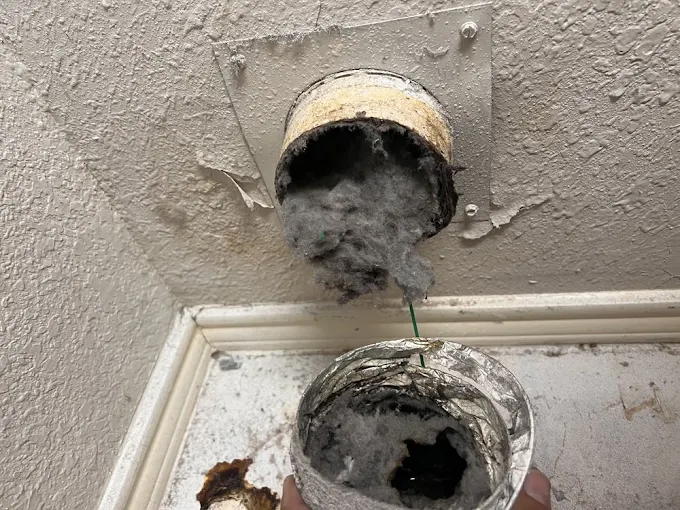
Professional duct cleaning and dryer vent cleaning can improve indoor air quality and reduce dust, odors, and allergy triggers when the system is contaminated or airflow is restricted. For dryer vents, cleaning is also a safety issue: lint buildup can lead to blockages and increase fire risk.
That said, the best results come from inspection-first service and proper cleaning methods for both the duct system and the dryer exhaust path—not a one-size-fits-all “clean and leave” approach.
How Duct and Dryer Vent Cleaning Improves Indoor Air (Without Guesswork)
Indoor air quality isn’t just about filters. It’s about what moves through your home or building’s airflow system.
What we commonly see in local ductwork
In Frisco-area homes, we often find:
- dust and debris accumulation in supply and return runs (especially in older duct systems or homes with renovation dust),
- mixed airflow issues, where some rooms feel stuffy while others get more airflow,
- poor circulation around registers, sometimes caused by duct restrictions rather than HVAC performance alone.
When duct airflow is restricted or contaminated, you can end up with more dust settling indoors. That’s why customers sometimes say, “We dust more often than we used to,” or “Our filters get dirty unusually fast.” Those are clues—not proof by themselves—but they’re the kind of starting points that lead us to inspect.
Why dryer vent cleaning affects the whole home
Dryers push moist, lint-laden air through the exhaust system. When that path gets restricted, the dryer has to work harder, and you can see symptoms like:
- longer dry times,
- clothes that feel hotter but still damp,
- lint visible around the dryer area,
- and that recurring musty laundry smell.
A blocked or partially blocked dryer exhaust line doesn’t stay “in the laundry room.” It can contribute to odors and moisture problems that spread through adjacent spaces. That’s why we treat dryer duct cleaning as indoor air quality support, not a separate “laundry-only” task.
What Most Customers Get Wrong About Duct and Dryer Vent Cleaning
After watching local customers make the same decisions over and over, here’s the biggest misconception: “Cleaning” is treated like a single generic service.
The common mistakes we see
1. Skipping inspection
- If someone starts cleaning without checking the vent route, discharge termination, and duct condition, they’re guessing. Guessing wastes time and often misses the real issue.
2. Focusing only on one system
- A home can have cleaner ducts but still have ongoing dryer-related odors and moisture strain. Or a dryer can be cleaned while the HVAC ducts continue to distribute settled dust.
3. Assuming DIY lint removal solves everything
- Many homeowners can improve airflow with basic brush kits, but those tools often don’t address the full exhaust path or hidden buildup at bends, transitions, or the termination.
4. Choosing based on price alone
- The cheapest option can be fine for very minor issues, but duct and dryer vent cleaning effectiveness depends on the equipment, technique, and thoroughness—not just the invoice.
5. Not planning for ongoing maintenance
- Cleaning helps, but vents and ductwork still collect debris over time. Without a maintenance rhythm, you may see recurring symptoms.
Our Take After Working With Local Customers
Here’s what we’ve learned the hard way through real jobs in Frisco and nearby communities: comfort complaints are often system complaints.
A customer calls and says they want “duct cleaning” because they’re tired of dust. But during inspection, we sometimes find:
- the dust is being driven by airflow imbalances or restricted sections,
- the HVAC system is pulling debris from places it shouldn’t (including areas affected by construction dust or past airflow leaks),
- or the “dust” problem is actually being worsened by dryer vent restrictions and household airflow patterns.
And on the business side, we commonly see recurring laundry or facility operations issues—especially in apartments, condos, and commercial laundry setups. When laundry equipment cycles frequently and vents aren’t maintained, lint buildup accelerates.
That’s why Lone Star Pro Flow LLC approaches duct and dryer vent cleaning as a coordinated indoor air quality improvement—especially when symptoms point to both systems.
Local Market Reality: Why Frisco Homes and Businesses Notice These Problems Sooner
Frisco is growing fast, and we see a mix of:
- newer construction (where ductwork may still be affected by installation debris or early-life settling),
- older homes with aging duct systems,
- and multi-unit properties where laundry activity is constant.
In busy households and commercial facilities, “minor” ventilation issues become “major” faster because usage is steady. Also, as HVAC systems run more consistently during seasonal swings, any airflow restriction or contamination becomes more noticeable.
If you’re searching for “air duct and dryer vent cleaning near me” or “duct and dryer vent cleaning in Frisco,” you’re probably comparing local options. Our practical take: the best companies don’t just schedule a visit—they diagnose first, explain what they found, and confirm what changed after the work is complete.
If you want to explore the HVAC side, you can review our service overview here:
HVAC Duct Cleaning
And for the laundry side:
dryer duct cleaning
Step-by-Step: A Smart Plan for Professional Duct and Dryer Vent Cleaning
You don’t need to become a technician to hire well. Use this framework to guide the conversation and the decision.
1) Start with symptoms (but verify with inspection)
Look for patterns:
- HVAC dust buildup or filter dirtiness spikes
- lingering odors (especially near laundry areas)
- longer dryer dry times
- visible lint around the dryer or vent termination
- inconsistent airflow across rooms
Then verify:
- dryer vent route and condition
- termination condition (outside discharge)
- duct condition and airflow indicators
2) Confirm what you’re actually cleaning
Ask questions such as:
- Are you cleaning supply, return, or both?
- Will you inspect the duct system for accessible contamination sources?
- For the dryer: are you addressing the full exhaust path, including bends and termination?
3) Set expectations for results
Good duct cleaning reduces contamination buildup, but it’s not a magic fix for every comfort issue. If you have:
- undersized HVAC equipment,
- major duct leaks,
- or persistent moisture problems,
cleaning helps, but the real fix may include repair or system adjustments.
For dryers, cleaning is more straightforward: if the vent is restricted, clearing it usually improves drying performance.
4) Plan the “before and after” proof
A professional service should be able to explain what changed and why.
- For dryer vents: improved airflow and reduced restriction indicators
- For HVAC ducts: reduced particulate sources and cleaner airflow pathway
5) Add a simple maintenance rhythm
Maintenance prevents “backsliding.” For dryer vents, that means periodic inspection and cleaning based on usage.
DIY vs Professional: What You Gain (and What You Risk)
| Decision point | DIY approach | Professional approach |
|---|---|---|
| Dryer lint removal | Can reduce lint near the dryer | Addresses the full exhaust path and hidden buildup |
| Time and effort | Often takes multiple attempts | Efficient inspection + targeted cleaning |
| Safety | Higher risk if vent is still blocked or damaged | Technician checks airflow path and termination |
| Indoor air impact | Limited control of where debris ends up | Designed to reduce contamination spread |
| Long-term results | May improve briefly, then restrictions return | Better chance of restoring proper airflow and reducing recurring issues |
For many homeowners and facilities, professionals cost more—but they also reduce the chance you’ll “clean it twice” because the real restriction was deeper in the system.
AI Overview-Ready: Do I Need Air Duct Cleaning and Dryer Vent Cleaning?
The Short Version
You likely need professional air duct cleaning if you have persistent dust issues linked to HVAC airflow, unusual filter loading, or visible contamination in accessible areas. You likely need dryer vent cleaning if you notice longer dry times, musty laundry odors, or signs of lint buildup beyond the lint trap.
How to decide quickly
- If the dryer takes longer than it used to → prioritize dryer vent inspection and cleaning.
- If dust keeps returning even after cleaning → consider ductwork cleaning plus an airflow check.
- If you’re experiencing both → do both systems as part of one indoor air quality plan.
What to avoid
Don’t assume that replacing a filter solves a duct contamination issue. And don’t assume a lint trap cleaning routine eliminates lint in the exhaust path. Filters help—ducts and dryer vents prevent the source of contamination.
FAQ: Real Questions We Hear in Frisco
How do I know if I need air duct cleaning?
If you’re seeing recurring dust on surfaces, your HVAC filter gets dirty faster than expected, or you notice odor or particulate issues that seem linked to HVAC cycles, it’s worth an inspection. Duct cleaning is most useful when there’s evidence of contamination and airflow distribution problems, not just because someone advertised “clean ducts” as a cure-all.
What should I check before hiring professional duct and dryer vent cleaning services?
Ask about inspection first, the scope of cleaning (especially for the dryer exhaust path), and how they verify results. Also confirm whether they work on both residential and commercial setups if you’re managing a property. A clear process beats a vague promise.
Why does the dryer smell musty even after laundry is “clean”?
That smell often points to moisture and lint buildup in the exhaust path. When airflow is restricted, lint can retain odors and moisture. Cleaning the dryer exhaust system and checking the termination can reduce the source.
How often should dryer vent maintenance happen?
Frequency depends on usage (single-family homes vs. multi-unit properties vs. commercial laundry). If you notice longer dry times or you’re cleaning lint frequently, schedule an inspection sooner. For many households, a periodic maintenance plan is safer than waiting until performance drops.
Ready to Improve Indoor Air Quality With Ductwork and Dryer Vent Cleaning?
If you want cleaner airflow and fewer recurring dust and laundry odor problems, Lone Star Pro Flow LLC can help you map out what needs attention in your home or business in Frisco, TX.
A practical next step is to start with an inspection and get a clear scope for both systems. You can reach us here:
If you’d like to review the HVAC side first, visit:
HVAC Duct Cleaning
And if your main concern is laundry performance and lint buildup, this can help too:
dryer duct cleaning
About the Company
Lone Star Pro Flow LLC is a local ductwork and ventilation cleaning team serving customers in Frisco, TX and surrounding communities. We focus on practical, inspection-led service for both HVAC systems and dryer exhaust lines—because “cleaning” should mean restoring proper airflow and reducing contamination sources, not just running equipment for a scheduled time.
When you contact us, you can expect a straightforward conversation about what’s happening in your system, what we can improve, and what maintenance steps will help keep results lasting.