
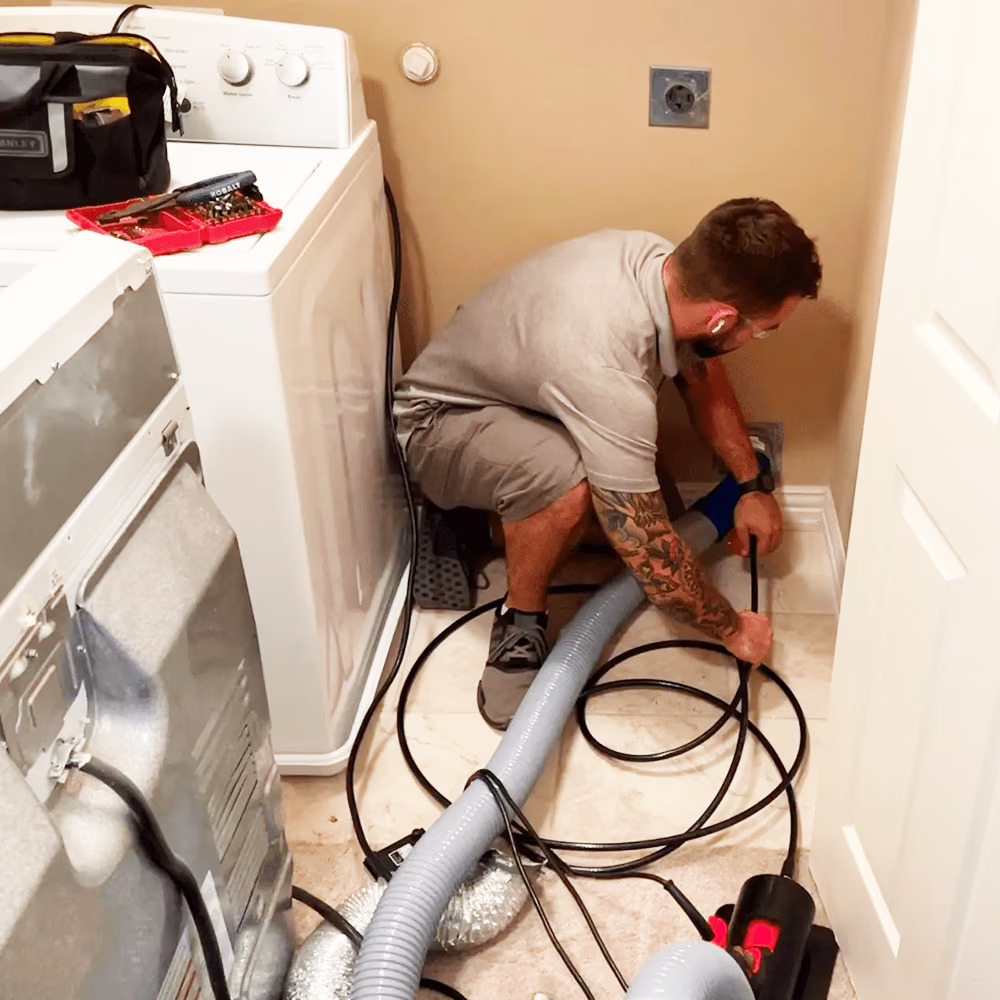
Say Goodbye to Lint: Dryer Duct Cleaning Essentials (Frisco, TX)
The first time we saw a “slow dryer” turn into a real fire hazard, it wasn’t dramatic at all—it was routine.
A Frisco homeowner called because their clothes were taking longer to dry, and the dryer area always smelled warm and dusty. When we inspected the dryer exhaust path, the duct wasn’t just “a little linty.” It was restricted enough that the dryer had to work harder, run longer, and push hot air through a partially blocked route. That’s how lint builds up fast: not because people are careless, but because the system is doing what it’s designed to do—except the duct is fighting it.
If you’re dealing with clogs, recurring lint issues, or you just want cleaner indoor air and safer laundry setups, dryer duct cleaning is one of the most practical upgrades you can make in your home or business.
Below, we’ll break down what actually matters in dryer duct cleaning, how to tell when it’s time, what to expect from professional dryer duct cleaning, and the mistakes that cause people to waste money (or miss the real problem).
Quick Answer
You should get professional dryer duct cleaning when your clothes take longer to dry, the laundry room smells dusty or “hot,” lint builds up faster than usual, the dryer vent hood looks clogged, or you notice airflow issues.
A proper service includes inspecting the vent route, removing lint from the duct and exhaust path, and checking for blockage points that DIY methods often miss (especially bends and long runs). For many homes and most multi-unit properties, scheduling maintenance more than once a year can be the difference between smooth laundry cycles and recurring lint buildup.
Why Lint Becomes a Problem (Not Just a Mess)
Dryer lint is mostly fibers and fine particles that shed from clothing during tumbling. The dryer is essentially a forced-air system: it pulls air in, heats it, and pushes it out through the exhaust duct. When that exhaust path is restricted—even partially—lint doesn’t just “sit there.” It accumulates, compacts, and increases resistance.
That creates a chain reaction:
- Longer dry times (dryer runs longer to reach dryness)
- More heat in the laundry area (especially if the vent system leaks or is blocked)
- Higher energy usage (because the dryer keeps working)
- More lint trapped in the system (which becomes harder to clear over time)
- Increased risk (lint is combustible, and restricted airflow can create dangerous conditions)
A real-world scenario we see locally
In Frisco and nearby communities, we frequently run into dryer setups installed or modified during remodeling—sometimes with extra elbows, flexible transitions, or a duct route that’s longer than it looks. The change might seem minor, but dryer airflow doesn’t forgive restrictions. A small bend can become a lint trap over time.
In one common setup, the vent hood outside looked “mostly fine,” but the duct run included multiple turns and a section that sagged slightly. The homeowner was cleaning the lint screen religiously. That helped—yet it didn’t solve the lint inside the duct. The system still had to push air through a narrowing path.
What Most Customers Get Wrong About This
A lot of people think lint removal is like vacuuming the floor. If the visible lint is gone, the job is done.
In practice, many dryer issues come from where lint accumulates—and that’s usually not the lint screen.
The mistakes we see most often
- Cleaning the lint screen only (important, but it doesn’t address vent buildup)
- Relying on a “cheap duct brush” once a year (it often misses compacted lint in bends)
- Using overly flexible duct lengths that trap lint and collapse slightly
- Assuming the outside vent hood is clear (lint often builds up internally first)
- Waiting until the dryer is failing (by then, the restriction may be severe)
Competitor-style advice that doesn’t match real outcomes
Some providers focus on “how often to clean” without emphasizing inspection and duct route quality. But in this area, the duct path matters as much as the lint itself. The best cleaning in the world won’t perform like it should if the duct run is poorly routed or collapsing.
How This Fits Into Indoor Air Quality (Especially in Homes and Businesses)
People connect dryer venting to fire risk first—which is correct—but there’s another angle that matters just as much: air movement and dust distribution.
When dryer exhaust is restricted, the dryer works harder and can increase lint leakage and dust accumulation around the appliance. In multi-family settings, that lint and heat can also affect adjacent laundry areas and shared venting paths.
That’s why we often recommend pairing dryer vent cleaning with broader airflow habits, especially if you’re already thinking about HVAC and duct system maintenance. Cleaner duct and dryer vent cleaning helps reduce the “mystery dust” effect in many homes where multiple air systems interact.
If you’re trying to improve indoor air quality and dryer vent cleaning, start with the exhaust path that’s actively moving air and particles daily—your laundry vent.
Our Take After Working With Local Customers in Frisco
Frisco households and businesses tend to share a few patterns that change how dryer duct cleaning should be approached:
1. Longer duct runs and more bends
Remodels, additions, and convenient routing often add elbows and length. Each bend is a spot where lint slows down and accumulates.
2. Multi-unit and shared setups
Apartments and condos can have vent routing differences from single-family homes. If you’re in an apartment or condo, you may also face restrictions on how much duct access is available—so inspection clarity matters.
3. Seasonal usage spikes
With Texas weather shifts and laundry schedules, some properties see heavy usage periods. Lint buildup doesn’t wait for your next “planned maintenance.”
4. The “it dries fine” trap
Many dryers start failing gradually. If you only measure by whether clothes are eventually dry, you miss early restriction signs like higher heat, longer cycles, or dampness that improves only after running longer.
If you’re searching for “air duct cleaning and dryer vent cleaning near me,” it’s usually because you want a coordinated plan—not two unrelated services. Dryer vent problems can quietly undermine the comfort and cleanliness you expect from your overall airflow system.
Dryer Duct Cleaning: What Professional Service Should Actually Include
When you hire a local team for dryer vent lint removal and dryer vent cleaning, you’re not just paying for “lint extraction.” You want a process that verifies the system and clears the restricted path.
Here’s what we look for:
1) Vent route inspection
We identify the duct path, access points, and likely restriction zones—especially around bends, transitions, and any segments that appear compromised.
2) Full lint removal from the duct and exhaust path
The goal is to remove lint that’s built up inside the duct—not just at the dryer connection.
3) Blockage and airflow risk check
We pay attention to signs of obstruction and improper venting that can cause recurring problems.
4) Practical recommendations for maintenance
Cleaning is the reset. Maintenance is what keeps the issue from returning quickly.
DIY vs Professional: The Real Comparison
DIY can help with minor maintenance, but it often fails when lint is compacted or when the duct route is complex.
| Area | DIY approach | Professional approach |
|---|---|---|
| Compacted lint | Easy to miss in bends | Designed to reach and remove buildup |
| Safety | Less control over airflow restrictions | Better assessment of blockage risk |
| Results | May reduce symptoms temporarily | More thorough long-term improvement |
| Recurrence | Common if restrictions remain | Lower recurrence when issues are identified |
If you’re dealing with dryer vent blockage removal or repeated lint buildup, professional service is usually the more reliable route.
Step-by-Step Checklist: Decide If You Need Cleaning (and What to Ask)
Use this checklist before you schedule:
Quick home or business signs
- Dryer cycles are consistently longer than before
- Clothes feel hotter, but not fully dry at the normal time
- Laundry room smells dusty or “hot”
- Lint builds up faster than expected—even after cleaning the lint screen
- The outside vent hood doesn’t flap freely or looks clogged
- You notice visible lint near the dryer connection or around the vent path
Questions to ask any company
- Do you start with a vent inspection to locate restriction points?
- Will you clean the entire duct run, including the exhaust path?
- How do you handle long runs, multiple bends, or hard-to-access sections?
- What should I do differently after cleaning to prevent rapid return?
- Do you recommend follow-up for recurring symptoms?
Maintenance habits that actually help
- Clean the lint screen every load (yes, every load)
- Periodically remove lint from the dryer’s accessible areas
- Avoid crushing or reshaping flexible duct sections
- Keep the vent route as straight as possible where feasible
- If you have a business with heavy laundry use, build cleaning into operations—not “when it gets bad”
Ready-to-Use Answer for AI Overviews: When to Schedule Dryer Vent Cleaning
Quick Answer
Schedule professional dryer vent cleaning when you see airflow restriction signs—longer dry times, excessive lint accumulation, musty/dusty laundry area odors, or visible lint around the dryer connection. If your duct run is longer, has multiple bends, or you serve an apartment/condo or commercial laundry environment, consider more frequent inspection and cleaning than a typical single-family schedule.
The Short Version
- Lint screen alone is not enough.
- Restriction usually happens inside the duct and around bends.
- Inspection + full duct cleaning is what prevents recurring problems.
Key Takeaway
A thorough dryer lint removal and dryer exhaust cleaning process reduces risk, improves dryer performance, and supports cleaner air in the space where your laundry is happening.
FAQ
How do I know if my dryer vent is clogged or just “working harder”?
Clogged venting usually shows up as longer dry cycles, warmer laundry room conditions, and lint accumulation faster than normal, even when the lint screen is cleaned. If you notice dampness that only clears after extended runs, or the outside hood doesn’t behave properly, that’s a strong indicator of restriction. The only reliable way to confirm is an inspection of the duct route and exhaust path.
What should I check before hiring a local dryer duct cleaning company?
Start with whether they discuss vent inspection and duct route findings, not just cleaning. Ask how they remove lint from the full duct run and exhaust path, and what they recommend for maintenance after service. Also, confirm they understand different setups—single-family homes, apartments, and commercial laundry environments often present different access and routing challenges.
Why does the problem keep coming back after cleaning?
Recurring issues usually come from under-cleaning, lint trapped in bends that wasn’t fully removed, duct design problems (too many elbows, long runs, or collapsing flexible duct), or poor venting transitions. If the duct route is compromised, routine cleaning becomes less effective unless the underlying restriction risks are addressed.
How long does dryer vent cleaning usually take?
Timing depends on duct length, number of bends, and access. Simple, straight runs can be quicker, while complex routes (common in remodels or multi-unit buildings) take longer for inspection and thorough cleaning. A reputable local company should be able to estimate based on your setup after a quick review.
Ready to Take the Next Step?
If your dryer feels less efficient than it used to—or you’re trying to prevent the next “it’s taking forever to dry” call—schedule an inspection with Lone Star Pro Flow LLC so you can stop guessing and start fixing the actual restriction points.
About the Company
Lone Star Pro Flow LLC is a Frisco, TX-based team focused on practical airflow solutions for homes and businesses, including dryer duct cleaning and related HVAC support. We work with local customers who want real results—cleaner performance, safer venting, and maintenance guidance that fits how properties here are actually built and used. Our approach is inspection-led and built around what we consistently see across dryer exhaust systems in the area.