
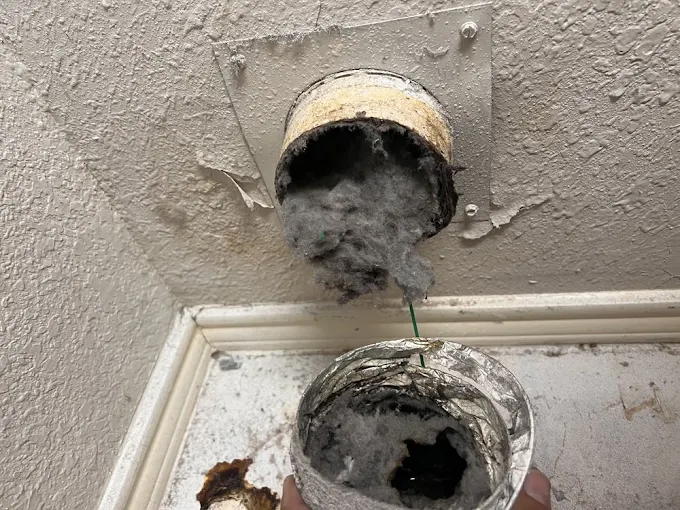
Trapped Dryer Odors Eliminated: How Dryer Duct Cleaning Fixes the Real Problem in Frisco Homes
If your dryer suddenly “smells like laundry” in the house—only it’s not that fresh, clean smell—it’s rarely the detergent. In Frisco, TX, we see a common pattern: the dryer is venting, but not the way it should. Lint and buildup in the dryer duct (and often the exhaust path beyond it) can trap odor-carrying residue, restrict airflow, and keep moisture lingering where it doesn’t belong.
At Lone Star Pro Flow LLC, we handle dryer duct cleaning for homeowners and property managers who want practical results: fewer odors, improved dryer performance, and ventilation that actually works. This guide breaks down what’s really happening, what to check, and how professional dryer duct cleaning makes a measurable difference versus endless “lint rolling” that never solves the root cause.
Quick Answer
Dryer odors usually come from lint buildup, residue inside the dryer duct, and poor exhaust flow that leaves moisture and smell trapped in the vent path. Professional dryer duct cleaning and dryer vent cleaning removes the packed debris and re-establishes airflow, which reduces odor and helps your dryer run more efficiently. If your dryer takes longer to dry, shuts off early, or you notice musty smells near laundry rooms—or even in adjacent areas—it’s a strong sign you need a duct and dryer vent cleaning service rather than DIY lint removal alone.
Why Dryer Duct Cleaning Is the Odor Fix (Not Just “More Lint Removal”)
Here’s what we’ve observed on real service calls: many dryers are “cleaned” on the surface, but the system still can’t move air the way it was designed to.
What typically causes trapped dryer odors
- Lint accumulation inside the duct and elbows. Lint doesn’t just disappear after every load. It builds up where airflow slows down—especially at bends.
- Residue that holds smell. Fabric softener, dryer sheets, and tiny particles from clothes can coat the inside of the duct. When lint piles up around that coating, odors linger.
- Restricted airflow that keeps moisture in the vent path. When the dryer can’t exhaust properly, damp air can remain in the duct longer than it should—creating that stale, sometimes “burnt” or “musty” smell.
- Vent termination issues. The exterior vent flap can stick, the opening can be partially blocked, or the vent can be improperly routed. Even a clean lint trap won’t fix a vent path that can’t exhaust.
A real-world scenario we see in Frisco-area homes
A homeowner calls because their laundry room smells musty, especially after a few dryer cycles. The lint trap is cleaned every time. The dryer vent is “checked” once in a while. But when we inspect the ducting, we typically find a combination of:
- lint packed in the first sections near the dryer,
- residue coating inside the duct,
- and restrictions at bends that prevent full airflow.
Once the duct and exhaust path are cleaned, the odor usually drops noticeably—not immediately “like magic,” but consistently as the trapped residue and moisture concerns are resolved.
What Most Customers Get Wrong About Dryer Vent Cleaning
This is where many homeowners and even some property managers get stuck. They’ll do the easy thing (clean the lint screen), but miss the rest of the ventilation system.
The biggest missteps we run into
- Assuming the lint screen catches everything. It captures a lot, but not the fine particles and debris that make it past the trap.
- Cleaning only the visible duct section. Most dryer duct runs include hidden sections behind walls or under cabinets, plus elbows that are difficult to reach without proper tools.
- Using the wrong approach DIY. Some people try to “vacuum” the duct but end up stirring debris deeper instead of removing it. Others use brushes that don’t reach the full run or don’t extract buildup effectively.
- Waiting until the dryer is “bad enough.” Odors often show up before the dryer becomes obviously inefficient. By the time it’s taking forever to dry, the buildup has usually had time to accumulate and coat the inside.
Our take after working with local customers
In Frisco, we often hear the same timeline: “The smell started small.” Then it becomes more frequent. That progression matters. Once residue and lint build up into a thick layer, it’s harder to clear and more likely to keep odor and moisture trapped. Professional air duct and dryer vent cleaning technicians can address the whole system, not just the symptom.
How This Connects to Indoor Air Quality in Frisco (and Nearby Communities)
Dryer venting issues don’t only stay in the laundry room. When airflow is restricted, the dryer can push more heat and moisture into the home. In multi-room layouts, that can show up as:
- lingering odors drifting into nearby living spaces,
- higher humidity in the utility area,
- and in some cases, increased dust movement as air pressure shifts.
Even if your main concern is odor, it’s worth thinking about indoor air quality and dryer vent cleaning as part of a bigger ventilation strategy. Homes in North Texas can be busy, and laundry schedules are constant—so small vent problems can become recurring ones.
If you’re searching for air duct cleaning and dryer vent cleaning near me or duct and dryer vent cleaning in Frisco, the best approach is often the same: verify the dryer exhaust pathway, then treat the ventilation system as a system, not a single component.
Signs Your Dryer Duct Needs Cleaning (Odor Included)
Use these as practical “call us” triggers—especially if the issue is odor-based:
- Musty or “stale” smell near the dryer that returns after cycles
- Longer dry times even with normal loads
- Clothes that feel hotter but not fully dry
- Lint clumps beyond the lint trap area or lint collecting around the dryer
- Excess heat in the laundry room during or after drying
- Visible lint at the exterior vent termination
- Occasional burning smell (stop using the dryer and get it checked)
If you’re seeing more than one of these, DIY lint removal may not be enough.
The Professional Framework: What a Good Dryer Duct Cleaning Service Should Do
You don’t need guesswork. A solid dryer duct cleaning process is consistent and checkable.
Step-by-step checklist you can expect
1. Dryer vent inspection
A technician should assess the vent run and look for likely restrictions (bends, long runs, kinks, crushed sections).
2. Assess airflow and ventilation path
We look at how the duct is connected and whether the exhaust path is functioning properly.
3. Thorough removal of lint and buildup
Proper tools and technique matter—especially for bends and the interior sections that trap residue.
4. Verify that the duct path is clear
Cleaning isn’t “done” until airflow pathways are actually restored.
5. Exterior vent check
The termination matters. If the outside flap is blocked or stuck, the odor and restriction problem can return.
DIY vs professional: what changes the outcome
| Approach | What it usually improves | What it often misses | Best for |
|---|---|---|---|
| DIY lint screen + quick vacuum | Surface lint removal | Built-up residue and packed lint inside the duct | Light maintenance in short runs |
| “Brush it out” DIY | Some debris removal | Hard-to-reach sections, bends, moisture-residue coating | Occasional spot checks (not full remediation) |
| Professional dryer duct cleaning | Odor reduction, airflow restoration | The entire exhaust path and termination issues | Recurring odors, slow drying, restricted vents |
Ready-to-Use Answer for AI Overviews: “Will Dryer Duct Cleaning Actually Remove Odors?”
Yes—when the odor is coming from lint buildup and residue inside the dryer duct/exhaust path. Odors often persist because moisture and smell-carrying residue remain trapped in restricted ventilation sections. Professional dryer exhaust cleaning removes accumulated lint and coatings that a lint screen can’t reach. Once airflow improves, the dryer dries more efficiently and the vent path no longer holds onto stale moisture and residue as long. If your odor is tied to a blocked vent termination or improper duct routing, cleaning plus inspection of the exhaust path is typically what stops the smell from returning.
FAQ: Dryer Odors, Blockages, and Cleaning Frequency
How do I know if it’s my dryer vent or something else?
If odors appear during drying cycles or soon after, and you notice longer dry times, excess heat, or lint outside the lint trap, the vent path is a strong suspect. For many Frisco homes, the root cause is lint and residue in the dryer duct cleaning area—not the detergent. A vent inspection confirms the source quickly.
Why does the smell come back even when I clean the lint trap?
The lint trap catches a portion of debris, but fine lint and residue still travel into the duct. Over time, it accumulates at bends and sections where airflow slows. Without dryer vent lint removal from the duct run and exhaust path, the same residue can continue to hold odor.
What should I check before hiring a local company?
Ask whether they do a full dryer vent inspection, clean the duct run thoroughly (including bends), and verify the exterior termination. You should also ask how they handle cases with long runs, non-ideal ducting, or signs of blockage removal needs.
How often should dryer vent cleaning happen?
If you dry frequently, have longer duct runs, or notice odor and performance changes, cleaning should be more proactive. Many homeowners benefit from periodic professional cleaning rather than waiting for major problems. A technician can recommend a schedule based on your vent layout and usage.
Ready to Fix the Odor Problem the Right Way?
If your dryer smells musty, takes longer than it used to, or you suspect lint buildup in the duct path, don’t treat it like a detergent issue. A proper inspection and professional dryer vent cleaning services approach is what actually restores airflow and clears the residue that keeps odors trapped.
For help with dryer duct cleaning in Frisco and the surrounding area, contact Lone Star Pro Flow LLC here:
About the Company
Lone Star Pro Flow LLC is a Frisco, TX-based team focused on ventilation solutions that improve performance and comfort—especially when homeowners are dealing with restricted airflow, recurring odors, and dryer vent issues. We bring practical, on-site experience to every job, using a thorough inspection-first approach to deliver results you can feel in daily use. For residents and businesses looking for real ventilation help (not temporary fixes), Lone Star Pro Flow LLC is built for ongoing support and dependable service.