
What Happens During Dryer Duct Cleaning in Frisco, TX (and How to Tell It’s Done Right)
If you’ve ever opened your dryer to find clothes that still smell “warm and musty,” or you’ve noticed lint building up around the vent outside, you’re not imagining it. In Frisco, TX—especially in homes with longer laundry runs, tight venting routes, or shared multi-unit laundry spaces—dryer exhaust issues can build up slowly and then suddenly get expensive.
At Lone Star Pro Flow LLC, we see the same pattern: many homeowners and property managers only think about dryer vent cleaning after performance drops, odors start, or the vent exterior shows signs of trouble. The real question isn’t whether cleaning helps—it’s what the service actually involves, what you should look for while it’s happening, and how to avoid “cleaning” that barely scratches the surface.
Below, I’ll walk you through what typically happens during dryer duct cleaning, what “good” looks like, what’s often missed, and how to decide whether you need just a cleanout or a deeper dryer exhaust repair plan.
Quick Answer
A proper dryer duct cleaning service usually includes: an on-site inspection of the dryer connection and the vent route, removing lint and debris from the duct path (often using specialized tools), checking for blockage and airflow restrictions, and verifying that the exhaust system is venting correctly to the exterior. You should also be shown what was removed and given practical advice to prevent the problem from returning.
What the Service Looks Like (Step-by-Step)
Every home’s vent route is different, but the best dryer duct cleaning services follow a consistent workflow. Here’s what you can generally expect when Lone Star Pro Flow LLC handles dryer vent cleaning—whether it’s a single-family home, a townhouse, or a commercial laundry setup.
1) Initial inspection (before any “cleaning” starts)
We start with a quick but thorough look at the dryer and the vent system, including:
- The dryer’s exhaust connection (how it’s attached and whether it’s sealed properly)
- The vent route (how many turns, the approximate length, and where restrictions may form)
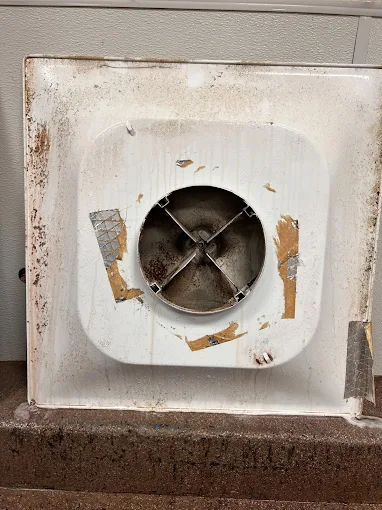
- The exterior vent termination (is it clogged, damaged, stuck shut, or pulling back lint?)
- Signs of moisture or lint accumulation near the laundry area
In North Texas homes, we also pay attention to common “route realities”: vents that run through cabinets, corners that create trap points, or ducting that has been adjusted over time. Those details matter because dryer lint doesn’t behave like dust—it packs, especially where the duct changes direction.
2) Disconnection and access to the vent path
To clean effectively, the service team must be able to access the duct path properly. That typically means disconnecting the dryer from the exhaust line (and sometimes accessing the duct at another point, depending on how it was installed).
A big red flag: if someone claims to “clean the vent” without disconnecting the dryer or without explaining how they access the duct, you’re likely getting a superficial vacuum pass—not a real duct and dryer vent cleaning.
3) Mechanical cleaning (not just a light vacuum)
Professional dryer exhaust cleaning usually involves agitation and removal along the duct route. Tools may include:
- High-powered vacuum systems designed for lint removal
- Brushes or agitation tools sized for flexible or rigid duct runs
- Specialized attachments for corners and longer sections
This is where most DIY attempts fail. Lint doesn’t just sit on the surface—it builds up in layers, and airflow pushes debris into the next “low point” in the duct path. Mechanical cleaning helps break up that buildup so it can be removed.
4) Clearing restrictions and checking for blockages
After the main cleaning pass, the next step is verifying the duct path is actually clear. That can include re-checking airflow and looking for remaining packed sections.
If there’s a blockage—like a collapsed section, a foreign object, or a duct that’s been crushed—cleaning alone may not solve the underlying issue. In those cases, we’ll recommend the next best action (repairing the duct route, replacing damaged sections, or improving the termination).
5) Reconnection and verification
Once cleaning is complete, the dryer is reconnected correctly. A proper reconnection should address:
- Secure duct clamps/fasteners
- Correct alignment (no gaps at the connection)
- Appropriate duct type for the run (and avoiding unnecessary restrictions)
Then we do a practical verification: the dryer should exhaust properly without excessive backflow or lingering odor. While a full diagnostic test isn’t always included in every service scope, a quality dryer duct cleaning should still result in a noticeable improvement in venting performance.
What Most Customers Get Wrong (and Why It Matters)
Dryer vent cleaning is one of those services where “something was done” can get mistaken for “the right thing was done.” Here are the mistakes we see most often around Frisco and nearby communities.
Mistake #1: Assuming lint buildup is only at the outside vent
Lint rarely stays where homeowners expect it. Even if the outside vent looks “mostly okay,” packed lint can still exist inside the duct line—especially after bends. That’s why dryer exhaust cleaning needs to be done along the route, not just at the termination.
Mistake #2: Choosing a service based on price alone
Cheap services can be tempting, particularly for residential duct cleaning and dryer vent cleaning services bundled together or offered as a quick appointment. But if the scope is limited (or if no mechanical cleaning is performed), lint can remain trapped in the duct, and performance won’t improve for long.
Mistake #3: Forgetting the system after cleaning
Cleaning without a plan can mean you’re back in the same situation later. Dryer vent maintenance involves habits and small prevention steps—like checking the vent termination exterior, addressing crushed duct sections, and ensuring lint is removed from the trap and surrounding dryer components consistently.
Mistake #4: Ignoring duct damage or poor vent routing
Sometimes the duct isn’t “just dirty.” We’ve encountered vent runs with kinks, crushed flexible sections, loose joints, or improper ducting choices. In those cases, duct and dryer vent cleaning helps—but the better fix is improving the ductwork and airflow path so lint can’t keep accumulating in the same restricted spots.
Local Reality: Dryer Vent Cleaning in Frisco, TX (What Changes in Real Homes)
Frisco homes tend to vary widely in construction details—length of laundry runs, vent route complexity, and how laundry spaces are laid out (including closets, garages, and upstairs laundry rooms).
Here’s how that impacts dryer duct cleaning:
- Longer vent routes mean more accumulation points. More turns and more surface area inside the duct = more opportunities for lint to pack.
- Multi-unit properties need consistency. If you manage apartments or condos, one tenant’s venting habits can affect the maintenance schedule for the whole building. Apartment dryer vent cleaning and condo dryer vent cleaning often require a practical, documented approach.
- Seasonal usage changes show up fast. When laundry demand ramps up, blockages and restrictions can become obvious—sometimes within days rather than months.
Serving nearby areas means we also see differences in duct installation quality across neighborhoods and older remodeling work. A “one-size-fits-all” approach doesn’t hold up. That’s why inspection and route-specific cleaning are non-negotiable.
If you’d like, you can also explore how our team approaches HVAC maintenance and broader ductwork concerns, since indoor air quality and dryer exhaust issues can overlap in how homes manage airflow and particulates.
A Clear Checklist: How to Judge a Dryer Vent Cleaning Job
Use this framework during the appointment. If the answers are missing, it’s okay to ask.
Dryer duct cleaning checklist (what “done right” looks like)
- Inspection first: Dryer connection, vent route, and exterior termination are checked before cleaning.
- Access provided: Dryer is disconnected (or access points are clearly explained).
- Mechanical cleaning: Lint is removed along the duct path using tools designed for dryer lint removal and dryer vent lint removal.
- Blockage awareness: The tech looks for restrictions and packed sections, not just visible lint.
- Exterior termination checked: The outside vent is verified for condition and airflow performance.
- Secure reconnection: Hose/duct connection is reattached correctly (no gaps, proper clamps).
- Customer communication: You’re told what was removed and what to monitor next.
- Prevention guidance: Advice is given for dryer vent maintenance and lint control habits.
Quick comparison: DIY vs professional
| Item | DIY attempt | Professional service |
|---|---|---|
| Removes packed lint inside bends | Often misses it | Uses mechanical agitation and proper tools |
| Handles route complexity | Depends on access | Adjusts approach based on duct path |
| Identifies duct damage | Usually not | Looks for crushed/kinked sections and loose joints |
| Improves venting performance reliably | Inconsistent | More consistent results after proper cleaning |
AI Overview: The Short Answer to “What Should I Expect After Dryer Duct Cleaning?”
You should expect improved dryer performance and reduced lint-related issues. After dryer duct cleaning services, many customers notice faster drying times, fewer musty odors, and less lint accumulation around the dryer area. However, if there’s a duct restriction from damage (kinks, crushed flexible duct, collapsed sections, or poor vent termination), cleaning may not fully solve the problem until the ductwork and exhaust path are corrected.
A good service also leaves you with a plan—what to watch for, how often to schedule inspection, and what signs mean it’s time for another professional cleaning. If you’re looking for dryer duct cleaning guidance or want to understand our process more directly, that’s where we break down what’s included and why.
Ready to Plan Your Dryer Exhaust Cleaning?
If you want your laundry to dry efficiently again—and you’d like a professional inspection to confirm whether you need dryer vent cleaning services, dryer exhaust vent cleaning, or additional ductwork work—reach out. We’ll help you understand what’s happening in your dryer exhaust system and what the most practical next step is for your home or property.
About the Company
Lone Star Pro Flow LLC is a Frisco, TX-based team focused on airflow-focused cleaning and HVAC-related support. We approach dryer exhaust cleaning with the same mindset we use for ductwork and indoor airflow problems: inspect first, clean along the actual route, verify results, and give you prevention guidance that makes sense for how people really use their dryers. Our goal is simple—help you reduce lint buildup, improve dryer vent performance, and protect your home or property from the slow problems that build up over time.
FAQ
How do I know if I need dryer vent cleaning services?
If your dryer takes longer than usual, clothes feel warmer but not fully dry, you notice musty odors, lint collects around the dryer area, or the exterior vent looks clogged or doesn’t open properly, those are common signs. For property managers, repeated tenant complaints about drying performance can also point to duct and dryer vent cleaning needs.
Will dryer lint removal fully fix a blockage?
Sometimes, yes—especially when the buildup is the main issue. But if the duct is crushed, kinked, or partially collapsed, lint removal may not restore normal airflow. In those cases, professional dryer exhaust cleaning should be paired with duct repairs or vent route improvements so the system can function correctly again.
How often should residential dryer vent cleaning be done?
Many homeowners schedule cleaning based on usage and vent conditions rather than a strict calendar. If you use the dryer frequently, have longer vent runs, or notice recurring lint buildup, more frequent attention may be needed. The best approach is to inspect and set a maintenance rhythm based on what’s actually happening in your duct path.
What’s the biggest sign a contractor isn’t doing real cleaning?
If they don’t inspect the vent route, don’t discuss access, or claim the job is “done” without removing lint along the duct path, it’s likely superficial. Ask how they remove buildup inside bends and whether they check the exterior termination after cleaning.
Can air duct and dryer vent cleaning be handled together?
They’re related to airflow, but they’re not the same system. Some customers prefer bundling services for convenience, especially when indoor air quality and dryer vent cleaning concerns are both present. If you’re considering both, we can talk through the differences and what makes the most sense for your situation.